34 min read

© IE Online Media Services Pvt Ltd



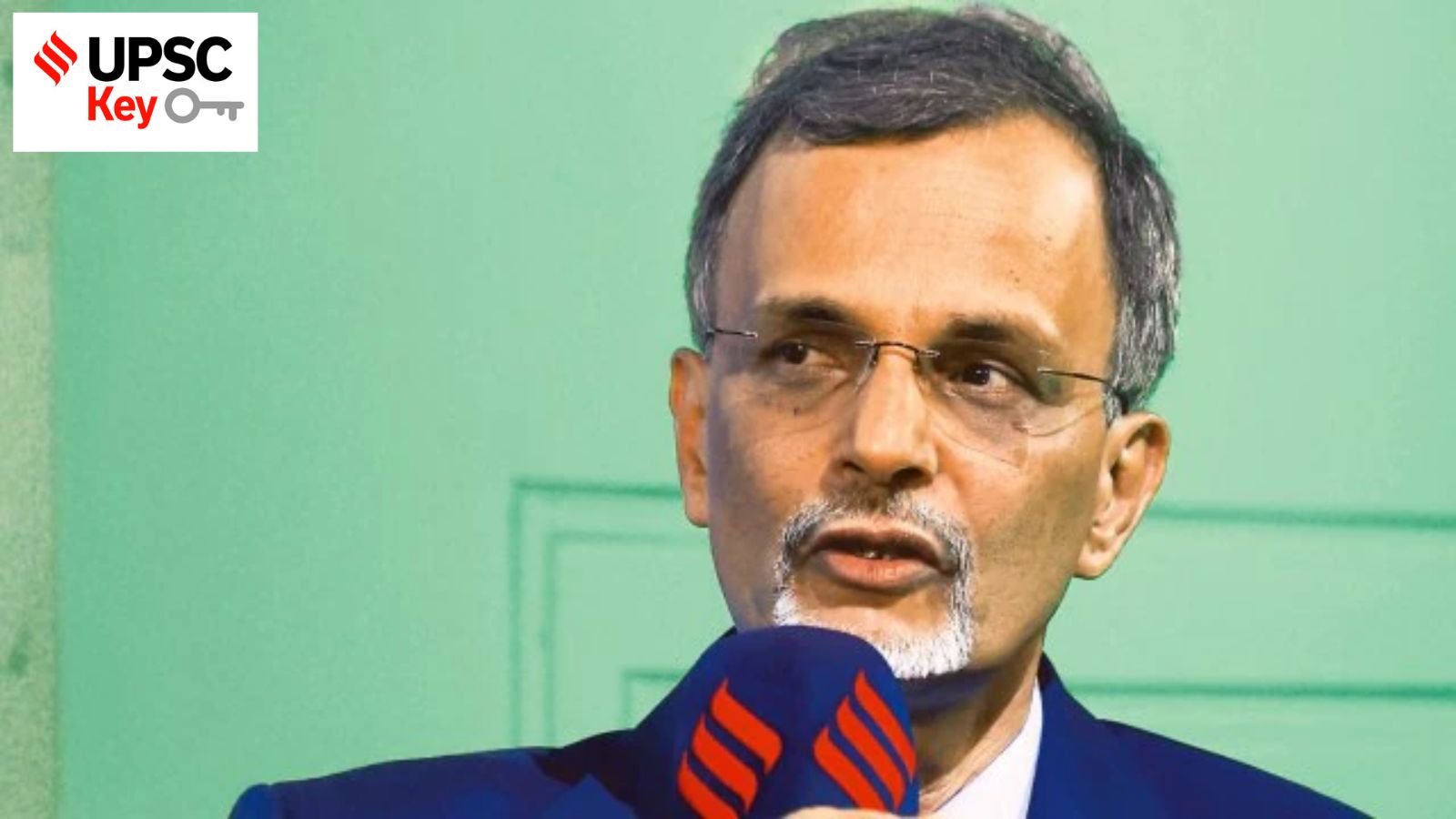 In a briefing after the Q2 GDP Growth Data was released, Chief Economic Advisor V Anantha Nageswaran said GDP growth for 2025-26 as a whole will now be at least 7 per cent. Know more in our UPSC Key. (Express Photo)
Important topics and their relevance in UPSC CSE exam for November 29, 2025. If you missed the November 28, 2025, UPSC CSE exam key from the Indian Express, read it here.
Syllabus:
Preliminary Examination: Current events of national and international importance
Mains Examination: General Studies-III: Indian Economy and issues relating to planning, mobilisation of resources, growth, development and employment; Government Budgeting.
What’s the ongoing story: The economy continued to expand at a faster-than-anticipated rate in July-September, with GDP growth rising to a six-quarter high of 8.2 per cent on the back of near double-digit growth in the services sector. The manufacturing sector, too, expanded at the fastest pace in six quarters.
Key Points to Ponder:
— What is GDP?
— How is GDP calculated?
— What are the challenges of GDP calculation?
— What is the contribution of various sectors in the GDP?
— What is Gross Value Addition?
— What is Real GDP and Nominal GDP?
— What is the Gross Fixed Capital Formation?
— What is the role of the Monetary Policy Committee(MPC)?
— What does the International Monetary Fund (IMF) rating of India’s data mean for the economy?
Key Takeaways:
— Economists had broadly expected that GDP growth would moderate to 7.3 per cent from 7.8 per cent in April-June. However, the growth rate unexpectedly rose for the fourth quarter in a row in July-September.
— In a briefing after the data was released, Chief Economic Advisor V Anantha Nageswaran said GDP growth for 2025-26 as a whole will now be at least 7 per cent. This is an upward revision from his previous forecast of 6.3-6.8 per cent.
— The Gross Value Added (GVA) of manufacturing rose by 9.1 per cent in July-September, up from 7.7 per cent in April-June and 2.2 per cent in the second quarter of 2024-25. Construction growth remained robust at 7.2 per cent after having grown 7.6 per cent in April-June and 8.4 per cent in July-September 2024.
— Industry as a whole posted a growth of 7.7 per cent, up from 6.3 per cent in April-June. The services sector, meanwhile, expanded by more than 9 per cent for the second quarter in a row…
— The GDP growth rate without adjusting for inflation, or nominal GDP growth, declined to a four-quarter low of 8.7 per cent in July-September from 8.8 per cent in April-June. Economists warned that nominal must be monitored.
— The economist expects GDP growth to slow down in the second half of the current fiscal to 6.1 per cent from 8 per cent in the first half, or April-September, due to the impact of higher US tariffs and normalisation of the government’s capital expenditure.
— The high GDP growth number comes days before the RBI’s Monetary Policy Committee (MPC) begins its three-day meeting on December 3, with Governor Sanjay Malhotra scheduled to announce the interest rate decision at 10 am on December 5.
ECONOMY: ‘C-grade’ for India’s national account statistics
— In its annual staff report for India for 2025, the International Monetary Fund (IMF) on Wednesday retained its C-grade for India’s national account statistics, or GDP data, which means the data provided to the Fund have “some shortcomings that somewhat hamper surveillance”.
— First things first: why is the IMF evaluating India’s data?
— The assessment is part of the multilateral agency’s annual bilateral discussions with its members, which is required by Article IV of the IMF’s Articles of Agreement. In these consultations, an IMF staff team visits the country, collects economic and financial information, and discusses with officials the country’s economic developments and policies. A report is prepared following the consultations.
— Ratings range from A to D. An A rating is given when the data is adequate for IMF surveillance, while B is used for data that has “some” shortcomings but is “broadly adequate”. C rating is for data with “some” shortcomings which “somewhat hamper surveillance”. Finally, a D rating is used when the data has “serious shortcomings that significantly hamper surveillance”.
Do You Know:
— The GDP is calculated by adding net indirect taxes — indirect taxes such as GST minus subsidies — to GVA.
— Only final goods and services are included in GDP. Intermediate goods — those goods which are used as inputs in the production of other goods — are excluded to avoid double counting.
— There are two main measures of GDP: Nominal GDP and Real GDP.
— Nominal GDP: It refers to the value of goods and services evaluated at current market prices without factoring in inflation or deflation.
— Real GDP: An inflation-adjusted measure that reflects both the value and quantity of goods and services produced by an economy in a given year.
Other Important Articles Covering the same topic:
📍Why is GDP considered a key measure of economic growth?
Previous year UPSC Prelims Question Covering similar theme:
(1) Consider the following statements : (UPSC CSE 2017)
1. Tax revenue as a percent of GDP of India has steadily increased in the last decade.
2. Fiscal deficit as a percent of GDP of India has steadily increased in the last decade.
Which of the statements given above is/are correct ?
(a) 1 only
(b) 2 only
(c) Both 1 and 2
(d) Neither 1 nor 2
Previous year UPSC Mains Question Covering similar theme:
Explain the difference between computing methodology of India’s Gross Domestic Product (GDP) before the year 2015 and after the year 2015. (UPSC CSE 2021)
Syllabus:
Preliminary Examination: Current events of national and international importance
Mains Examination: General Studies-II: Bilateral, regional and global groupings and agreements involving India and/or affecting India’s interests.
What’s the ongoing story: In what can be seen as another major defence contract with the US in recent weeks, India on Friday signed Letters of Offer and Acceptance (LOAs) for sustainment support of Indian Navy’s fleet of MH60R helicopters through Follow on Support and Follow on Supply Support for five years worth Rs 7,995 crore.
Key Points to Ponder:
— What are the features of MH60R helicopters?
— What are the major defence agreements between India and the USA?
— How have India-US defence relations evolved?
— Know about the 10-year Framework for the US-India Major Defence Partnership which was signed recently?
— What are the challenges in the India-US relationship?
— What are the major defence agreements that India has signed in the recent years?
— Know about the Basic Exchange and Cooperation Agreement for Geospatial Intelligence (BECA), Logistics Exchange Memorandum of Agreement (LEMOA), Communication Compatibility and Security Agreement (COMCASA), and General Security of Military Information Agreement (GSOMIA)
Key Takeaways:
— The Indian Navy has procured 24 of these helicopters, manufactured by Lockheed Martin, under foreign military sales from the US government at an estimated cost of USD 2.4 billion, while 15 choppers have been inducted so far. The deal was signed in 2020.
— This comes days after the Defence Security Cooperation Agency, in two separate statements, said that the State Department has made a determination approving a possible Foreign Military Sale to India of Excalibur Projectiles and related equipment at an estimated cost of USD 47.1 million and of Javelin Missile System and related equipment at an estimated cost of USD 45.7 million.
— Apart from a boost to self-reliance, the sustainment support would also enable operation of MH60R helicopters from dispersed locations as well as ships, ensuring optimal performance during all their primary and secondary missions/roles, a Defence Ministry statement said.
— It added that the in-country development of these facilities will ensure capability build-up in the long run and reduced dependence on the US government, thus aligning with the vision of Atmanirbhar Bharat.
Do You Know:
— As they continue to negotiate a bilateral trade deal and the thorny issue of a tariff penalty by Washington over Delhi’s purchase of Russian oil, India and the US on November 1, 2025 signed a 10-year Framework for the US-India Major Defence Partnership, signalling stable ties between the two countries in the defence sector.
— In a statement, the Ministry of Defence said the 2025 framework is intended to provide a unified vision and policy direction to deepen defence cooperation. It said the framework will usher in a new era in the already strong defence partnership between the two countries and marks a new chapter in further transforming it over the next 10 years.
— The vision for bilateral defence cooperation was encapsulated in the September 2013 Joint US-India Declaration on Defence Cooperation and the 2015 Framework for the US-India Defence Relationship, in which the two countries committed themselves to increasing cooperation in the sector.
— Between 2016 and 2020, the two sides signed four more agreements, including the Logistics Exchange Memorandum of Agreement (LEMOA) in 2016, the Communications Compatibility and Security Agreement (COMCASA) in 2018, and the Basic Exchange and Cooperation Agreement (BECA) in 2020.
— In August 2024, both countries signed a Security of Supply Arrangement (SOSA) and Memorandum of Agreement regarding the Assignment of Liaison Officers, among other bilateral military agreements that have enhanced defence and security cooperation.
Other Important Articles Covering the same topic:
📍US clears Excalibur artillery shells, Javelin anti-tank systems for India
📍India, US seal 10-yr defence partnership framework, signal strategic convergence
UPSC Prelims Practice Question Covering similar theme:
(2) With reference to the Security of Supply Arrangement (SOSA), consider the following statements:
1. It is signed between India and Ukraine.
2. It is a binding agreement.
3. The arrangement will enable both countries to acquire the industrial resources to meet national security needs.
Which of the statements given above is/are correct?
(a) 2 only
(b) 1 and 3 only
(c) 3 only
(d) 1, 2 and 3
Previous year UPSC Mains Question Covering similar theme:
‘What introduces friction into the ties between India and the United States is that Washington is still unable to find for India a position in its global strategy, which would satisfy India’s National self-esteem and ambitions’. Explain with suitable examples. (UPSC CSE 2019)
Syllabus:
Preliminary Examination: Current events of national and international importance
Mains Examination: General Studies-II: Important International institutions, agencies and fora- their structure, mandate
What’s the ongoing story: Lakshmi Puri writes: Eight decades after its founding, the United Nations, an institution created to safeguard peace and advance human progress, finds itself betrayed by a massive swerve away from universalism to nationalist egocentrism. It stands paralysed by a polycrisis it was meant to prevent or resolve.
Key Points to Ponder:
— What was the objective behind the formation of the United Nations (UN)?
— Why is the need for reforming the UN?
— What are the reforms proposed by India?
— Critically analyse the working of the UN in the past 80 years.
— What is the role and composition of the UN Security Council?
— What is India’s position on UNSC reform?
— What is multilateralism?
Key Takeaways:
— From Gaza to Ukraine, climate change to income inequality, and rampant terrorism to frenetic rearmament, the UN’s ability to build and uphold the consensus on and deliver global public goods is, as António Guterres puts it, “gridlocked in dysfunction”.
— Thant Myint-U’s Peacemaker: U Thant and the Forgotten Quest for a Just World arrives at a moment when the world urgently needs to rediscover what global leadership once meant and why multilateralism is needed more than ever. It is a must-read for believers in humanity’s shared destiny.
— The book is both an absorbing biography of U Thant, the first Asian and developing-country Secretary-General, and a mirror held up to today’s multilateral decay.
— The answer to what is needed for the restoration of the UN’s relevance lies in what may be called the Trinity of Multilateral Responsibility, comprising three interdependent actors: The Secretariat, the Member States, and We the People.
— When these actors harmoniously work for global public goods on the basis of what PM Modi and India emphasise as the credo of “one Earth, one family, one future,” or Vasudhaiva Kutumbakam, the institution becomes the transcendental force it is meant to be. When one weakens or becomes self-serving and myopic, the UN is pushed towards the precipice of extinction.
— The Secretariat once embodied initiative, independence and moral authority. Secretaries-General such as U Thant exercised discretion and spoke truth to power without partiality. Today, political bias and bureaucratic control have replaced principled leadership in a polarised world.
— The Member States, especially the privileged P5, were entrusted to support the UN as the custodian of GPGs (global public goods) and a champion of the disadvantaged. Instead, the most powerful countries have jettisoned GPGs, including sustainable development and aid to poor countries.
— The Security Council veto, selective interventions for regime change, double standards on counter-terrorism, violations of the principles of sovereignty, institutional capture, refusal to reform and democratise the UNSC and chronic defunding have hollowed out the UN system.
— The UN Charter begins with “We the People” because the institution was conceived as a partnership with humanity itself. Civil society, academia, the media, youth and women’s movements and the private sector once sustained this moral energy.
— Today, that civic engagement has withered into indifference. Global citizenship has been replaced by parochial nationalism, digital tribalism and purpose with profit-seeking.
— Under Prime Minister Narendra Modi, India has emerged as a bridge-builder between North and South, East and West. Its stewardship of the G20 and the Voice of the Global South platform reaffirmed that reinventing multilateral institutions is an urgent moral imperative.
— As India’s global stature rises, it carries both opportunity and obligation to champion that renewal for delivering peace, development, equity and dignity for all. U Thant’s forgotten compass still points the way.
Do You Know:
— The United Nations (UN) came into existence on 24 October 1945, after being ratified by 51 nations, which included five permanent members or P5 (France, the Republic of China, the Soviet Union, the UK and the US) and 46 other signatories. The first meeting of the General Assembly took place on January 10, 1946. At present, 193 countries are members of the United Nations.
— The UNSC is composed of 15 members: five permanent members — China, France, Russian Federation, the United States, and the United Kingdom — and 10 non-permanent members who are elected by the General Assembly. The non-permanent members are elected for two-year terms — so every year, the General Assembly elects five non-permanent members out of the total 10.
— From G20 countries pledging to reform the United Nations Security Council through a transformative reform that aligns it with the realities and demands of the 21st century to BRICS nations calling for making global governance more inclusive by reforming the major multilateral institutions such as the UN Security Council.
Other Important Articles Covering the same topic:
📍Why UNSC often mirrors geopolitical divides rather than global consensus
Previous year UPSC Prelims Question Covering similar theme:
(3) The Security Council of UN consists of 5 permanent members, and the remaining 10 members are elected by the General Assembly for a term of ( UPSC CSE 2009)
(a) 1 year
(b) 2 years
(c) 3 years
(d) 5 years
Previous year UPSC Mains Question Covering similar theme:
Discuss the impediments India is facing in its pursuit of a permanent seat in the UN Security Council (UPSC CSE 2015)
Syllabus:
Preliminary Examination: Indian Polity and Governance – Constitution, Political System, Panchayati Raj, Public Policy, Rights Issues
Mains Examination: General Studies-II: Issues relating to development and management of Social Sector/Services relating to Health, Education, Human Resources
What’s the ongoing story: Kamini Walia writes: Antibiotics are life-saving medicines, but their power is diminishing due to widespread overuse and misuse. When antibiotics are taken unnecessarily or stopped prematurely, bacteria develop resistance, making common infections harder and more expensive to treat. This threatens routine medical procedures and imposes a substantial socio-economic burden, especially on low- and middle-income countries like India.
Key Points to Ponder:
— What are Antibiotics?
— What is anti-microbial resistance (AMR)?
— What is the National Essential Diagnostics List?
— Embedding citizen ownership within AMR strategies is therefore not only justified but essential for bridging the gap between policy intent and real-world behaviour. Elaborate.
— What are the reasons behind the increasing antimicrobial resistance?
— What is the impact of increasing AMR?
— Why is AMR a grave threat?
— What are the global initiatives taken against it?
— What initiatives have been taken by the government to tackle the challenge of increasing AMR?
Key Takeaways:
— The recent World Antimicrobial Awareness Week marked the launch of India’s National Action Plan (NAP) 2.0, reaffirming the government’s commitment to tackling antimicrobial resistance (AMR), one of the most serious public health threats of the 21st century.
— Since the first NAP in 2017, India has strengthened AMR surveillance networks, introduced regulations to discourage misuse of antibiotics, banned certain antimicrobials as growth promoters in poultry, improved access to diagnostics through the National Essential Diagnostics List, and enhanced infection control through initiatives like Kayakalp. Standards for antimicrobial use in the food sector have also been introduced.
— However, significant gaps remain, and successful implementation of NAP 2.0 over the next five years will be critical. Notably, in countries where NAPs succeeded, progress was closely monitored, and a key factor was strong community participation and ownership.
— Citizen ownership represents deep public engagement where AMR is viewed not as a distant scientific issue but as a shared social challenge. When people perceive AMR containment as a personal responsibility, they are more likely to adopt prudent behaviour: Seeking medical advice before taking antibiotics, completing prescribed courses, and avoiding leftover non-prescribed drugs.
— Reducing infection is a crucial, often under-emphasised, pillar of AMR containment. Fewer infections mean lower antibiotic consumption and reduced selection pressure for resistance. Citizen-led initiatives can significantly influence hygiene, sanitation, vaccination, and waste management.
— Citizen ownership can also complement weak enforcement systems, particularly in India, where over-the-counter access to antibiotics remains common. Informed citizens are more likely to question inappropriate prescriptions and resist easy access to antibiotics from unlicensed sellers.
— India’s own public-health successes underscore the power of citizen participation. The polio eradication campaign, community-led HIV advocacy, tuberculosis survivor networks, and women’s collectives like Kudumbashree demonstrate that widespread behaviour change and treatment adherence improve when communities lead.
Do You Know:
Reasons behind the increasing AMR
— Many Indians have a tendency to pop an antibiotic for a fever, without even checking if the fever is caused by a bacterium. An antibiotic is of no use for viral infections such as influenza, but consuming it can drive up resistance in the population.
— Doctors must be educated to not use broad-spectrum antibiotics, Dr Kamini Walia, one of the authors of the ICMR annual report on Antimicrobial Resistance Research and Surveillance Network (January-December 2023), said. These are antibiotics that work against a wide range of infections, but these are also the ones that are more likely to lead to resistance. Overuse of antibiotics has rendered some of them useless or of limited use.
— The WHO’s guidelines on antibiotic pollution from manufacturing provides guidance on wastewater and solid waste management for antibiotic manufacturing facilities. Despite the high levels of antibiotic pollution that have been widely documented, the issue is largely unregulated, the WHO said.
Other Important Articles Covering the same topic:
📍UPSC Issue at a Glance | Antimicrobial Resistance and India
Previous year UPSC Prelims Question Covering similar theme:
(4) Which of the following are the reasons for the occurrence of multi-drug resistance in microbial pathogens in India? (UPSC CSE 2019)
1. Genetic predisposition of some people
2. Taking incorrect doses of antibiotics to cure diseases
3. Using antibiotics in livestock farming
4. Multiple chronic diseases in some people
Select the correct answer using the code given below.
(a) 1 and 2 only
(b) 2 and 3 only
(c) 1, 3 and 4 only
(d) 2, 3 and 4 only
Previous year UPSC Mains Question Covering similar theme:
Can overuse and free availability of antibiotics without Doctor’s prescription, be contributors to the emergence of drug-resistant diseasesin India? What are the available mechanisms for monitoring and control? Critically discuss the various issues involved. (UPSC CSE 2014)
Syllabus:
Preliminary Examination: Current events of national and international importance.
Mains Examination: General Studies-II: Government policies and interventions for development in various sectors and issues arising out of their design and implementation
General Studies III: Conservation, environmental pollution and degradation, environmental impact assessment..
What’s the ongoing story: Randeep Singh Surjewala writes: The recent decision of the Supreme Court allowing post-facto environmental approvals is shocking. In a scenario where the central and relevant state governments have abandoned citizens to their own devices, brazenly smothering protests, the SC was the last bastion of hope.
Key Points to Ponder:
— What do you understand by the ex-post facto clearance?
— What are the concerns related to retrospective environmental clearances?
— Which projects in India need environmental clearance?
— What is the objective of environmental clearance or Environment Impact Assessment?
— Environmental Impact Assessment-Achievements, Issues and Challenges
— How to effectively balance between environment protection and development needs?
Key Takeaways:
— Prior to the judgment in question, on May 16, the Court had barred any post-facto environmental clearances in Vanashakti vs Union of India, stating that the concept of post-facto clearances itself is outright illegal.
— Thereafter, the Confederation of Real Estate Developers of India filed a petition seeking review of the Vanashakti judgment and on November 18, the three-judge bench of the SC (in a 2:1 verdict) recalled the judgment.
— The bench held that retrospective environmental clearances may be granted, but only for “permissible activities” as defined in the relevant regulatory framework.
— This judgment does not merely open a procedural back door. It threatens to erode the edifice of environmental governance painstakingly built over decades. In a country battling the world’s worst pollution indicators, where children breathe poison and rivers covered in toxic foam gasp for life, this ruling risks becoming the straw that finally breaks the camel’s back.
— Environmental clearance is not a clerical formality. It is a constitutional guarantee. It flows from Article 21, the right to life, a right repeatedly interpreted by the Supreme Court itself to include the right to clean air, clean water, and a healthy environment. The purpose of prior environmental clearance is simple: Prevention is better than a post-mortem because the consequences are often irreversible.
— The last decade has seen a systematic and deliberate dilution of our environmental laws…. Here are five examples: The first and perhaps the most infamous example, the Draft Environmental Impact Assessment Notification 2020 (along with an Office Memorandum of 2021), attempted to institutionalise post-facto clearances.
— Second, the amendments to the FCA redefined what constitutes “forest land”, effectively excluding vast stretches of land that were earlier protected under judicial interpretation.
— Third, over the years, key sectors including coal mining, oil and gas exploration, and certain categories of construction have been granted exemptions or placed in lower regulatory brackets.
— Fourth, the CRZ Notification 2018 significantly weakened protections for fragile coastal ecosystems. It allowed construction closer to shorelines, opened ecologically sensitive coastal zones for tourism infrastructure, and relaxed norms for commercial development.
— Fifth, environmental and forest clearances have been routinely fast-tracked through rubber-stamp expert committees, many of which meet virtually, examine dozens of proposals in a single sitting, and clear projects with minimal field verification.
— The previous judgment banning post-facto clearances had clearly observed that “the very concept of grant of ex-post facto EC is illegal” and that “coming out with measures such as the 2021 Office Memorandum is violative of fundamental rights of all persons guaranteed under Article 21 to live in a pollution free environment”.
Do You Know:
— Environmental Impact Assessment (EIA) has emerged as a mechanism to aid nations in walking the tightrope between economic development and environmental protection, ensuring that growth does not come at the expense of ecological sustainability.
— EIA is a systematic process used to evaluate the potential environmental effects – both positive and negative – of a proposed project or development before it is approved. The primary objectives of EIA include the prediction and evaluation of the environmental, economic and social impacts of development projects.
— It facilitates informed decision-making by providing in-depth analysis of a proposed project and promotes sustainable development by identifying potential negative effects early in the planning stage, while also suggesting appropriate alternatives and mitigating mechanisms.
— EIA also fosters popular participation in developmental decision-making by holding public consultations where citizens can express their concerns regarding a project.
Other Important Articles Covering the same topic:
📍Environmental Impact Assessment: Navigating the development-environment dilemma
Previous year UPSC Mains Question Covering similar theme:
Environmental impact assessment studies are increasingly undertaken before the project is cleared by the government. Discuss the environmental impacts of coal- fired thermal plants located at Pitheads. (UPSC CSE 2013)
Syllabus:
Preliminary Examination: Current events of national and international importance
Mains Examination: General Studies-III: Indian Economy and issues relating to planning, mobilisation of resources, growth, development and employment.
What’s the ongoing story: Five years after they were passed by the Parliament, the Indian government notified the implementation of the four new labour codes last week. The new codes replace 29 existing laws and are aimed towards reforming India’s labour market, a key element in helping the Indian economy achieve its potential.
Key Points to Ponder:
— What are the four labour codes?
— What is the significance of these labour laws?
— What are the certain concerns related to these laws?
— How is it going to generate jobs?
— What are the challenges associated with its implementation?
— Labour laws fall under which list of the Seventh schedule of the Indian Constitution?
— How does the reform in labour laws promote the ease of doing business?
Key Takeaways:
— That’s because, as the government claims, these labour codes will modernise labour market regulations, ease compliance burden, widen the security net for workers, including for gig and platform workers, and encourage formalisation. The idea is that these codes will provide a new, more predictable framework in which India’s labour can be engaged.
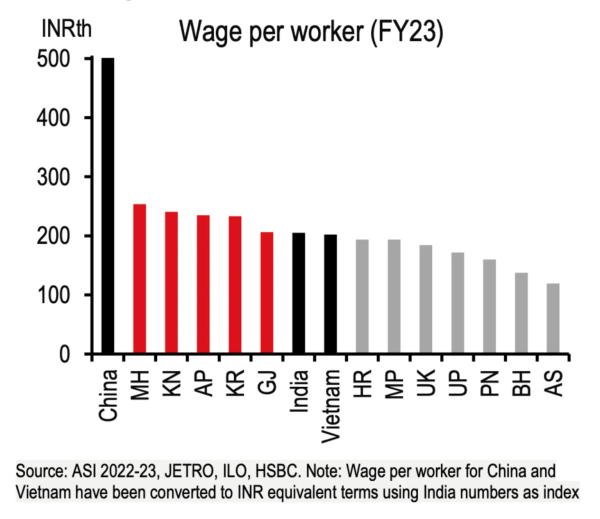
— India has always had surplus labour and, not surprisingly as a result, fairly low wage rates. But instead of these being a strength, Indian states that had surplus labour and low wage rates, have historically been the laggards in the growth story — think of Uttar Pradesh (UP) and Bihar. — On the other hand, countries with similar characteristics, say China, Vietnam and Bangladesh, have, over time, been successful in leveraging these very factors to overtake India, especially in the manufacturing sector — the one sector that has the most ability to absorb surplus labour by means of creating new jobs.
 CHART
CHART
— ‘India’s emerging states have a wage advantage (see attached chart), and if they double it up with better infrastructure, more deregulation, and easier labour laws, they can succeed in attracting some of this mid-tech FDI, and finally become a part of global supply chains,’ states HSBC Global Investment Research report.
— Several key things stand out from this chart. For one, it again underscores the point that China’s manufacturing dominance is no longer about low wage rates. China’s wages are far higher.
— The second noteworthy aspect is that Vietnam’s average wage per worker is lower than India’s average. Several Indian states that are already some of the bigger states either in total economic output or else in output per capita — such as Maharashtra, Karnataka, Andhra Pradesh and Kerala — have wage rates much higher than Vietnam.
— However — and this is the most important insight from this chart — in most states that have lagged behind in economic growth in the past (e.g. UP, Bihar and Madhya Pradesh, etc.) the wage rates are still lower than in Vietnam. As HSBC points out, with the right incentive structure in the form of easier labour laws and better infrastructure, etc., these states can script a growth story of their own.
Do You Know:
— The recently implemented four labour codes – Code of Wages (2019), Industrial Relations Code (2020), Code on Social Security (2020) and Occupational Safety, Health and Working Conditions Code (2020) – replaced 29 fragmented laws with a unified, modern framework.
— Notably, India’s old labour laws were too many, too complex, and outdated. They increased the compliance burden and discouraged businesses from hiring. Many workers, especially gig, platform, MSME, and migrant workers, had no uniform social security.
— Also, as labour is a Concurrent List subject, and while most states have finalised rules aligned with the four codes, central-level implementation was pending. This delay resulted in uneven social security coverage for workers and compliance complexity for employers operating across multiple states. Thus, the new labour codes are introduced to try to fix all this.
Other Important Articles Covering the same topic:
📍How India’s 4 labour codes aim to improve wages and worker safety
📍UPSC Issue at a Glance | Understanding India’s New 4 Labour Codes: The what, why and how
Previous year UPSC Prelims Question Covering similar theme:
(5) In India, which one of the following compiles information on industrial disputes, closures, retrenchments and lay-offs in factories employing workers? (UPSC CSE 2022)
(a) Central Statistics Office
(b) Department for Promotion of Industry and Internal Trade
(c) Labour Bureau
(d) National Technical Manpower Information System
Previous year UPSC Mains Question Covering similar theme:
Discuss the merits and demerits of the four ‘Labour Codes’ in the context of labour market reforms in India. What has been the progress so far in this regard? (UPSC CSE 2024)
Preliminary Examination: Current events of national and international importance
Mains Examination: General Studies-I: Indian culture will cover the salient aspects of Art Forms, literature and Architecture from ancient to modern times
What’s the ongoing story: From battery-operated golf carts to digital exhibits and immersive storytelling modules, Sirpur is set for a facelift as Chhattisgarh pushes for a UNESCO World Heritage tag for the 5th Century archaeological site.
Key Points to Ponder:
— What is a UNESCO World Heritage site?
— How many UNESCO World Heritage sites are in India?
— What is the process of selecting the World Heritage List?
— What is the role and function of the Archaeological Survey of India?
— What is the significance of Sirpur?
Key takeaways:
— Earlier this month, the Archaeological Survey of India (ASI) and the Sirpur Special Area Development Authority (SADA) conducted a joint inspection of the Sirpur archaeological site to advance its nomination for the UNESCO World Heritage status.
— Located two hours from Raipur, Sirpur in Mahasamund district is a 5th–12th Century archaeological site with 34 Hindu, Jain and Buddhist monuments on the banks of the Mahanadi.
— A World Heritage Site is a location of “outstanding universal value” — a place of cultural and/or natural significance so exceptional that it transcends national boundaries and is of common importance to present and future generations of humanity.
— A UNESCO tag enhances a site’s international recognition, boosting its tourism and revenue. It can also help mobilise funds and strengthen efforts to protect monuments from destruction and encroachment.
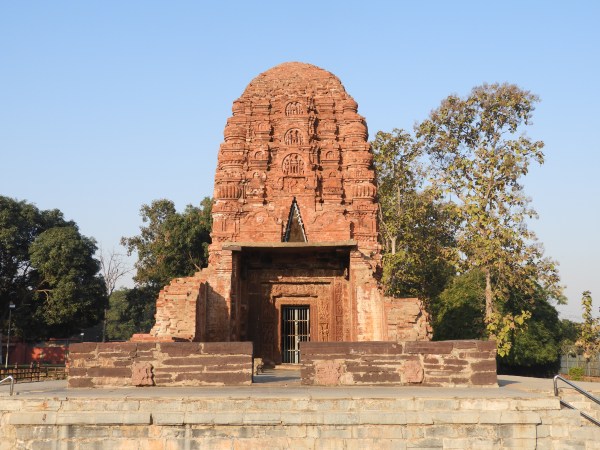 A view of the Lakshman temple in Sirpur in Chhattisgarh’s Mahasamund district. (Source: Archaeological Survey of India)
— Sirpur, also known as Shripur and Sripura, is a multi-religious urban centre first discovered in 1882 by Alexander Cunningham, a British army engineer who became the first Director-General of the Archaeological Survey of India (ASI) in 1871.
— These excavations revealed 22 Shiva temples, five Vishnu temples, 10 Buddhist viharas and three Jain viharas, with the earliest monuments dating back to the 5th Century AD.
— A fine example of early-medieval urban planning, Sirpur was the flourishing capital of Dakshina Kosala under the Panduvanshi and later Somavamshi kings. The site still has ruins of palace complexes, market structures, residential quarters, brick and stone temples, viharas, stupas, meditation cells and a water management system.
— The Lakshmana Temple (dedicated to Vishnu), one of India’s finest brick temples, was built around the 7th Century. The Surang Tila complex is especially dramatic: built on a high terrace accessed by a steep flight of 37 steps, it has multiple shrines in the panchayatana style (one main shrine surrounded by four subsidiary ones).
— The site was a major Buddhist centre with large viharas, meditation halls and excavated stupas. One monastery (Tivaradeva Mahavihara) houses a significant Buddha statue. Archaeologists have also uncovered a 6th Century market complex, showing Sirpur was both a religious and commercial hub.
— Sirpur’s location along the Mahanadi creates a sacred riverine cultural landscape with ghats and temple clusters, aligning with UNESCO’s concept of a combined work of nature and humankind, enhancing the site’s value.
Do You Know:
— The United Nations Educational, Scientific and Cultural Organisation (UNESCO) plays a vital role in safeguarding cultural and natural heritage across the globe. Its primary objective is to identify, protect, and preserve sites that hold outstanding value for humanity. It is guided by the Convention Concerning the Protection of the World Cultural and Natural Heritage, an international treaty adopted by UNESCO in 1972.
— The UNESCO World Heritage Committee meets at least once every year, generally in June/July, to deliberate the addition, removal, or modification of items on the list of World Heritage Sites. The Committee comprises of 21 members selected from amongst 196 States Parties of the 1972 World Heritage Convention
— To be added to the World Heritage List, sites must possess outstanding universal value and meet at least one of ten specific selection criteria. According to UNESCO website, the selection criteria are provided in detail in the Operational Guidelines for the Implementation of the World Heritage Convention.
Other Important Articles Covering the same topic:
Previous year UPSC Prelims Question Covering similar theme:
(6) Recently, which one of the following was included in the UNESCO’s World Heritage list? ( UPSC CSE 2009)
(a) Dilwara Temple
(b) Kalka-Shimla Railway
(c) Bhiterkanika Mangrove Area
(d) Visakhapatnam to Araku valley railway line
| ALSO IN NEWS | |
| Bharat NCAP 2.0: How the new rules could impact vehicle and pedestrian safety | The Ministry of Road Transport and Highways (MoRTH) has released a revised draft of Bharat New Car Assessment Program or Bharat NCAP for the assessment of crash safety performance of cars. The programme was first implemented in October 2023, which laid down the detailed procedure for vehicle manufacturers or importers to get their vehicles tested as per Automotive Industry Standard (AIS)-197 and get a star rating based on the crashworthiness of the car.
Bharat New Car Assessment Programme (Bharat NCAP) provides safety ratings for vehicles based on crash testing and evaluation criteria. The vehicles that perform the best get the maximum five-star rating. These guidelines are mainly for manufacturers who want to display Bharat NCAP’s rating on their cars and in marketing campaigns to establish their safety features in the retail market. |
| How will the next United Nations secretary-general be chosen? | The process to elect the next United Nations secretary-general formally kicked off on Tuesday as member states were asked to nominate candidates to take over the role from January 1, 2027.
In a joint letter, the 15-member Security Council and the president of the 193-member General Assembly invited nominations, marking the start of the race to replace Antonio Guterres as the world body’s chief administrator. The 15-member Security Council will formally recommend a candidate to the 193-member General Assembly for election as the 10th U.N. secretary-general later next year. Publicly declared candidates for the role include Chile’s former President Michelle Bachelet, the former Vice President of Costa Rica Rebeca Grynspan, and Argentinian diplomat Rafael Grossi. Ultimately, the five permanent veto-wielding council members – the United States, Russia, Britain, China and France – must agree on a candidate. |
| PRELIMS ANSWER KEY |
| 1. (d) 2. (c) 3. (b) 4. (b) 5. (c) 6. (b) |
Subscribe to our UPSC newsletter. Stay updated with the latest UPSC articles by joining our Telegram channel – IndianExpress UPSC Hub, and follow us on Instagram and X.
🚨 Click Here to read the UPSC Essentials magazine for November 2025. Share your views and suggestions in the comment box or at manas.srivastava@indianexpress.com🚨

Read UPSC Magazine