27 min read

© IE Online Media Services Pvt Ltd



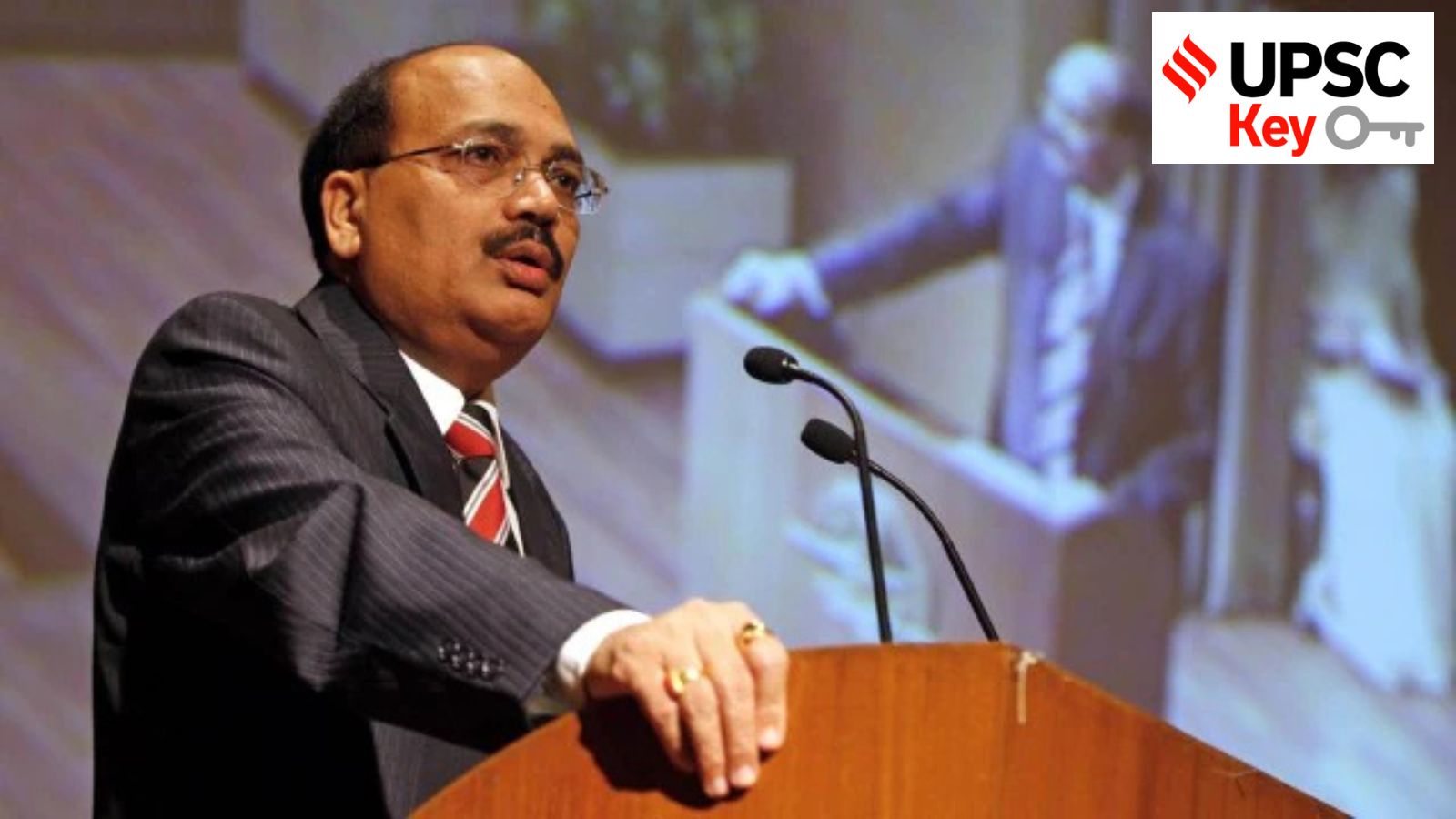 In an interview to The Indian Express, the CJI said that while the Collegium has evolved, “any system or practice, no matter how well-established, will at some stage require improvement”. Know more in our UPSC Key. (File photo)
Important topics and their relevance in UPSC CSE exam for December 14, 2025. If you missed the December 13, 2025, UPSC CSE exam key from the Indian Express, read it here.
Syllabus:
Preliminary Examination: Indian Polity and Governance – Constitution, Political System, Panchayati Raj, Public Policy, Rights Issues.
Mains Examination: General Studies-II: Constitution of India —historical underpinnings, evolution, features, amendments, significant provisions and basic structure; Separation of powers between various organs dispute redressal mechanisms and institutions.
What’s the ongoing story: Signalling continuity with reform, new Chief Justice of India Justice Surya Kant has said the Collegium system of judicial appointments is “certainly far more open and transparent today than it once was” and “there is always room to do better.”
Key Points to Ponder:
— What is the collegium system?
— Read about the Three Judges Cases.
— What are the concerns related to the collegium system?
— What are the constitutional provisions related to the appointment of judges?
— What are the various Court rulings related to the appointment of the judges?
— Read about the National Judicial Appointments Commission Act, 2014.
Key Takeaways:
— “Change is the only constant, and as society evolves, institutions must also adapt their mechanisms accordingly. The same applies to the Collegium system, which is certainly far more open and transparent today than it once was. There is, however, always room to do better,” he said.
— In an interview to The Indian Express, the CJI said that while the Collegium has evolved, “any system or practice, no matter how well-established, will at some stage require improvement”. He pointed to the introduction of in-person interactions with candidates as “a very welcome step”, adding that it allows members to “arrive at a more objective view.”
— On the Chief Justice’s role as “master of the roster”, he said the phrase is often misunderstood. While the CJI, as the seniormost judge, has administrative responsibilities, “that does not automatically imply that matters are assigned in a unilateral manner”. Decisions, he said, are taken after discussion and consultation, keeping in mind experience and availability.
— Drawing from his years as a judge of the Punjab and Haryana High Court, where he monitored cases relating to Punjab’s drug crisis, the CJI described that phase as “a true test of patience and, quite frankly, a labour of love”.
— Assigned the matter around 2015, he said he listed it regularly to ensure sustained oversight. “It wasn’t the kind of case that could be resolved through one sweeping order,” he said, adding that it required engagement with families, authorities and institutions.
— He outlined a “holistic” approach that combined criminal investigation, border strengthening, extradition of offenders, rehabilitation through de-addiction centres, and awareness among youth through curricular changes. “In that sense, the approach in this case was holistic: punitive, preventive, rehabilitative, and educational,” he said.
— On criticism directed at judges through clipped videos of court hearings, the CJI was clear that trolling should not be allowed to influence judicial conduct. “And of course, with that comes trolling, which must be ignored at all costs because it stems from a place of nescience and is not meant to be constructive,” he said. “The moment we shift our focus from our duties to what is being said on social media, justice will inevitably suffer.”
— Looking ahead, he said his focus would be on tackling pendency by strengthening systems and mediation, and on ensuring access to justice and representation. “That, to me, is fundamental,” he said.
Do You Know:
— Article 124(1) of the Constitution of India says that “there shall be a Supreme Court of India consisting of a Chief Justice of India…and…other Judges”.
— Article 124(2) says: “Every Judge of the Supreme Court shall be appointed by the President by warrant under his hand and seal after consultation with such of the Judges of the Supreme Court and of the High Courts in the States as the President may deem necessary for the purpose and shall hold office until he attains the age of sixty-five years. Provided that in the case of appointment of a Judge other than the Chief Justice, the Chief Justice of India shall always be consulted.”
— Collegium is the system of appointment of Judges of the higher judiciary, which evolved through a series of Supreme Court judgments known as “Judges Cases.”
Other Important Articles Covering the same topic:
📍Knowledge Nugget: Why should UPSC aspirants revisit ‘Three Judges Cases’?
Previous year UPSC Prelims Question Covering similar theme:
(1) Consider the following statements: (UPSC CSE 2019)
1. The motion to impeach a Judge of the Supreme Court of India cannot be rejected by the Speaker of the Lok Sabha as per the Judges (Inquiry) Act, 1968.
2. The Constitution of India defines and gives details of what constitutes incapacity and proved misbehaviour’ of the Judges of the Supreme Court of India.
3. The details of the process of impeachment of the Judges of the Supreme Court of India are given in the Judges (Inquiry) Act, 1968.
4. If the motion for the impeachment of a Judge is taken up for voting, the law requires the motion to be backed by each House of the Parliament and supported by a majority of total membership of that House and by not less than two-thirds of total members of that House present and voting.
Which of the statements given above is/are correct?
(a) 1 and 2 only
(b) 3 only
(c) 3 and 4 only
(d) 1, 3 and 4 only
Previous year UPSC Mains Question Covering similar theme:
Critically examine the Supreme Court’s judgment on ‘National Judicial Appointments Commission Act, 2014’ with reference to appointment of judges of higher judiciary in India. (UPSC CSE 2017)
Syllabus:
Preliminary Examination: History of India and Indian National Movement.
Mains Examination: General Studies-I: Modern Indian history from about the middle of the eighteenth century until the present – significant events, personalities, issues.
What’s the ongoing story: Suanshu Khurana writes- “In the days leading up to the Centre’s decision to stage a 10-hour parliamentary debate on Vande Mataram — a move perhaps heavily influenced by poll prospects in West Bengal — an ensemble of classical musicians performed the country’s national song on the day of its 150th commemoration.”
Key Points to Ponder:
— Compare Vande Mataram and Jana Gana Mana as national symbols of India.
— How did cultural symbols like Vande Mataram contribute to India’s freedom struggle?
— What is the difference between India’s National Anthem and National Song?
— What is the cultural significance of Vande Mataram?
— Who sang Vande Matram for the first time?
— What was the reason for the partition of Bengal in 1905?
— What were the aftermath of the partition of Bengal?
— Understand the historical background in which Vande Matram was written?
Key Takeaways:
— “PM Modi gave a speech right after, revisiting Jawaharlal Nehru’s decision to drop two stanzas from the original Vande Mataram by Bankim Chandra Chatterjee, framing it as an act of appeasement toward Muslim leaders, which, according to the PM, “sowed the seeds of the division of the nation”.”
— “At this point, BJP members are asking for, besides an apology from Congress and awareness of Vande Mataram, inclusion of the two paras dropped in 1937 and equal status for the national song as the anthem and the flag. The national song does have the same status; only that the anthem has legal backing as there are mandatory guidelines governing its performance.”
— “But the status of a song also depends on the inherent idea that it is still a combination of melody, lyrics and rhythm, and is to be sung and performed. The musical structure of Vande Mataram, which is set in the evening raag Desh, comes with melodic lines that rest on emotional adornments.”
— “One can hear these in Pandit Bhimsen Joshi’s voice as he sang it at the 50th anniversary of India’s Independence. The emotion was intact even when Pandit Omkarnath Thakur crooned it on All India Radio early on August 15, 1947 — India’s first day as an independent nation. Even though he chose his guru DV Paluskar’s composition in raag Kafi instead of Desh, and sang it with all the stanzas and not the truncated version, it is musically irresistible.”
— “Desh is completely unlike the bright, morning raag Bilawal with all shuddh (natural) notes, in which Rabindranath Tagore composed Jana Gana Mana. Not only does the tune structure scream alignment with its staccato metre, it also has one phrase atop another, almost like a building which has various communities living in its different homes.”
— “Just like a nation. It is balanced, even if just for 52 seconds, allowing India to stand together in attention in the same key easily. That Bilawal is also equivalent to the Western major scale gives it a universality of sound across borders and regions. It is also perhaps why it was chosen over Vande Mataram.”
— In his ‘Note to the Cabinet’, dated May 21, 1948, during discussions over national symbols, Nehru wrote, “Vande Mataram was associated with the struggle for our freedom. Hence it is bound to continue as a favourite national song which revives poignant memories,” adding that music-wise it was “plaintive, mournful and repetitive”.
Do You Know:
— Vande Mataram was partly written in Sanskrit and partly in Bengali, was composed in 1875 and included in Chattopadhyay’s novel Anandamath in 1881 during its serialisation in the magazine Bangadarshan. During the 1896 Congress session in Calcutta, Rabindranath Tagore set it to tune and sang it for the first time.
— The widespread use of the song — Vande Mataram means “Mother, I bow to you” — began only after it captured popular imagination during the movement against Lord Curzon’s Partition of Bengal of 1905. It transcended the province, with the use of Sanskrit making it relatable in large parts of the country.
— Anandamath, published as a book in 1882, tells the story of a rebellion of sanyasis against Muslim conquerors. The song appears in the novel when Mahendra, a householder, meets Bhavananda, a fighting monk, who sings the first few lines.
Other Important Articles Covering the same topic:
📍From ‘national song’ to ‘modern anthem’ – the journey of Vande Mataram
📍The making of Vande Mataram and its controversial journey thereafter
Previous year UPSC Prelims Question Covering similar theme:
(2) The Partition of Bengal made by Lord Curzon in 1905 lasted until (UPSC CSE 2014)
(a) the First World War when Indian troops were needed by the British and the partition was ended
(b) King George V abrogated Curzon’s Act at the Royal Durbar in Delhi in 1911
(c) Gandhiji launched his Civil Disobedience Movement
(d) the Partition of India in 1947 when East Bengal became East Pakistan
Syllabus:
Preliminary Examination: Current events of national and international importance.
Mains Examination: General Studies-II, III: Government Policies and Interventions, Science and Technology- developments and their applications and effects in everyday life.
What’s the ongoing story: The NDA government has cleared the Atomic Energy Bill, 2025, which is one of the key amendments being readied to overhaul a couple of overarching laws governing the country’s atomic energy sector. The cabinet clearance Friday now sets the stage for the government to move legislative amendments during the last week of the winter session in Parliament, which are aimed at tweaking the Atomic Energy Act 1962 to enable private companies to enter nuclear power plant operations in India.
Key Points to Ponder:
— What are India’s nuclear liability laws?
— Know the key highlights of Atomic Energy Bill, 2025.
— Read about the India’s nuclear power programme.
— Know about the Indo-US civil nuclear deal.
— The Civil Liability for Nuclear Damage Act, 2010 (CLNDA)-know its key features
— What are the legal barriers posed by the Atomic Energy Act and CLNDA to private and foreign participation in India’s civil nuclear sector?
— What is the Nuclear Energy Mission?
— What are Small Modular Reactors (SMR)?
Key Takeaways:
— Consequently, private players could take a minority equity exposure of up to 49 per cent in upcoming nuclear power projects, with the move also potentially setting the stage for foreign companies, in collaboration with global sovereign wealth funds, to infuse equity into these projects. Hitherto, atomic energy has been one of India’s most closed sectors.
— The legal amendments are being seen as a reform push that could help leverage the commercial potential of the Indo-US civil nuclear deal, nearly two decades after it was inked. New Delhi is also keen to package this as part of a broader trade and investment outreach with Washington DC, which could eventually culminate with a trade pact that is currently under negotiation.
— The approved Atomic Energy Bill, 2025, or the Sustainable Harnessing and Advancement of Nuclear Energy for Transforming India (SHANTI) Bill as the rebadged legislation has been named, comes amid the country’s plan to progressively add 100 gigawatt electric (GWe) of nuclear capacity by 2047, up from the current installed nuclear capacity of under 8 GWe. The US has the highest operational nuclear capacity of 100 GWe, followed by France (65 GWe) and China (58 GWe).
— For scaling up nuclear capacity, the Indian government had also announced the setting up of a Nuclear Energy Mission for the research and development of Small Modular Reactors (SMR) with an outlay of Rs 20,000 crore.
— The Centre has targeted at least 5 indigenously developed SMRs that will be operationalised by 2033. Besides private participation, the legislative amendments cleared by the Cabinet are likely to cover core nuclear activities such as exploration of atomic minerals, fuel fabrication, equipment manufacturing, and aspects of plant operations, while also involving the private sector in research and development of nuclear technologies for civil use, such as for the development of SMRs.
— The groundwork to build political consensus took time and resulted in the amendments being pushed to the winter session from the earlier target of the monsoon session. The other amendment that is expected entails an easing of the provisions in India’s nuclear liability law called the Civil Liability for Nuclear Damage Act, 2010 (CLNDA), which sought to create a mechanism for compensating victims from damages caused by a nuclear accident, and allocating liability and specifying procedures for compensation, but has subsequently been cited as an impediment by foreign equipment vendors.
— The new amendments aim to tweak and align the two domestic legislations with legal provisions globally, addressing festering investor concerns and setting the stage for an opening up of India’s civil nuclear sector.
— In the civil nuclear sector, New Delhi is now pushing SMRs – advanced nuclear reactors that have about a third of the generating capacity of most traditional nuclear power reactors but can produce a large amount of low-carbon electricity – as a technology of promise that can help in industrial decarbonisation, including a determined hard sell of the country’s ability to take something of a leadership role in the dissemination of this technology.
— These are important in offering base load power, especially for targeted applications such as data centres, that could give grid operators some degree of flexibility, especially given the imperative of inducting renewables into the grid brings with it the challenge of inducting more base load generation to balance out the vagaries of renewable power output. While thermal generation is seen as important in this regard, nuclear energy offers a more carbon-neutral base load generation option.
— Though India’s civil nuclear programme has expertise in manufacturing smaller reactor types, it is almost entirely based on its mainstay PHWR technology – based on heavy water and natural uranium. But these are increasingly out of sync with the light water reactors or LWRs (also called pressurised water reactors or PWRs) that are now the most dominant reactor type across the world. The Americans, alongside the Russians and the French, are among the leaders in LWR technology — thermal-neutron reactors that utilise normal water, as opposed to heavy water, as both its coolant and neutron moderator.
Do You Know:
— SMRs are essentially advanced small nuclear reactors that have a power capacity of 30MWe to 300 MWe (megawatt electrical) per unit. Conventional nuclear reactors, the kind which are currently installed in India and elsewhere, usually have capacities to produce 500 MW of electricity or more.
— The relatively simpler and modular design of SMRs—enabling their components to be assembled in a factory instead of being constructed on-site—lowers costs and allows flexible deployment, making them a much more attractive proposition in recent years.
— While lots of different types of SMRs are being developed, there are currently four main types, each using a different coolant to manage the extreme heat of a nuclear fission reaction — light water, high temperature gas, liquid metal, and molten salt.
— The most common type, though, are light water reactors, which are very similar to traditional nuclear power plants being built in Russia, France and the US that are all water-cooled. That makes light water SMRs much easier to design and get approved, as today’s nuclear regulations are mostly based on water-cooled reactors.
Other Important Articles Covering the same topic:
📍Knowledge Nugget: How is Nuclear Energy Mission and Small Modular Reactors relevant for UPSC Exam?
📍How India’s nuclear mission can be both ambitious and realistic
Previous year UPSC Prelims Question Covering similar theme:
(3) Consider the following countries: (UPSC CSE 2015)
1. China
2. France
3. India
4. Israel
5. Pakistan
Which among the above are Nuclear Weapons States as recognized by the Treaty on the Non-Proliferation of Nuclear Weapons, commonly known as Nuclear Non-Proliferation Treaty (NPT)?
(a) 1 and 2 only
(b) 1, 3, 4 and 5 only
(c) 2, 4 and 5 only
(d) 1, 2, 3, 4 and 5
Previous year UPSC Mains Question Covering similar theme:
With growing energy needs should India keep on expanding its nuclear energy programme? Discuss the facts and fears associated with nuclear energy. (UPSC CSE 2018)
Syllabus:
Preliminary Examination: Current events of national importance.
Mains Examination: General Studies-III: Challenges to internal security through communication networks, role of media and social networking sites in internal security challenges, basics of cyber security; money-laundering and its prevention.
What’s the ongoing story: Incidents of GPS or GNSS interference, primarily jamming and spoofing of the signals, have seen a surge in recent years, raising concerns regarding safe and efficient flight operations globally. While rather common and even expected in airspace over and around active and latent conflict zones and tense international borders, such incidents are also increasingly being witnessed in other regions.
Key Points to Ponder:
— What is GNSS?
— What is GNSS interference?
— What is the difference between GPS jamming and GPS spoofing?
— What are the threats related to GPS spoofing?
— How is the aviation sector vulnerable to cyber attacks?
— Why is the rise in GPS spoofing incidents near major Indian airports a serious concern for aviation safety?
— What steps have taken to address the growing threat of GNSS interference in civil aviation?
Key Takeaways:
— On Monday, the Ministry of Civil Aviation (MoCA) informed the Parliament that such incidents were reported in the vicinity of the Delhi airport, and reports are also being received from major other Indian airports like Mumbai, Bengaluru. Hyderabad, Chennai, Kolkata, and Amritsar.
— According to aviation sector insiders, such incidents have been on the rise in recent months in India, and the country’s largest and busiest airport in Delhi has been a significant target. November particularly saw a number of GPS spoofing incidents around the Delhi airport, it is learnt.
— India is not alone though, as GNSS interference is one of the key challenges that the global aviation industry has been grappling with over recent years in various parts of the world. While there are mitigation measures, fallbacks, and redundancies to prevent significant harm to flight safety from GPS jamming and spoofing, it is a risk that is clear and present, and also evolving.
— Spoofing and jamming of these crucial signals could potentially disrupt navigation, lead to misrouting of aircraft, and reduce the distance between aircraft. As per Europe’s aviation regulator EASA, GNSS interference has become a significant safety risk, particularly in geographical areas surrounding conflict zones and the eastern Mediterranean, West Asia, Baltic Sea, and the Arctic area, where it can increase pilots’ and air traffic controllers’ workload.
— Aircraft depend on global navigation satellite systems (GNSS) for position, navigation, and timing (PNT) information, which is key to aircraft and air traffic management operations. The American Global Positioning System (GPS) is the most popular GNSS, and the terms are often used interchangeably. But there are other GNSSs as well, like Europe’s Galileo, Russia’s GLONASS, and China’s BeiDou.
— In the context of aircraft, GNSS interference can broadly be classified into two categories—jamming and spoofing. Put simply, jamming involves overpowering GNSS receivers with strong radio interference, making the equipment GNSS-based navigation unusable for some time. While this type of interference can be accidental and unintended, or a result of natural causes like solar storms interrupting signals, a bulk of instances experienced by aircraft are deliberate.
— Spoofing is a lot more serious than jamming, or a disruption in signals. GNSS or GPS spoofing is a deliberate act that involves transmitting counterfeit lookalike signals to deceive the receiver into believing that the aircraft position or time, or both, are not what they are supposed to be. This could cause abnormal behavior by certain aircraft systems, and unwarranted warnings—like that of terrain or low altitude—being sounded in the cockpit regarding. Spoofing essentially tells the aircraft that it is where it is not supposed to be, and can create confusion in the cockpit.
— While theoretically, such interference could pose a credible threat to flight safety, pilots are adequately trained to identify the jamming or spoofing, and react calmly and methodically, essentially by cross-referencing the faulty GNSS data with independent data from other systems on the aircraft and on the ground, and air traffic control inputs. They can then switch to other navigational aids and systems that are independent of the GNSS or GPS. In some extreme cases, though, such interference has resulted in rerouting and even diversion of flights.
— As aircraft use of GNSS is subjected to increasing levels of interference, airlines and the broader aviation ecosystem are becoming increasingly dependent on conventional ground-based navigation aids (GBNAs) as a back-up to the loss of GNSS capabilities. According to IATA, these Minimum Operating Networks (MON) will be a necessary mitigation until reliable system capabilities can be developed to suitably protect against GNSS interference.
— India, too, is ensuring that MONs are being retained to counter the threat from GNSS spoofing and jamming.
Do You Know:
— NavIC, or Navigation with Indian Constellation, is an independent stand-alone navigation satellite system developed by the Indian Space Research Organisation (ISRO).
— As per the Indian Cybercrime Coordination Centre, there are several types of rackets — digital arrest, trading scam, investment scam and romance/dating scam.
— Under the provisions of section 70B of the Information Technology (IT) Act, 2000, the CERT-In is designated as the national agency for responding to cyber security incidents. The CERT-In plays a vital role in controlling cybersecurity incidents and coordinating incident response activities. It acts as the central agency for incident response, vulnerability handling, and security management in India’s cyberspace.
Other Important Articles Covering the same topic:
📍GPS ‘spoofing’ hits flights, ministry looks to locate source
📍UPSC Issue at a Glance | India’s Cybercrime Challenge : Rise and Response
Previous year UPSC Prelims Question Covering similar theme:
(4) The terms ‘WannaCry, Petya and EternalBlue’ sometimes mentioned in the news recently are related to (UPSC CSE 2018)
(a) Exoplanets
(b) Cryptocurrency
(c) Cyber attacks
(d) Mini satellites
Syllabus:
Preliminary Examination: Current events national and international importance.
Mains Examination: General Studies-II: Bilateral, regional and global groupings and agreements involving India and/or affecting India’s interests.
What’s the ongoing story: Germany will host U.S. and Ukrainian delegations over the weekend for talks on a ceasefire in Ukraine, before a summit with European leaders and President Volodymyr Zelenskiy in Berlin on Monday, a German official said.
Key Points to Ponder:
— What is the Russia-Ukraine war all about and what have been the key events?
— How was Ukraine created?
— How has been the global support for Ukraine and what peace efforts have been made so far.
— How the recent meeting between Trump and Zelenskyy can impact the ongoing Ukraine-Russia war?
— What has been India’s stand on the Russia-Ukraine war?
— Read about the European Union.
— Map work: Important places in news with reference to Russia and Ukraine.
Key Takeaways:
— A U.S. official said President Donald Trump’s envoy Steve Witkoff and son-in-law Jared Kushner were travelling to Germany for talks involving Ukrainians and Europeans.
— The choice to send Witkoff, who has led negotiations with Ukraine and Russia regarding a U.S. peace proposal, appeared to be a signal that Washington saw a chance of progress after nearly four years of war since Russia’s 2022 invasion.
— The White House had said on Thursday Trump would send an official to talks only if he felt there was enough progress to be made.
— On Monday, Merz is hosting Zelenskiy and European leaders for a summit in Berlin, the latest in a series of public shows of support for the Ukrainian leader from allies across Europe as Kyiv faces pressure from Washington to sign up to a peace plan that initially backed Moscow’s main demands.
— Britain, France and Germany have been working in the last few weeks to refine the U.S. proposals, which, in a draft disclosed last month, called for Kyiv to cede more territory, abandon its ambition to join NATO and accept limits on its armed forces.
— Merz said in a speech on Saturday that Europe had to brace for a fundamental shift in its relations with the U.S. while facing a growing threat from Russia.
— The European Union has sought to shore up Ukraine’s position by leveraging frozen Russian central bank assets to fund Kyiv’s military and civilian budget.
— Ukraine meanwhile has battled to contain Russian advances on the battlefield and the frequent bombardment of its energy and water supplies going into winter.
— The southern Black Sea port city of Odesa and the surrounding region suffered blackouts on Saturday after a large missile and drone attack on the electricity grid that left more than a million households without power, officials said.
— Turkish President Tayyip Erdogan, after a meeting with Russian President Vladimir Putin on Friday, said “peace is not far away” and that he hoped to discuss a peace plan with Trump.
Other Important Articles Covering the same topic:
📍Endgame in Ukraine: How Trump will end the war Putin started
Previous year UPSC Prelims Question Covering similar theme:
(5) Consider the following countries: (UPSC CSE 2023)
1. Bulgaria
2. Czech Republic
3. Hungary
4. Latvia
5. Lithuania
6. Romania
How many of the above-mentioned countries share a land border with Ukraine?
(a) Only two
(b) Only three
(c) Only four
(d) Only five
| ALSO IN NEWS | |
| ‘India engaged with Mexico over tariff hike’ | India is engaged with Mexico over the South American nation’s decision to unilaterally raise tariffs on a number of products to find mutually beneficial solutions, even as New Delhi reserves the right to take appropriate measures to safeguard the interests of its exporters, an official said on Saturday. These duties are announced against countries that do not have free trade agreements with Mexico, including India, China, South Korea, Thailand and Indonesia. The official said that India, in fact, was engaged with Mexico during the initial tabling of a bill in this regard. The Embassy of India in Mexico raised the issue with the Ministry of Economy on September 30, 2025, itself, seeking special concessions to shield Indian exports from the new tariffs. Further, both the countries are looking to start negotiations for a free trade agreement, and terms of reference (ToR) to initiate the talks formally are expected to be finalised soon. |
| PRELIMS ANSWER KEY |
| 1. (c) 2. (b) 3. (a) 4. (c) 5. (a) |
Subscribe to our UPSC newsletter. Stay updated with the latest UPSC articles by joining our Telegram channel – Indian Express UPSC Hub, and follow us on Instagram and X.
🚨 Click Here to read the UPSC Essentials magazine for November 2025. Share your views and suggestions in the comment box or at manas.srivastava@indianexpress.com🚨

Read UPSC Magazine