34 min read


© IE Online Media Services Pvt Ltd



 UPSC Key August 2023: Here's what you should be reading from the August 2, 2023 edition of The Indian Express (PTI Photo)
 Important topics and their relevance in UPSC CSE exam for August 2, 2023. If you missed the August 1, 2023 UPSC CSE exam key from the Indian Express, read it here
FRONT PAGE
Have serious concerns how cheetah project is managed, we in dark, foreign experts tell SC
Syllabus:
Preliminary Examination: General issues on Environmental ecology, Bio-diversity and Climate Change
Mains Examination: General Studies III: Conservation, environmental pollution and degradation, environmental impact assessment.
Key Points to Ponder:
• What’s the ongoing story- South African and Namibian experts, all members of the national cheetah project steering committee, under which 20 cheetahs have been translocated to India beginning last September, have written to the Supreme Court expressing their anguish over being kept in the dark and have raised “serious concerns” over the project’s management.
• Why South African and Namibian experts have expressed their anguish?
• Do You Know-The first set of eight cheetahs from Namibia were released into the Kuno National Park in Madhya Pradesh by Prime Minister Narendra Modi on September 17 last year and another 12 cheetahs landed from South Africa this February. Since the first two cheetahs were released in the wild on March 11, five adults and three cubs have died in Kuno. On a petition filed by the National Tiger Conservation Authority (NTCA), the Supreme Court in January 2020 had lifted the ban it imposed on the cheetah project in 2013. The court continues to monitor the project. On July 15, days after the death of male South African cheetahs Tejas and Suraj caused by radio collar injuries, South African veterinary wildlife specialist Dr Adrian Tordiffe signed a letter on behalf of his colleagues: cheetah specialist Vincent van der Merwe; and wildlife veterinarians Dr Andy Fraser and Dr Mike Toft.
• What they have said exactly?
• What is cheetah Project Steering Committee?
• Who is the chairman of cheetah Project Steering Committee?
• Why cheetahs are dying in Kuno National Park?
• What experts have said on the same?
• Expert’s Take-South African cheetah expert Adrian Tordiffe, who was involved in the translocation of the cheetahs from Namibia and South Africa, had at the time claimed to have looked at the video of the two dead cheetahs and made the suggestion that collars may be an issue. Adrian said the cheetahs in Africa were mostly used to dry weather conditions and were experiencing an Indian monsoon for the first time, causing unforeseen problems. “You must also take in stock that cheetahs are also different when it comes to resilience and susceptibility. They are not able to groom themselves as well as other animals and are not as resilient.” Mike Toft, a cheetah expert from South Africa, will be flying down to India on Tuesday and is expected to help the Kuno officials to deal with the situation. An expert in radio collars, Toft was also involved in the translocation project and has looked after some of the cheetahs at his enclosure. “In East Africa, we have similar monsoon conditions as well and face difficulty with radio collars. I have seen cases of infections breaking out in collared cheetahs, lions and dogs. There are multiple factors like the fit of the collar, long periods of a wet environment, which can cause chafing and discomfort. During the wet weather, the skin becomes thin and once it breaks, there is a risk of flies infecting the injured part, resulting in a maggot infestation. These collars are relatively large satellite tracking collars and we need to check if the collars are a contributing factor to the infection. We need to remove the collars for the monsoon and keep the cheetahs under monitoring,” Toft said. Toft also indicated the challenges in tracking cheetahs without the presence of radio collars – he said that the collars are a “necessary evil” that have to be used to monitor the animals during a translocation and have to be kept on for at least a period of six months. “We did not think of this when we were translocating the cheetahs. In Mozambique, we have wet weather conditions, but not a lot of cheetahs are collared. In this project, a large number of cheetahs are collared. It is an unforeseen problem,” he said.
• What is the Reintroduction of the cheetah in India plan?
• Cheetah in India- Background
• Extinction of Cheetah from Indian Landscape-know the reasons
• Action Plan for Introduction of Cheetah in India-Important Highlights
• Know the difference between cheetah and Leopard and African cheetah and Asiatic cheetah
• Supreme Court of India on Translocating Animals-know in detail
• Trans-continental translocation of Animals-know the Issues and Challenges
• Map Work World-South Africa, Namibia and Botswana
• Map Work India-Kuno Palpur National Park (Madhya Pradesh)
• For Your Information-Cheetahs are among the oldest of the big cat species, with its ancestors going back about 8.5 million years. It is listed as “vulnerable” by the World Conservation Union (IUCN) Red List of Threatened Species. Two subspecies, the Asiatic cheetah and the Northwest African cheetah, are listed as “critically endangered”.
Other Important Articles Covering the same topic:
📍The 360° UPSC Debate: Project Cheetah — Is it problematic, or is it too early to judge?
Violence spreads to parts of Gurgaon, CM says conspiracy
Syllabus:
Preliminary Examination: Indian Polity and Governance
Mains Examination: General Studies I: Social empowerment, communalism, regionalism & secularism.
Key Points to Ponder:
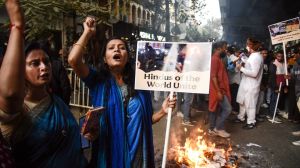
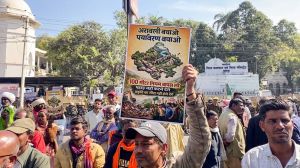
• What’s the ongoing story-Violence that erupted Monday in Nuh in Haryana’s Mewat region during a procession led by the Bajrang Dal and Vishwa Hindu Parishad spread to neighbouring Gurgaon where some shops and a mosque were torched Tuesday, and the mosque naib imam killed, taking the death toll to five. Chief Minister Manohar Lal Khattar, who held a meeting at his residence in Chandigarh, said police have taken 70 people into custody and lodged 44 FIRs. Over 1,500 Central paramilitary personnel and 30 companies of Haryana Police have been deployed in Nuh where no new incident was reported Tuesday. But incidents of arson were reported from different parts of Gurgaon throughout the day.
• Why Violence erupted in Haryana?
• What preventive measures have been taken by the administration?
• What is communalism?
• What is an example of communalism?
• What are the main features of communalism?
• What is the most common form of communalism?
• What is meant by communal violence?
• How communalism and communal violence are interconnected?
• What is the origin of the rise of communalism in India?
• What are the main causes of Communalism in India?
• What are the significant instances of Communalism seen in India?
• What is the difference between communalism and secularism?
• For Your Information-According to the NCERT textbook, in everyday language, the word ‘communalism’ refers to aggressive chauvinism based on religious identity. Chauvinism itself is an attitude that sees one’s own group as the only legitimate or worthy group, with other groups being seen – by definition – as inferior, illegitimate and opposed. Thus, to simplify further, communalism is an aggressive political ideology linked to religion. This is a peculiarly Indian, or perhaps South Asian, meaning that is different from the sense of the ordinary English word. In the English language, “communal” means something related to a community or collectivist as different from an individual. The English meaning is neutral, whereas the South Asian meaning is strongly charged. The charge may be seen as positive – if one is sympathetic to communalism – or negative, if one is opposed to it. It is important to emphasise that communalism is about politics, not about religion. Although communalists are intensely involved with religion, there is in fact no necessary relationship between personal faith and communalism. A communalist may or may not be a devout person, and devout believers may or may not be communalists. However, all communalists do believe in a political identity based on religion. The key factor is the attitude towards those who believe in other kinds of identities, including other religion-based identities. Communalists cultivate an aggressive political identity, and are prepared to condemn or attack everyone who does not share their identity. One of the characteristic features of communalism is its claim that religious identity overrides everything else. Whether one is poor or rich, whatever one’s occupation, caste or political beliefs, it is religion alone that counts. All Hindus are the same as are all Muslims, Sikhs and so on. This has the effect of constructing large and diverse groups as singular and homogenous. It is noteworthy that this is done for one’s own group as well as for others. This would obviously rule out the possibility that Hindus, Muslims and Christians who belong to Kerala, for example, may have as much or more in common with each other than with their co-religionists from Kashmir, Gujarat or Nagaland. It also denies the possibility that, for instance, landless agricultural labourers (or industrialists) may have a lot in common even if they belong to different religions and regions. Communalism is an especially important issue in India because it has been a recurrent source of tension and violence. During communal riots, people become faceless members of their respective communities. They are willing to kill, rape, and loot members of other communities in order to redeem their pride, to protect their home turf.
Other Important Articles Covering the same topic:
📍Communal violence is not new to India. But something is different now
📍The Challenges of Cultural diversity
Patna HC clears Bihar caste survey, says state action ‘perfectly valid’
Syllabus:
Preliminary Examination: Indian Polity and Governance-Constitution, Political System, Panchayati Raj, Public Policy, Rights Issues, etc.
Mains Examination: General Studies II: Welfare schemes for vulnerable sections of the population by the Centre and States and the performance of these schemes; mechanisms, laws, institutions and Bodies constituted for the protection and betterment of these vulnerable sections.
Key Points to Ponder:
• What’s the ongoing story- PATNA HIGH Court on Tuesday allowed the Bihar government to go ahead with its caste survey, taking into account its assurance on data protection in the Assembly. On May 4, the court had stayed the caste survey through an interim order, saying that the state government was not competent to conduct the caste survey.
• What exactly Patna High Court said?
• Why Bihar is conducting a caste census?
• What is meant by caste census?
• What is the purpose of caste census?
• What is the importance of caste census?
• Has a caste census ever been conducted?
• What data are the enumerators collecting?
• What kind of caste data is published in the Census?
• How often has the demand for a caste census been made?
• On the difference between “census” and “survey”, What exactly the Patna HC said?
• For Your Information-On the difference between “census” and “survey”, the HC said Black’s Law Dictionary “defines ‘census’ as an official count of people, made for the purpose of compiling social and economic data of the political subdivision to which the people belong”. ‘Census’ as defined by Webster’s New Collegiate Dictionary is the count of a population and a property evaluation in early Rome, which is almost a complete enumeration of the population, made by the Government. The Concise Law Dictionary by P Ramanatha Aiyar defines it as an official enumeration of the inhabitants of the state or country with details of sex, age, family, occupation, possession etc”. A “survey”, the court said, is defined in the Oxford Advanced Dictionary as “an investigation of the opinions and behaviour of a particular group of people”, determined by asking them pre-framed questions. Black’s Law Dictionary defines it as an appraisal and a general consideration of something and also includes the measuring of a tract of land. It has also been defined as a poll or questionnaire, especially one examining popular opinions, the HC said.
• What is the Socio Economic and Caste Census?
• Caste Census and Socio Economic and Caste Census-Compare and Contrast
Other Important Articles Covering the same topic:
📍Why we need the Bihar caste census
📍Explained: The caste census debate, and the government stand over the years
Sharp skew in national big cat map: 20% of tiger area has less than 1% of tiger population
Syllabus:
Preliminary Examination: General issues on Environmental ecology, Bio-diversity and Climate Change – that do not require subject specialization.
Main Examination: General Studies III: Conservation, environmental pollution and degradation, environmental impact assessment.
Key Points to Ponder:
• What’s the ongoing story-One-fifth of India’s tiger area spanning 16 tiger reserves harbours only 25 — or less than one per cent — of India’s 3,682 tigers, show figures in the latest All-India Tiger Estimate (AITE) report released Tuesday by the Environment Ministry. None of these 16 “bottom reserves,” — the lowest 16 by number of tigers per 100 sq km — has more than five tigers. Seven have one tiger each, and five reported none.
• All-India Tiger Estimate (AITE) report-What are the key takeaways?
• What are the reasons for abysmal tiger density?
• For Your Information-In its latest report released last week, the Management Effectiveness Evaluation (MEE) — a “comprehensive, system-wide, peer-based” assessment on 33 parameters — scored nine of these 16 bottom reserves as ‘Very Good’ (above 75%) or ‘Good’ (60-74%).
While two were notified after the MEE exercise, the remaining five reserves were scored ‘Fair’ (50-59%). “It’s worrisome that the slide in the bottom strata (in tiger count) shows no sign of reversal. One of the big achievements of Project Tiger was that we held on to India’s tiger range until this trend of losing areas set in. Losing tigers from an area may have irreversible consequences and reintroduction cannot always compensate for the genetic loss,” said conservation biologist Raghu Chundawat who has worked extensively on snow leopards and tigers.
• What is Project Tiger?
• Quick Recall-Project Tiger was launched by the Central government on April 1, 1973, in a bid to promote conservation of the tiger. The programme came at a time when India’s tiger population was rapidly dwindling. According to reports, while there were 40,000 tigers in the country at the time of the Independence, they were soon reduced to below 2,000 by 1970 due to their widespread hunting and poaching. Concerns around the issue further intensified when the same year, the International Union for Conservation of Nature declared the tiger as an endangered species. Two years later, the Indian government conducted its own tiger census and found that there were only 1,800 of them left in the country. To tackle the problem of hunting and poaching of not just tigers but also other animals and birds, then Prime Minister Indira Gandhi promulgated the Wildlife Protection Act in 1972. A year later, after a task force urged the government to create a chain of reserves dedicated to tiger preservation, Indira unveiled Project Tiger. Launched at the Jim Corbett National Park, the programme was initially started in nine tiger reserves of different States such as Assam, Bihar, Karnataka, Madhya Pradesh, Maharashtra, Odisha, Rajasthan, Uttar Pradesh and West Bengal, covering over 14,000 sq km.
• Map Work-Tiger Reserves in India, Locate top five and bottom five states (Population) Tiger Reserves in India
• Under which Prime Minister was Project Tiger launched?
• What is India’s tiger population?
• How scientists count tigers in India
• How are camera traps used to count tigers?
• What is spatial capture-recapture used to count tigers?
• What is Monitoring System for Tigers: Intensive Protection and Ecological Status (MSTrIPES)?
• National Tiger Conservation Authority is a statutory body under which Ministry?
• Who is the Chairman of National Tiger Conservation Authority?
• What is Conservation Assured Tiger Standards (CATS)?
• Know about Section 38V (1) of The Wildlife (Protection) Act, 1972
• As tigers inhabit diverse habitats across a vast geographical expanse in India, they are categorized into five major landscapes based on biogeography and interconnectivity of the habitats-What are they?
• What are the persisting threats facing the tiger across its habitats?
Other Important Articles Covering the same topic:
📍Fifty years of ‘Project Tiger’: How the programme saved Indian tigers
Previous Year Prelims Questions Covering Same theme:
📍The term ‘M-STrIPES’ is sometimes seen in the news in the context of (Please Refer GS1 2017 for Complete Question)
📍Among the following Tiger Reserves, which one has the largest area under “Critical Tiger Habitat”? (Please Refer GS1 2020 for Complete Question)
IN PARLIAMENT
Delhi services Bill tabled in LS amid Opp protests
Syllabus:
Preliminary Examination: Indian Polity and Governance
Mains Examination: General Studies II: Functions and responsibilities of the Union and the States, issues and challenges pertaining to the federal structure, devolution of powers and finances up to local levels and challenges therein
Key Points to Ponder:
• What’s the ongoing story- The Centre on Tuesday introduced the Government of National Capital Territory of Delhi (Amendment) Bill, 2023, in Lok Sabha. The Bill seeks to replace the National Capital Territory of Delhi (Amendment) Ordinance, 2023, on the control of services in Delhi. While the Opposition tore into the government, alleging that the Bill aims to take away Delhi Assembly’s powers, Union Home Minister Amit Shah, who was present in the House, said, “All objections raised are political, which do not have any Constitutional basis.”
• The Government of National Capital Territory of Delhi (Amendment) Bill, 2023-Know the key provisions
• Quick Recap- The Centre on May 19 promulgated an Ordinance extending powers to the Delhi lieutenant governor over services in the administration of the national capital – basically, the power to transfer and appoint bureaucrats posted to Delhi. The Government of National Capital Territory of Delhi (Amendment) Ordinance, 2023, is seen as a bid to nullify last week’s ruling by a Constitution bench of the Supreme Court that handed over the reins of “services” to the Delhi Government. The court had then underlined the importance of the people’s mandate in a democracy expressed through an elected government.
• “The intent of this Bill is to “override” the Supreme Court’s verdict of May 11, 2023” alleged by the opposition in parliament-What was the Supreme Court’s verdict of May 11, 2023 on the same issue?
• What did the court decide?
• What exactly Supreme Court said in its judgement?
• Do you agree that the Lt. Governor of Delhi has more power? Attest your opinion with some recent incidence.
• What is the 69th Constitutional Amendment Act of 1991?
• The Chief Minister of Delhi is appointed by the Lieutenant Governor (LG)-True or False?
• In Delhi, In the case of difference of opinion between the Lieutenant Governor (L-G) and his ministers, the Lieutenant governor’s (L-G) decision is taken into the consideration-True or False?
• Government of National Capital Territory of Delhi Act, 1991-Know the Key Provisions
• The Government of National Capital Territory of Delhi (Amendment) Act, 2021 and Government of National Capital Territory of Delhi Act, 1991-Compare and Contrast
• Know the Key Provisions of the Government of National Capital Territory of Delhi (Amendment) Act, 2021
• Articles 239AA and 239AB of the Constitution-Know in Detail
• There was Conflict between the Chief Minister of Delhi and the Lieutenant Governor (L-G)-What were the point of conflicts between the two?
• Supreme Court of India’s Verdict in Government of NCT of Delhi vs Union of India and Another in 2018 case-Know in Detail
• National Capital Territory of Delhi (NCTD) and Other Union territories-Compare and Contrast
• “NCTD, having a sui generis federal model, must be allowed to function in the domain charted for it by the Constitution”-What do you understand by this statement?
• “The Union and NCTD share a unique federal relationship. It does not mean that NCTD is subsumed in the unit of the Union merely because it is not a ‘State’,”-Comment
• The Legislative Assembly of NCTD has competence over entries in List II (state list) and List III (concurrent list) except for the expressly excluded entries of List II. The excluded entries are related to what?
• The Supreme Court also made it clear that “NCTD has legislative and executive power over services, that is, Entry 41 of List II of the Seventh Schedule.” Why did the Supreme Court have to come out with this directive?
• What Centre had contended with Entry 41 of List II of the Seventh Schedule?
• For Your Information-While the Supreme Court said that the legislative and executive power of NCTD over Entry 41 shall not extend to services related to public order, police, and land, these powers would remain with NCTD over “services such as Indian Administrative Services, or joint cadre services, which are relevant for the implementation of policies and vision of NCTD in terms of day-to-day administration of the region shall lie with NCTD”.
• “If a democratically elected government is not provided with the power to control the officers posted within its domain, then the principle underlying the triple-chain of collective responsibility would become redundant”-Elaborate further
• What is the extent of Delhi’s powers now?
• Extent of Delhi’s powers now- Article 239AA specifically excludes land, police and public order from the purview of the legislative powers of the Delhi government. The court acknowledged that these three issues can also have some overlap with “services” “The legislative and executive power of Delhi over Entry 41 (services) shall not extend over to services related to public order, police and land. However, legislative and executive power over such services such as Indian administrative services, or joint card of services, which are relevant for the implementation of policies and vision of NCT of Delhi in terms of day to day administration of the region, shall live with Delhi,” the court said.
Other Important Articles Covering the same topic:
📍The 360° UPSC Debate: Delhi Statehood Debate—Reasons For And Against
GOVT & POLITICS
Govt sets fresh target of 63 lakh loans for street vendors by year-end
Syllabus:
Preliminary Examination: Economic and Social Development-Sustainable Development, Poverty, Inclusion, Demographics, Social Sector Initiatives, etc.
Mains Examination: General Studies II: Welfare schemes for vulnerable sections of the population by the Centre and States and the performance of these schemes; mechanisms, laws, institutions and Bodies constituted for the protection and betterment of these vulnerable sections.
Key Points to Ponder:
• What’s the ongoing story- The Union Housing and Urban Affairs Ministry has set a new target for its loan scheme for street vendors — 63 lakh new loans in less than six months till December this year — after having disbursed 50 lakh loans to 39 lakh beneficiaries in the three years since the scheme’s launch in 2020.The Pradhan Mantri Street Vendors Atmanirbhar Nidhi (PM SVANidhi) was launched during the Covid-19 pandemic and the resultant lockdown to provide street vendors with small working capital loans of Rs 10,000 each. During its launch, the target was set at 50 lakh beneficiaries.
• What is PM-SVANidhi (PM Street Vendors’ AtmaNirbhar Nidhi)?
• Why PM-SVANidhi (PM Street Vendors’ AtmaNirbhar Nidhi) was launched?
• For Your Information-The scheme, which was launched as a part of the COVID-19 response measures, completed three years on June 1. According to data from the Union Ministry of Housing and Urban Affairs, of the total number of beneficiaries (36.33 lakhs) of the scheme in the country, 21.31 lakh are men and 15.02 lakh are women. The scheme also includes 219 beneficiaries of the “others” gender category. In 10 states and Union territories, almost all in the Southern and North-East region, women are the majority of the beneficiaries. Among the 10 are Andhra Pradesh (70 per cent women), Telangana (66 per cent women), Tamil Nadu (64 per cent women) and Karnataka (50 per cent women%). Kerala is an exception, but this state has been a pioneer in fostering women’s empowerment through its own programmes like the Kudumbashree which in June this year completed 25 years.
• Who are street vendors in India?
• Street Vendors in India-What data’s and statistics says?
• What are the issues and challenges faced by Street Vendors?
• Do we have any Government’s Initiatives for Street Vendors?
• How PM Street Vendor’s AtmaNirbhar Nidhi (PM SVANidhi) scheme for street vendors helped alleviate poverty?
• What are the various challenges that vendors are facing while applying for the loan?
• What is the National Association for street vendors of India?
Other Important Articles Covering the same topic:
📍Explained: How scheme for street vendors will help alleviate poverty
📍Explained: What is the PM SVANidhi scheme for street vendors, and why was it launched?
THE EDITORIAL PAGE
Syllabus:
Preliminary Examination: Current events of national and international importance.
Main Examination:
• General Studies II: Government policies and interventions for development in various sectors and issues arising out of their design and implementation.
• General Studies III: Conservation, environmental pollution and degradation, environmental impact assessment.
Key Points to Ponder:
• What’s the ongoing story- Sharachchandra Lele Writes: It is hoped that the wider public will see through the verbiage of the preamble, ignore the false drumbeat of development, national security and strategic importance, and mobilise for the long battle ahead to regain our right to govern our environments and forests in a meaningful way.
• What is Greenwashing?
• How Greenwashing Works?
• What are the examples of Greenwashing?
• Why greenwashing is a problem?
• Greenwashing refers to actions that claim to provide positive environmental benefits but don’t achieve much. With the Forest (Conservation) Amendment Bill 2023, the government is going one step further and indulging in “green-gutting” — using pro-environment language while actually undermining regulations-what author is trying to say in this paragraph?
• What is the Forest (Conservation) Amendment Bill, 2023?
• How the Forest (Conservation) Amendment Bill, 2023 is different from the Forest (Conservation) Act, 1980?
• The Forest (Conservation) Amendment Bill, 2023-What are the objectives?
• For Your Information-On March 29, the government introduced The Forest (Conservation) Amendment Bill, 2023 in Lok Sabha to make changes to The Forest (Conservation) Act, 1980. It was passed on July 27 and is now awaiting passage in the Rajya Sabha. Diversion of forests for the construction of roads, railway lines or other projects of strategic nature near India’s international borders would no longer require clearance once the bill becomes law. It exempts certain kinds of infrastructure or development projects from the need to get forest clearance, which is mandatory at present. The amendment bill also renames the parent legislation, the Forest (Conservation) Act, 1980, to Van (Sanrakshan Evam Samvardhan) Adhiniyam which translates to Forest (Conservation and Augmentation) Act. Besides being in Hindi, the new name is a reflection of a new focus on afforestation and reforestation activities with the objective of increasing India’s forest cover and fulfilling its international commitment of creating an additional carbon sink of 2.5 to 3 billion tonnes by 2030. The predominant idea of the proposed changes is to build forest carbon stock by raising plantations. The Bill also seeks to make land available for developers to meet their legal obligation towards compensatory afforestation in lieu of forest land diverted for development projects. The Bill tries to achieve both these objectives by restricting the applicability of the FC Act, and by freeing up land that is currently locked up as unrecorded forests.
• What are the concerns and issues with the Forest (Conservation) Amendment Bill, 2023?
Other Important Articles Covering the same topic:
📍Forests and national security
EXPLAINED
WHO report on tobacco control: key findings, how India fares
Syllabus:
Preliminary Examination: Indian Polity and Governance-Constitution, Political System, Panchayati Raj, Public Policy, Rights Issues, etc.
Mains Examination:
• General Studies II: Issues relating to development and management of Social Sector/Services relating to Health, Education, Human Resources.
• General Studies II: Important International institutions, agencies and fora- their structure, mandate.
Key Points to Ponder:
• What’s the ongoing story- Bengaluru finds special mention in a World Health Organisation (WHO) report on tobacco control measures released Monday. Hundreds of enforcement drives, putting up ‘No Smoking’ signs, and creating awareness about the effects of smoking and second-hand smoke resulted in a 27% reduction in smoking in public places in the city, the report said. Across the world, there are 300 million fewer smokers today, with the prevalence of smoking declining from 22.8% in 2007 to 17% in 2021.
• What is MPOWER?
• What does the report say?
• Why is it important to curb second-hand smoke?
• How does India fare?
• What do experts say?
• What is the role of World Health Organization?
• How many countries are members of World Health Organization (WHO)?
• What is the mission and vision of the World Health Organization (WHO)?
• What are the three stages of health defined by World Health Organization (WHO)?
• What are the contributions of the World Health Organization (WHO)?
• What are the issues and challenges with the World Health Organization (WHO)?
Other Important Articles Covering the same topic:
📍India tops ‘no tobacco’ labelling, says WHO. But what about second-hand smoking?
Syllabus:
Preliminary Examination: Indian Polity and Governance-Constitution, Political System, Panchayati Raj, Public Policy, Rights Issues, etc.
Mains Examination: General Studies II: Welfare schemes for vulnerable sections of the population by the Centre and States and the performance of these schemes; mechanisms, laws, institutions and Bodies constituted for the protection and betterment of these vulnerable sections.
Key Points to Ponder:
• What’s the ongoing story- The long awaited report of a commission set up to examine the sub-categorisation of Other Backward Classes (OBCs) was submitted to President Droupadi Murmu on Monday (July 31), the last working day of the commission. The four-member commission headed by Justice G Rohini, a retired Chief Justice of Delhi High Court, was appointed on October 2, 2017, and received as many as 13 extensions to its tenure.
• Why the G Rohini commission was set up?
• What is the Commission’s brief?
• What is sub-categorisation of OBCs?
• What is the need for sub-categorisation of OBCs?
• What were the terms of reference of the Rohini Commission?
• How did the work of the Commission proceed?
• Know the background-Under the provisions of Article 340 of the Constitution, the Rohini Commission was established in October 2017. It was granted 12 weeks to present its report, but since then, there have been multiple extensions (13th extension), the most recent is until January 31, 2023 to submit its report.
• When was it meant to submit its report?
• What have its findings been so far?
• What is the extent of OBC recruitment in central jobs?
Other Important Articles Covering the same topic:
WHAT IS CARBON CAPTURE AND STORAGE, CAN IT CUT EMISSIONS?
Syllabus:
Preliminary Examination: Economic and Social Development–Sustainable Development, Poverty, Inclusion, Demographics, Social Sector Initiatives, etc.
Mains Examination:
• General Studies II: Government policies and interventions for development in various sectors and issues arising out of their design and implementation.
• General Studies III: Conservation, environmental pollution and degradation, environmental impact assessment.
Key Points to Ponder:
• What’s the ongoing story-A key tool to stop climate change is costly and has for decades not worked as well as fossil fuel companies said it would. Experts say carbon capture and storage — a way to grab a planet-heating gas and lock it underground — is sorely needed to cut pollution in sectors where other clean technologies are farther behind. There are cases where capturing carbon makes a lot of sense — but we also need to push all the options to avoid CO2 in the first place, said Georg Kobiela, an expert in cleaning up industry at the environmental nonprofit Germanwatch. “Some applications can be just a fig leaf for keeping fossil fuel business models alive.”
• What is carbon capture and storage?
• For Your Information-Carbon capture and storage (CCS) is a way to catch carbon and trap it beneath the earth. It is different to carbon dioxide removal (CDR) — where carbon is sucked out of the atmosphere — although some of the technologies overlap. The key difference is that CDR brings down the level of carbon dioxide in the atmosphere, cooling the planet, while CCS in fossil fuel plants and factories prevents the gas from getting out in the first place.
In its latest review of scientific research, the Intergovernmental Panel on Climate Change (IPCC) found both options will be needed for emissions that are hard to wipe out. For chemical processes that release carbon dioxide, there are few alternatives to capturing CO2 straight away or sucking it out of the air later. Scientists see a big role for CCS in factories that make cement and fertiliser, as well as in plants that burn rubbish. They are split on whether it makes sense to use it to make steel and hydrogen, which have some greener alternatives. Most of their skepticism goes to capturing carbon when making electricity, because there are already cheaper alternatives that work better, like wind turbines and solar panels. In theory, it could play a role in gas plants as a back-up when the sun doesn’t shine and wind doesn’t blow — particularly in countries that are still building fossil fuel plants today — but it would have to quickly grow cheaper and more effective.
• How well does CCS work?
• Why is CCS controversial?
• How can CCS work better?
Other Important Articles Covering the same topic:
📍Carbon capture and storage: where should the world store CO2? It’s a moral dilemma
ECONOMY
Touching a record high, Urals volumes boost India’s Russian oil imports in July
Syllabus:
Preliminary Examination: Current events of national and international importance.
Mains Examination: General Studies II: Bilateral, regional and global groupings and agreements involving India and/or affecting India’s interests.
Key Points to Ponder:
• What’s the ongoing story-After falling sequentially in June, India’s Russian oil imports in July recovered to almost touch the all-time high level of 1.93 million barrels per day (bpd) seen in May, thanks to a jump in import volumes of Moscow’s flagship Urals crude, data shared by energy cargo tracker Vortexa showed. Going ahead, however, imports of Russian oil by Indian refiners could see some moderation due to various factors, which include export cuts by Russia and higher demand from Russian refineries, erosion in discounts offered by Moscow on its oil, and Urals breaching the G7 price cap of $60 per barrel.
• What percentage of India’s oil import is imported from Russia?
• For Your Information-In July, Russian oil imported by Indian refiners rose 5.3 per cent over June to 1.92 million bpd. Of this, Urals alone accounted for 83.3 per cent. Import of Urals crude rose 17.9 per cent sequentially in July to 1.60 million bpd. Russian oil accounted for 41.9 per cent of India’s overall oil imports of 4.58 million bpd in July, and dwarfed the cumulative volumes of at least the next four large suppliers–Iraq, Saudi Arabia, the United Arab Emirates, and the United states. Urals, which is a medium-sour crude, has been the mainstay of India’s Russian oil purchases. However, its price recently breached the price cap imposed by G7 countries and the discounts being offered by Russian oil exporters have eroded substantially, which could have a bearing on India-Russia oil trade, which has been booming since Moscow’s February 2022 invasion of Ukraine. Russia began offering deep discounts on its oil exports as major Western economies started weaning themselves off Moscow’s crude. Indian refiners lapped up the opportunity, snapping up the discounted barrels in huge quantities, resulting in Russia emerging as India’s largest source of crude. From a share of less than 2 per cent in India’s oil imports prior to the war in Ukraine, Russian crude now accounts for over 40 per cent of Delhi’s oil import pie.
• How much trade does India have with Russia?
• Why India imports more oil from Russia?
• How can India reduce its dependency on oil imports?
• What crude oil means?
• What are the types of crude oil?
• Why India is dependent on crude oil?
• Where does India import oil?
• India’s domestic crude oil and natural gas production has declined steadily-why?
• What steps have been taken by the Government of India to reduce the imports of crude oil?
• What is the difference between Open Acreage Licensing Programme (OALP), New Exploration Licensing Policy (NELP) and Hydrocarbon Exploration and Licensing Policy (HELP)?
• How high reliance on imported crude oil impacts the Indian economy?
• Do You Know-The share of high-sulphur crudes, or sour crudes, in India’s oil imports in 2022-23 rose to 77.5 per cent from 76.6 per cent a year ago. Indian refiners imported a total of 197.9 million tonnes of sour crudes during the fiscal, up from 185 million tonnes a year ago. Import volumes of low-sulphur crudes, or sweet crudes, rose marginally to 57.3 million tonnes in 2022-23 from 56.7 million tonnes in 2021-22. Sour crudes have high sulphur content, which makes the refining process complex and relatively more cost-intensive than refining sweeter grades of oil. However, sour crudes are usually cheaper than sweet crudes and newer refineries are equipped to process them. In the Indian crude basket, which represents a derived basket of the two grades as per Indian refineries’ processing of crude, the ratio of sour to sweet grades is 75.62 to 24.38.
Other Important Articles Covering the same topic:
📍Explained: The fall in crude oil prices, and its impact in India
📍The significance of rise in India’s petroleum product exports to EU
For any queries and feedback, contact priya.shukla@indianexpress.com
The Indian Express UPSC Hub is now on Telegram. Click here to join our channel and stay updated with the latest Updates.


Read UPSC Magazine