20 min read

© IE Online Media Services Pvt Ltd



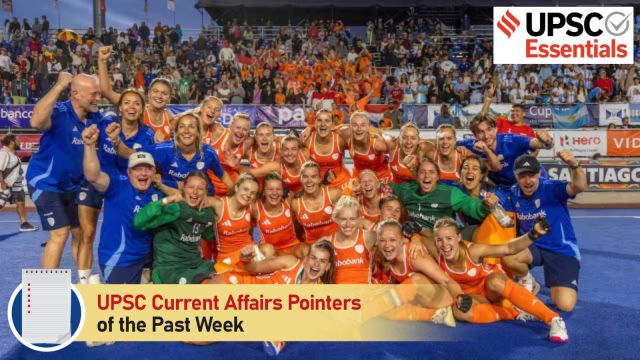 The Netherlands sealed their third consecutive world title at the FIH Hockey Women’s Junior World Cup. (FIH photo)
Every Monday, we bring you UPSC Current Affairs Pointers—a concise, exam-focused guide to help you stay ahead in your Prelims and Mains preparation.
If you missed the UPSC Current Affairs Pointers of the past week | December 1 to December 7, 2025, read it here.
(FYI: The data provided in these reports can be used to substantiate your Mains answer and create a broad understanding of the topic.)
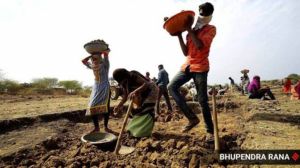
— Income inequality in India remains among the highest in the world, with top 10 per cent of earners capturing 58 per cent of national income, while bottom 50 per cent receive only 15 per cent, according to the latest World Inequality Report 2026.
— According to the report, wealth inequality is even greater in India, with the richest 10 per cent holding around 65 per cent of total wealth and the top 1 per cent holding about 40 per cent.
— The global top 10 per cent owns three-quarters of all wealth, while the bottom 50 per cent holds just 2 per cent.
— The top one-in-a-million, collectively hold 3 per cent of global wealth, more than the bottom half of the world’s adult population.
— The World Inequality Report 2026, the third report in the series after earlier 2018 and 2022 editions, is based on the work of over 200 scholars across the world, affiliated with the World Inequality Lab.
— International Anti-Corruption Day has been observed every year on December 9 since 2005 to raise awareness of corruption and of the role of the Convention in combating and preventing it.
— The theme for this year is ‘Uniting with Youth Against Corruption: Shaping Tomorrow’s Integrity.’
— The eleventh session of the Conference of the States Parties to the UN Convention against Corruption (the UN Anti-Corruption Conference) is scheduled from 15-19 December 2025 in Doha, Qatar.
(Source: United Nations)
— Human Rights Day is observed on December 10 every year. It is the day when the United Nations General Assembly adopted the Universal Declaration of Human Rights (UDHR).
— The theme for the year 2025 is ‘Human Rights, Our Everyday Essentials’.
— On December 10, 1948, the UNGA approved the Universal Declaration of Human Rights at a meeting in Paris – laying one of the foundation stones of the international order that emerged following the horrors of World War II.
— Recently, the India International Science Festival (IISF) 2025 was held at Vivekananda Hall, CSIR-National Institute of Science Communication and Policy Research (CSIR-NIScPR), Pusa Campus, New Delhi. The event was jointly organised by CSIR-NIScPR and CSIR-National Physical Laboratory (CSIR-NPL).
— The theme of the festival is “Vigyan Se Samruddhi: for Aatmanirbhar Bharat”. It aimed to celebrate and advance the spirit of science-led growth for a self-reliant and prosperous India.
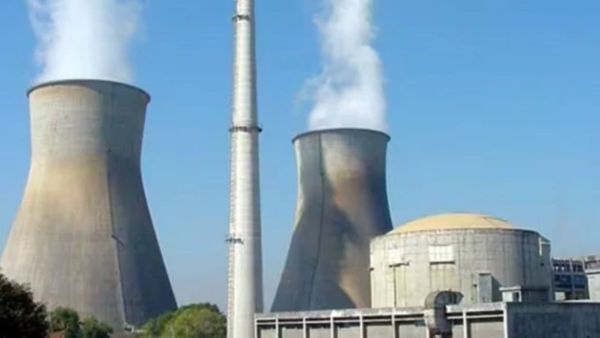 Amendments to the Atomic Energy Act, 1962 are being initiated to enable private companies, and possibly even foreign players at a later stage, to enter nuclear generation as operators (File)
— The government has cleared the Atomic Energy Bill, 2025, also known as the Sustainable Harnessing and Advancement of Nuclear Energy for Transforming India (SHANTI) Bill, which is one of the key amendments being readied to overhaul a couple of overarching laws governing the country’s atomic energy sector.
— This will enable private companies to enter nuclear power plant operations in India.
— This amendment is seen as a reform push that could help leverage the commercial potential of the Indo-US civil nuclear deal, nearly two decades after it was inked.
— This is important as the country plans to progressively add 100 gigawatts (GWe) of nuclear capacity by 2047, up from the current installed nuclear capacity of under 8 GWe.
— The Union Cabinet has approved the Viksit Bharat Shiksha Adhikshan Bill that proposes a unified regulator for higher education, replacing existing statutory bodies such as the University Grants Commission (UGC), the All India Council for Technical Education (AICTE) and the National Council for Teacher Education (NCTE).
— The legislation was earlier known as the Higher Education Commission of India (HECI) Bill. This move follows recommendations in the National Education Policy (NEP) 2020 for a single regulatory authority to streamline governance and oversight in India’s higher education sector.
— The Prime Minister, Shri Narendra Modi, has called upon citizens to take part in the ‘Your Money, Your Right’ movement, an initiative aimed at enabling people to reclaim their unclaimed deposits, insurance proceeds, dividends, and other financial assets.
— He underlined that to make the process of claiming funds simple and transparent, dedicated portals have also been created. They are:
(i) Reserve Bank of India (RBI) – UDGAM Portal for unclaimed bank deposits & balances
(ii) Insurance Regulatory and Development Authority of India (IRDAI) – Bima Bharosa Portal for unclaimed insurance policy proceeds
(iii) Securities and Exchange Board of India (SEBI) – MITRA Portal for unclaimed amounts in mutual funds
(iv) Ministry of Corporate Affairs, IEPFA Portal for Unpaid dividends & unclaimed shares
(Source: pmindia)
— Recent data has revealed that only 2.16 lakh Waqf properties out of a total of 8 lakh have been registered on the UMEED (Unified Waqf Management, Empowerment, Efficiency and Development) website, as Waqf Board officials prepare to approach tribunals after the deadline for the process.
— The worst-performing state was West Bengal, with registration of just 716 properties being completed out of 80,480 (0.89%) in the state.
— The UMEED portal was launched by the Centre under provisions of the contested Waqf (Amendment) Act with the objective of bringing all Waqf properties under a centralised digital database, with geo‑tagging and documentation. The government said it will ensure that the properties are managed and protected better and in a transparent manner.
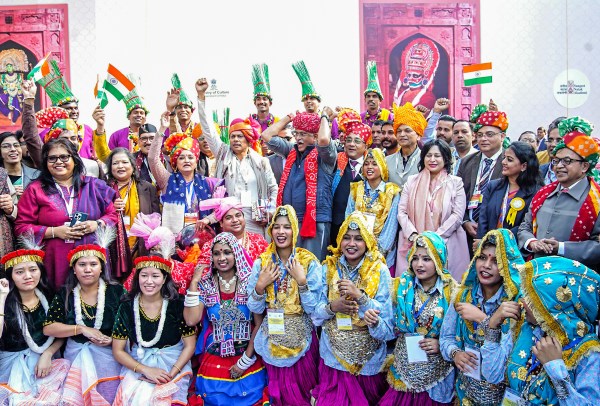 Union Minister of Culture Gajendra Singh Shekhawat in a group photograph during the UNESCO Intergovernmental Committee for the Safeguarding of Intangible Cultural Heritage’s announcement on the inscription of Diwali at Red Fort, in Delhi on Wednesday. (PIB Photo Gallery/ANI Photo)
— India is hosting the 20th session of the UNESCO Intergovernmental Committee for the Safeguarding of the Intangible Cultural Heritage (ICH) from December 8 to 13, 2025, at the historic Red Fort in New Delhi.
— This is the first time that India is hosting a session of the UNESCO panel.
— The event also coincides with the twentieth anniversary of India’s ratification of the 2003 UNESCO Convention for the Safeguarding of the Intangible Cultural Heritage.
— At this session, Deepavali, India’s spectacular festival of lights, along with 19 other cultural heritages that featured in 2025 list, is now inscribed on UNESCO Representative List of Intangible Cultural Heritage of Humanity.
— According to UNESCO, Intangible cultural heritage is “traditional, contemporary and living at the same time”, “inclusive”, “representative”, and “community-based”.
— There are a total of 16 intangible cultural heritages listed in UNESCO ICH.
List of UNESCO Representative List of Intangible Cultural Heritage of Humanity from India
| Intangible Cultural Heritage | Year of Inclusion in the UNESCO list |
| Diwali | 2025 |
| Garba of Gujarat | 2023 |
| Durga Puja in Kolkata | 2021 |
| Kumbh Mela | 2017 |
| Nowruz and Yoga | 2016 |
| Traditional brass and copper utensil-making among the Thatheras of Jandiala Guru, Punjab | 2014 |
| Sankirtana of Manipur | 2013 |
| Buddhist chanting of Ladakh | 2012 |
| Chhau dance, Kalbelia dance of Rajasthan, and Mudiyettu of Kerala | 2010 |
| Ramman festival of Garhwal | 2009 |
| Kutiyattam Sanskrit theatre, Ramlila, and Vedic chanting | 2008 |
— The second WHO Global Summit on Traditional Medicine will be convened by the WHO Global Traditional Medicine Centre (GTMC) from 17-19 December 2025 at Bharat Mandapam, New Delhi.
— The theme of the summit is “Restoring balance: The science and practice of health and well-being.”
— The WHO GTMC is a knowledge centre for traditional medicine. Its center is established in Jamnagar, Gujarat.
— In a latest series of spat between Japan and China, Japan has protested against a Chinese fighter jet, which took off from the Chinese carrier Liaoning, as it locked fire-control radar at Japanese military aircraft near Japan’s Okinawa islands.
— China’s military aircraft J-15 “intermittently” directed its radar at Japanese F-15 fighter jets in two separate incidents. However, there were no reports of any injury or damage and the Japanese airspace was not violated.
— A fire-control radar lock is considered as one of the most lethal acts as a military aircraft due to its signals which clearly signifies a potential attack, forcing the targeted aircraft to take evasive action.
 Millions of children and teenagers in Australia have lost access to their social media accounts. (File Photo)
— Australia has become the first country in the world to enforce a minimum age for social media use, requiring platforms such as Instagram, YouTube and Snap to block more than a million accounts of users below the age of 16.
— According to the new law, called the ‘Online Safety Amendment (Social Media Minimum Age) Act’, age-restricted platforms will be expected to take “reasonable” steps to find existing accounts held by under-16s, and deactivate or remove those accounts, preventing them from opening new accounts.
— In India, there is no specific law that regulates the use of social media platforms by children. However, under the Digital Personal Data Protection Act, 2023, tech companies are required to implement a mechanism for collecting “verifiable” parental consent before processing the personal data of children.
— Pax Silica is a US-led strategic initiative to build a “secure, prosperous, and innovation-driven silicon supply chain” — from critical minerals and energy inputs to advanced manufacturing, semiconductors, AI infrastructure, and logistics.
— Pax Silica Summit convenes counterparts from Japan, the Republic of Korea, Singapore, the Netherlands, the United Kingdom, Israel, the United Arab Emirates and Australia. India is not part of this.
— Measures under Pax Silica include pursuing new joint ventures and strategic co-investment opportunities, protecting sensitive technologies and critical infrastructure from undue access or control by countries of concern and building trusted technology ecosystems, including ICT systems, fibre-optic cables, data centres, foundational models and applications.
— According to the official statement, “Pax Silica” draws from the Latin pax—meaning peace, stability, and long-term prosperity, as seen in terms like Pax Americana and Pax Romana. Silica refers to the compound that is refined into silicon, one of the chemical elements foundational to the computer chips that enable artificial intelligence.
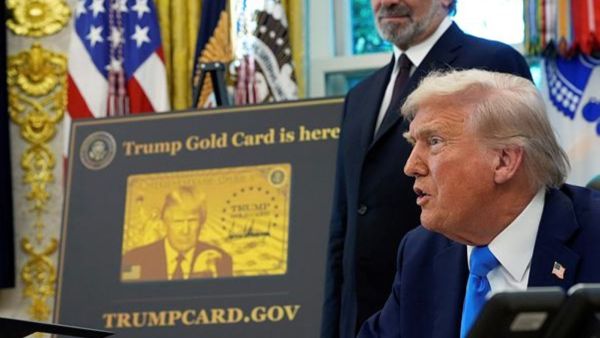 The website launched by the US government shows a gold-coloured image of Trump card, which has the face of the Republican president along with some symbols of America.
— On December 10, the Trump administration formally began accepting applications for the “Trump Gold Card”, under which the government plans to provide residency, work rights and a path to citizenship to foreigners who pay at least $1 million.
— The programme will replace the existing EB-5 visa category. The EB-5 programme, part of the Employment-Based visa ecosystem, was created by Congress in 1990 and administered by the US Citizenship and Immigration Services (USCIS). It grants permanent residency (Green Card) to foreigners who invest in American businesses. Investors must put in at least $1.05 million ($800,000 in certain specific cases), and create at least 10 jobs for Americans.
— A government project has revealed the presence of the Bengal Tiger at an altitude of 3,010 metres in Bageshwar district’s Sunderdhunga glacier valley. A camera trap captured the image of a tiger moving through dense subalpine forest.
— Although the research was undertaken to study the snow leopard, a tiger has now been captured, posing questions over the movement of the animal from the terai region to the hill district.
— Bengal Tiger has vibrant orange fur and dark stripes because of a distinctive genetic mutation.
| Facts about the Tiger
📍Scientific Name: Panthera tigris 📍Wildlife Protection Act (WPA), 1972 status: Schedule I. 📍IUCN Red List status: Endangered. 📍CITES status: Appendix I. 📍Habitats: Tropical rainforests, evergreen forests, temperate forests, mangrove swamps, grasslands, and savannas. 📍India’s Habitat: Shivalik-Gangetic plains, Central India and Eastern Ghats, Western Ghats, North Eastern Hills & Brahmaputra Flood Plains and Sundarbans |
— Siliserh Lake in Rajasthan and Kopra Jalashay in Chhattisgarh have recently been designated as Ramsar Sites, taking the total Ramsar sites in India to 96.
— Kopra Jalashay is the first Ramsar site of Chhattisgarh. According to the IUCN website, “the reservoir is located in the upper catchments of the River Mahanadi. The wetland supports more than 60 migratory bird species, which rely on it for nesting, feeding, and as a stopover site. Notable species include the vulnerable greater spotted eagle (Aquila clanga) and the endangered Egyptian vulture (Neophron percnopterus)”.
— Siliserh Lake in Rajasthan is a human-made wetland within the buffer zone of Sariska Tiger Reserve. It is in a semi-arid zone, and the Site serves as an important water source for diverse species of the region.
(Source: IUCN)
— A manufacturing modification to a key component of the ALH Dhruv fleet will soon be implemented. This is after the Defect Investigation Committee probing the crash on January 5 that killed three personnel found the need for this specific modification.
— The committee has recommended a manufacturing process improvement of the Non-Rotating Swashplate Bearing (NRSB) for the choppers with the Navy and Coast Guard to improve its fatigue life.
— These helicopters operate in corrosive saline environments and have to deal with the mechanical stress of deck landings.
— The Dhruv, an indigenously designed and developed ALH, is a twin-engine, multi-role, multi-mission new-generation helicopter in the 5.5 tonne weight class.
— According to the HAL website, a total of 345 helicopters were produced until June 2024 including 313 for the Indian Armed Forces. The choppers together have clocked over four lakh flying hours.
— Union Minister Sarbananda Sonowal has flagged off the commercial operation of India’s first indigenous hydrogen fuel-cell passenger vessel at Namo Ghat in Varanasi.
— The vessel is the first in India to demonstrate hydrogen fuel-cell propulsion in a maritime setting and features fully indigenous technology. It operates on a Low Temperature Proton Exchange Membrane (LT-PEM) fuel cell system that converts stored hydrogen into electricity, releasing only water as a byproduct.
— Scientists from Kolkata-based Bose Institute, an autonomous institute of the Department of Science and Technology (DST), have designed GlowCas9, a bioluminescent version of Cas9 that glows inside cells, by fusing Cas9 with a split nano-luciferase enzyme derived from deep-sea shrimp proteins.
— It allows real-time observation of genome editing inside living cells. It pioneers the emerging field of theratracking or visualizing molecular gene therapy in motion.
(Source: dst)
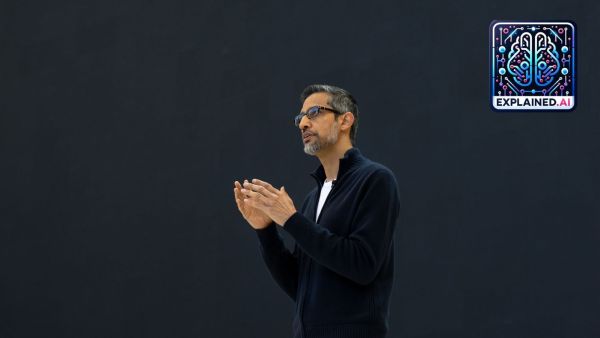 Google plans to launch two prototype satellites as part of a learning mission in partnership with Planet Labs, an Earth imaging company, by early 2027. (NYT)
— Google CEO Sundar Pichai announced that the company has begun work on a long-term research initiative, Project Suncatcher, aiming to start putting solar-powered data centres into space by 2027.
— Project Suncatcher will equip solar-powered satellite constellations with Tensor Processing Units (Google’s patented chip capable of high-volume, low-precision computation) and optical links that may scale machine learning computations in space.
(Just FYI: UPSC has consistently included questions on health and diseases in its examinations over the years. For instance, in 2014, a question about the Ebola virus appeared in the Prelims, and in 2017, a question about the Zika virus was featured. Therefore, it is crucial to stay updated on diseases that are currently in the news.)
— Scientists have, for the first time, captured real-time footage of influenza viruses “surfing” their way into human cells, a breakthrough that could reshape understanding of how flu infections begin.
— Scientists found that the cell does not simply wait passively for the virus. In fact, it seems to reach out.
— Before entering, the flu virus latches onto specific molecules on the cell’s membrane and glides across the surface, almost like surfing, until it reaches an area densely packed with receptors. These clustered sites provide the smoothest entry point.
— Once the virus binds there, the cell begins shaping a small pit beneath it. A protein called clathrin strengthens and deepens this indentation. As the pocket expands, it envelopes the virus, forming a vesicle that the cell pulls inward. Once inside, the outer coating dissolves, and the virus is set free to begin infection.
(Just FYI: Noting historical personalities’ anniversaries aids UPSC prep. UPSC often includes such personalities in questions, so revisiting their lives refreshes your static syllabus.)
— Artist Nnena Kalu has become the first artist with a learning disability to win the acclaimed Turner Prize.
— Kalu, who is autistic with limited verbal communication, won the prize for her cocoon-like sculptures, which she makes by twisting, swirling and knotting found fabric and VHS tape.
— Established in 1984 and named after English painter JMW Turner, the Turner Prize is an annual recognition awarded to a British artist — an artist working primarily in Britain or an artist born in Britain working globally.
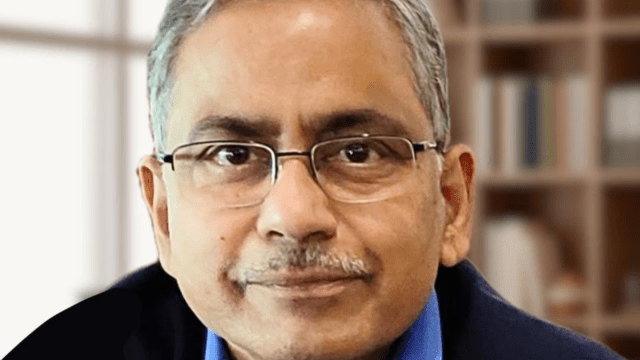 Dr Kishore M Paknikar has been appointed as one of the first Prime Minister Professors under the ANRF initiative and will be based at COEP Technological University for five years. (Express Photo)
— Renowned scientist Dr Kishore M Paknikar, former Director of the Agharkar Research Institute (ARI), Pune, and Distinguished Visiting Professor at IIT Bombay, has been selected as one of the first recipients of the Prime Minister Professorship instituted by the Anusandhan National Research Foundation (ANRF), Government of India.
— He will be hosted at COEP Technological University, Pune, for a period of five years .
— The Prime Minister Professorship is a new national initiative aimed at strengthening India’s research ecosystem by placing highly experienced scientists in universities that have strong teaching foundations but need sustained research leadership.
— The Prime Minister Professorship will provide a fellowship of Rs. 2,50,000/- per month, along with a research grant of Rs. 24,00,000/ per annum and an overhead of Rs. 1,00,000/- per annum, for a duration of five years.
(Just FYI: The location of the place is important, considering that UPSC has asked several questions about places that were in the news, such as Aleppo and Kirkuk, in the 2018 UPSC Prelims. The best way to remember them is to plot them on a world map.)
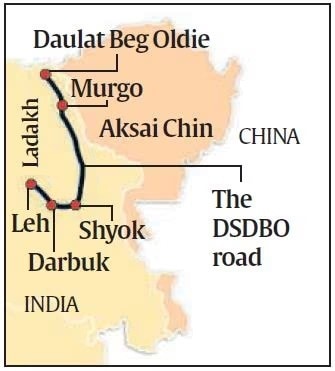 DSDBO road.
— Recently, Defence Minister Rajnath Singh has inaugurated 125 the Shyok Tunnel on the Durbuk-Shyok-Daulat Beg Oldie (DS-DBO) Road that runs along the Line of Actual Control (LAC) in eastern Ladakh.
— Shyok Tunnel is a 920-metre cut-and-cover tunnel on the 255 km long DS-DBO road, which is the only operational road connecting Durbuk to the Depsang Plains and DBO in the north. DBO hosts one of the world’s highest operational airfields, which is a key strategic air infrastructure for India.
— The Shyok Tunnel is of key strategic significance as it would provide all-weather connectivity to areas close to the LAC; it would particularly help in the quick mobilisation and redeployment of troops when needed.
— The DS-DBO road is one of the two roads that is aimed at connecting the lower region of eastern Ladakh to DBO. The Shyok tunnel has been built on this road.
(Just FYI: With the unpredictability of the UPSC examinations and questions like the ICC World Test Championship question 2021, you can’t be sure of anything. It is wise to know what it is and not go into too much detail.)
— Germany beats Spain to win the FIH Junior World Cup 2025. This is their eighth title win. The events were held in Chennai and Madurai.
— The Indian Hockey team won the Bronze medal after defeating Argentina.
— The Netherlands sealed their third consecutive world title at the FIH Hockey Women’s Junior World Cup, triumphing in Santiago, Chile, after defeating Argentina in the final, to reaffirm their historical dominance in the category.
— The Dutch side reached a record sixth world title and completed a third consecutive crown following their triumphs in 2022, 2023, and now 2025.
— Belgium secure the bronze medal, following a convincing 5-1 victory over China in the third-place play-off.
(Note: The best way to remember facts for UPSC and other competitive exams is to recall them through MCQs. Try to solve the following questions on your own.)
(1) Consider the following Intangible heritage:
1. Yoga
2. Chhath Puja
3. Diwali
4. Garba
Which of the above are included in the UNESCO List of Intangible Cultural Heritage of Humanity?
(a) 1 and 2 only
(b) 2, 3 and 4 only
(c) 1, 3 and 4 only
(d) 3 and 4 only
(2) Consider the following pairs:
| Wetland/Lake | Location |
| 1. Hokera Wetland | : Punjab |
| 2. Kopra Jalashay | : Rajasthan |
| 3. Rudrasagar Lake | : Tripura |
| 4. Siliserh Lake | : Chhattisgarh |
How many pairs given above are correctly matched?
(a) Only one pair
(b) Only two pairs
(c) Only three pairs
(d) All four pairs
| Prelims Answer Key |
| 1. (c) 2. (a) |
For your suggestions and feedback, write to khushboo.kumari@indianexpress.com
Subscribe to our UPSC newsletter. Stay updated with the latest UPSC articles by joining our Telegram channel – IndianExpress UPSC Hub, and follow us on Instagram and X.
🚨 Click Here to read the UPSC Essentials magazine for November 2025. Share your views and suggestions in the comment box or at manas.srivastava@indianexpress.com🚨

Read UPSC Magazine