3 min read


© IE Online Media Services Pvt Ltd



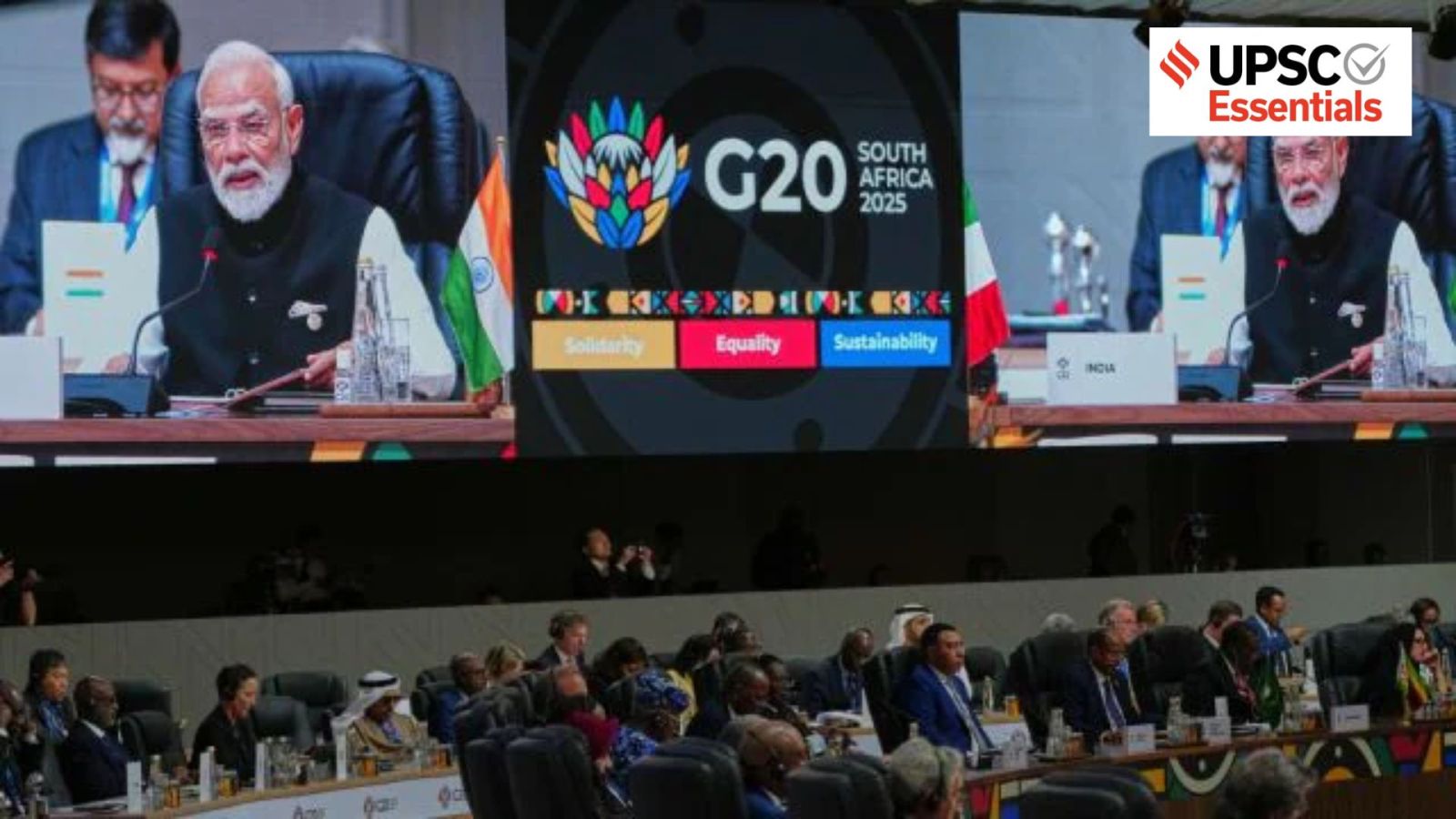 Delegates listen to Indian Prime Minister Narendra Modi address the plenary session of the G20 leaders' summit in Johannesburg, South Africa, Saturday, Nov. 22, 2025. AP/PTI
This year’s G20 summit, held under the presidency of South Africa, has largely been seen as a rare victory for multilateralism. Notwithstanding the boycott and objections by the US, the G20 leaders adopted the summit declaration.
But how does the G20 declaration, ignoring US President Donald Trump’s warning and speculation about its future, reaffirm the idea of multilateralism? What exactly is multilateralism, and how does it compare to bilateralism and unilateralism?
In international relations, multilateralism is commonly used for any form of cooperation among states. The idea gained traction after WWI and was central to the formation of the League of Nations (1920) and the United Nations (1945).
Thus, multilateralism constitutes a core element of the Liberal International Order or rules-based international order premised on liberal values like democracy, open market and shared rules. It stands in contrast to the realist tradition, where international order is defined as anarchic.
International relations scholar Robert O Keohane defined multilateralism as “the practice of co-ordinating national policies in groups of three or more states, through ad hoc arrangements or by means of institutions”. Other scholars like John Gerard Ruggie underlined the significance of “generalised principles” that coordinate relations among three or more states.
Thus, the idea of multilateralism is usually employed to refer to the interactions among states within institutionalised frameworks of cooperation such as international rules/law or the United Nations system. In other words, while working together through international organisations (like the United Nations, World Trade Organisation), states abide by the rules/laws of international politics to propose common solutions to shared problems.
The growing integration of the world that followed the end of the Cold War sparked renewed interest in multilateralism. As a result, countries turned to international cooperation through multilateral institutions to address global economic and political issues, such as trade, investment, climate change, conflicts, migration, etc.
While such issues require international cooperation and solutions, multilateralism now appears to have reached a dead end. It is evident in the impasse created by great-power rivalries, de-globalisation, and populist nationalism, to name a few.
It underscores why countries like India have emphasised the need for multilateral reforms. At the same time, the G20 declaration addressing issues like climate change, debt sustainability, and just energy transitions reaffirmed the belief of leaders in multilateralism.
It stands in contrast with the idea of bilateralism and unilateralism. While bilateralism concerns relations or policies of joint action between two parties, unilateralism involves states acting independently, often promoting their national interests. US President Trump’s reciprocal tariff can be seen as an example of unilateralism.
We would love to hear what you think about this new initiative. Send your comments at ashiya.parveen@indianexpress.com.
Click Here to read the UPSC Essentials magazine for November 2025. Subscribe to our UPSC newsletter and stay updated with the news cues from the past week.
Stay updated with the latest UPSC articles by joining our Telegram channel – IndianExpress UPSC Hub, and follow us on Instagram and X.

Read UPSC Magazine