2 min read
© IE Online Media Services Pvt Ltd



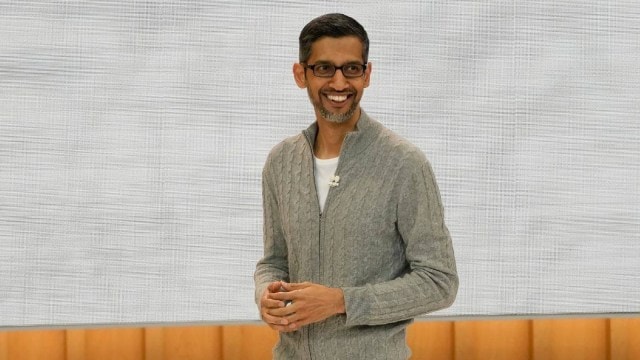 Google CEO Sundar Pichai's favorite Indian food revealed! (AP Photo/Jeff Chiu)
Despite facing headwinds around generative AI, Google CEO Sundar Pichai remains bullish on the transformative potential of the technology. In a recent talk at Stanford, Pichai shared insights into how he aims to foster a culture of risk-taking and innovation.
For Pichai, staying ahead of startups trying to disrupt Google’s businesses is an ever-present concern. “Honestly, it’s a question which has always kept me up at night through the years,” he admitted. While scale can provide advantages, Pichai recognises that “you’re always susceptible to someone in a garage with a better idea.”
Maintaining an entrepreneurial mindset at a company of over 180,000 employees is no easy feat. Pichai emphasised the need to encourage ambitious risk-taking initiatives and reward effort over just outcomes. “It’s easy to think you should reward outcomes. But then people start gaming it, right? People take conservative things in which you will get a good outcome.”
Pichai pointed to Google Glass as an example of the company’s willingness to experiment in the past. “We recently said, we went back to a notion we had in early Google of Google Labs…How can you put out something in the easy way, the lighter weight way? How do you allow people to prototype more easily internally and get it out to people?”
Looking ahead, Pichai is particularly excited about two key AI advances. First, the multimodal nature of Google’s latest large language model Gemini, with its ability to process different data types like video and text. “The ability to process huge amounts of information in any type of modality on the input side and give it on the output side, I think it’s mind blowing,” Pichai stated.
Second, Pichai highlighted the power of chaining AI models together to tackle complex workflows beyond just information retrieval. “Where today you’re using the LLMs as just an information-seeking thing, but chaining them together in a way that you can kind of tackle workflows, that’s going to be extraordinarily powerful,” he explained.