‘GPU and graphics have been part of our long-term strategy’: Intel
In an interview with indianexpress.com, Akshay Kamath, Director - Client Sales, Intel India, discussed why the company decided to develop dedicated GPUs and what it means for the industry.
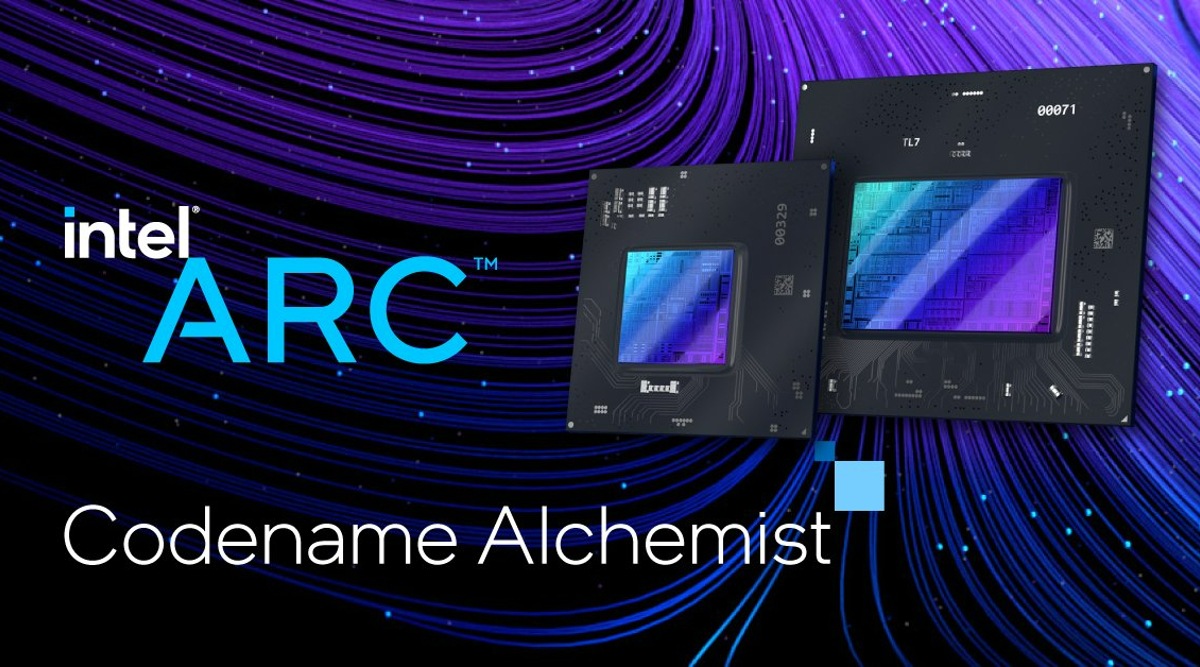
Intel’s Arc-based Alchemist GPUs will be available in both desktops and notebooks in early 2022. (Image credit: Intel)
Intel recently announced its entry into the high-end graphics card market to better compete with the likes of Nvidia and AMD with its Arc Alchemist line of GPUs. The powerhouse chip maker said that the Arc line would span several generations of hardware targeting gamers and content creators, coupled with its software and services for high-performance graphics. Its new generation of gaming GPUs based on its Xe-HPG architecture will start shipping in consumer graphics cards for laptops and desktops by the first quarter of 2022.
In an interview with indianexpress.com, Akshay Kamath, Director – Client Sales, Intel India, discussed why the company decided to develop dedicated GPUs and what it means for the industry. Edited excerpts:
You’ve Read Your Free Stories For Now
Sign up and keep reading more stories that matter to you.
For the first time, Intel will be directly taking on AMD and NVIDIA in the dedicated GPU segment. Why did it take you so much time to build these graphics cards and why now?
Akshay: We have been in the graphics space for quite some time because we have been developing integrated graphics for quite some time as part of our CPU roadmaps and platforms. What we also intend to do is leverage our rich legacy in PC gaming and esports to give choice in the market. The idea here is to give some really smooth, frictionless gaming and content creation experiences on the GPU side and hopefully provide some greater choice in terms of the hardware as well to the software developer community out there.
I think what we are doing is in addition to the architecture strengths that we bring, we are also taking a very software forward approach with Xe architecture. It is being developed in very close collaboration with developers. We are driving a very close alignment with all the industry standards. Whether it is the Microsoft DirectX12 Ultimate or the latest game engines like Unreal Engine 5, we are working with a variety of game developers. We work very closely with these folks to ensure the game engines, the corresponding game visual effects, as well as different technologies are optimised across both the CPU and GPU. That’s a strength that we truly bring to the table. But I think, with that in mind, the legacy we have in PC gaming, the architecture strength that we bring from the graphics side, as well as the software first approach that we are taking here, is something truly unique that we will bring to the market from the GPU side as well.
So last year, Xe LP Graphics in Tiger Lake was first introduced. Do you think it was a precursor to what was about to come? Can you give an overview of what the strategy is all about?
Akshay: Intel has developed the Xe architecture which has been designed to be a fully scalable graphics architecture to serve many markets and many product segments. Xe architecture spans the entire spectrum of GPUs, right from the low-power integrated graphics to entry-level discrete graphics to the high-end gaming and performance graphics, as well as data centre graphics for HPC. So, what we launched last year with our 11th Gen Tiger Lake family was the Iris Xe graphics based on the Xe LP architecture, which is the low-power architecture. Now, the high-performance graphics are called Xe HPG, and then the graphics that are optimised for the HPC and the AI segment, that’s our Xe HPC line. It’s a new discrete graphics microarchitecture that is specifically designed to scale to enthusiast-class performance for both gaming as well as creative workloads.
Story continues below this ad
These graphics cards will be launched in the market next year. The announcement has been made in the midst of a semiconductor shortage, when it’s difficult to get graphics cards. What would be the impact of Intel in the market in these crucial times?
Akshay: Intel’s IDM 2.0 strategy offers us the flexibility and capability to explore different options and use the best process technology for each architecture. So, for the GPU that we are bringing to market on the Xe HPG architecture, which is Alchemist in Q1 of 2022, there is a strong collaboration with TSMC. That’s a great example of how our IDM2.0 strategy is going to work. We are working closely with TSMC to ensure a robust supply chain.
Akshay Kamath, Director of PC Client Sales, Intel India.
Right now, consumers have a lot of options to choose from, in terms of graphics cards. So, is there any space for a new player in the market?
Akshay: Games are getting more complex. There are now games that have more and more advanced simulations. There are a lot of NPC characters in the game and all of these NPC characters, the AI that runs them, is getting more and more complex and intelligent. 4K graphics is becoming more and more mainstream now, ray tracing is increasingly growing in popularity and even technologies that we are looking at, like variable-rate shading, all of these things, I think there is the right opportunity for a player like Intel to come in and provide technologies that can ensure smooth and consistent gameplay.
Story continues below this ad
What would be the impact of this foray into the GPU market on Intel’s overall strategy?
Akshay: GPU and graphics have been part of our strategy for quite some time. We have always been very clear about our intent to focus from the lowest, low-power graphics all the way to the HPC side of things. I think it’s been very clear that we intend to participate in all these areas.
But do you think it’s very hard to break into the GPU market?
Akshay: The way the current discrete GPU market dynamics are today, bringing to bear the strength that Intel has, these are proven strengths in terms of technology and the sheer scale that we bring to the table, we believe that the discrete GPU market is ripe right now, for market disruption and some much-needed competition. So, from our perspective, it is the right time to get into the GPU market.
What are your insights into the gaming market and how Arc fits into this?
Akshay: At a very high level, we have seen gaming grow substantially, not just worldwide but in India as well. One of the things we have seen is, over the last 4-5 years, gaming, especially the PC gaming market in India has been growing exponentially. What we have also seen is that after the pandemic hit last year, the use cases for gaming and the number of people who have taken to PC gaming has increased even further. That right now is reflecting in the sheer demand that we see for gaming desktops, gaming laptops, as well as discrete GPUs, and we believe that these trends are here to stay. So, even looking into the future, next year onwards, we believe that demand for gaming products, especially PC gaming products, is going to be pretty robust.
So Intel wants to break the duopoly of AMD and Nvidia in the GPU market?
Akshay: We believe that we can make a difference in terms of GPU technology out there… we have the right architecture, we have the right solutions, we have an extensive legacy from the CPU side, and working with the software. I think we can bring something truly differentiated to the table. We see the opportunity and we are here to make sure that we bring to consumers some really delightful gaming and content creation experiences.
Anuj Bhatia is a seasoned personal technology writer at indianexpress.com with a career spanning over a decade. Active in the domain since 2011, he has established himself as a distinct voice in tech journalism, specializing in long-form narratives that bridge the gap between complex innovation and consumer lifestyle.
Experience & Career: Anuj has been a key contributor to The Indian Express since late 2016. Prior to his current tenure, he served as a Senior Tech Writer at My Mobile magazine and held a role as a reviewer and tech writer at Gizbot. His professional trajectory reflects a rigorous commitment to technology reporting, backed by a postgraduate degree from Banaras Hindu University.
Expertise & Focus Areas: Anuj’s reporting covers the spectrum of personal technology, characterized by a unique blend of modern analysis and historical context. His key focus areas include:
Core Technology: Comprehensive coverage of smartphones, personal computers, apps, and lifestyle tech.
Deep-Dive Narratives: Specializes in composing longer-form feature articles and explainers that explore the intersection of history, technology, and popular culture.
Global & Local Scope: Reports extensively on major international product launches from industry titans like Apple and Google, while simultaneously covering the ecosystem of indie and home-grown tech startups.
Niche Interests: A dedicated focus on vintage technology and retro gaming, offering readers a nostalgic yet analytical perspective on the evolution of tech.
Authoritativeness & Trust
Anuj is a trusted voice in the industry, recognized for his ability to de-jargonize trending topics and provide context to rapid technological advancements. His authority is reinforced by his on-ground presence at major international tech conferences and his nuanced approach to product reviews. By balancing coverage of the world's most valuable tech brands with emerging startups, he offers a holistic and objective view of the global technology landscape.
Find all stories by Anuj Bhatia here.
You can find Anuj on Linkedin. ... Read More