


© IE Online Media Services Pvt Ltd
Tags:


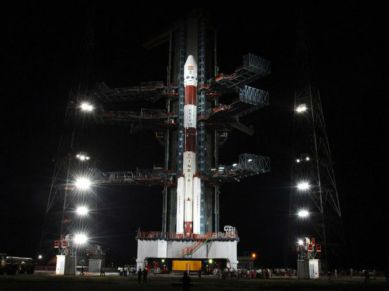
On this day eight years ago (October 22, 2008), ISRO launched its first lunar probe atop a PSLV rocket – Chandrayaan 1. Chandrayaan 1 was India’s first mission to the moon and included an orbiter and an impactor probe. Aside from India becoming the fourth nation to place its flag on the moon, the biggest achievement of the mission was the discovery of widespread presence of water molecules in lunar soil.
The Chandrayaan 1 mission was supposed to last two years, but scientists lost communication after just 312 days of operation. Even so, 95 per cent of the missions primary goals were achieved before scientists lost touch with the spacecraft.


On November 14 2008, the Moon Impact Probe (MIP) disconnected itself from the orbiter and impacted on the lunar surface near the south pole of the Moon. It was through the data gathered by the MIP that scientists were able to confirm the presence of water in the Moon’s soil.
India is already working on a second mission to the moon aptly called the Chandrayaan-2. This time however, the mission includes an orbiter, a lander and a rover that are all being developed in India. The rover will be able to traverse across the lunar surface collecting rock and soil samples for on-site chemical analysis. Chandrayaan 2 is expected to launch onboard ISRO’s GSLV launch vehicle in 2018.
Following the success of its Mars Orbiter Mission, ISRO is also working on Mangalyaan 2 – India’s second interplanetary mission to Mars. The mission is planned for launch in 2020.


