2 min read
© IE Online Media Services Pvt Ltd



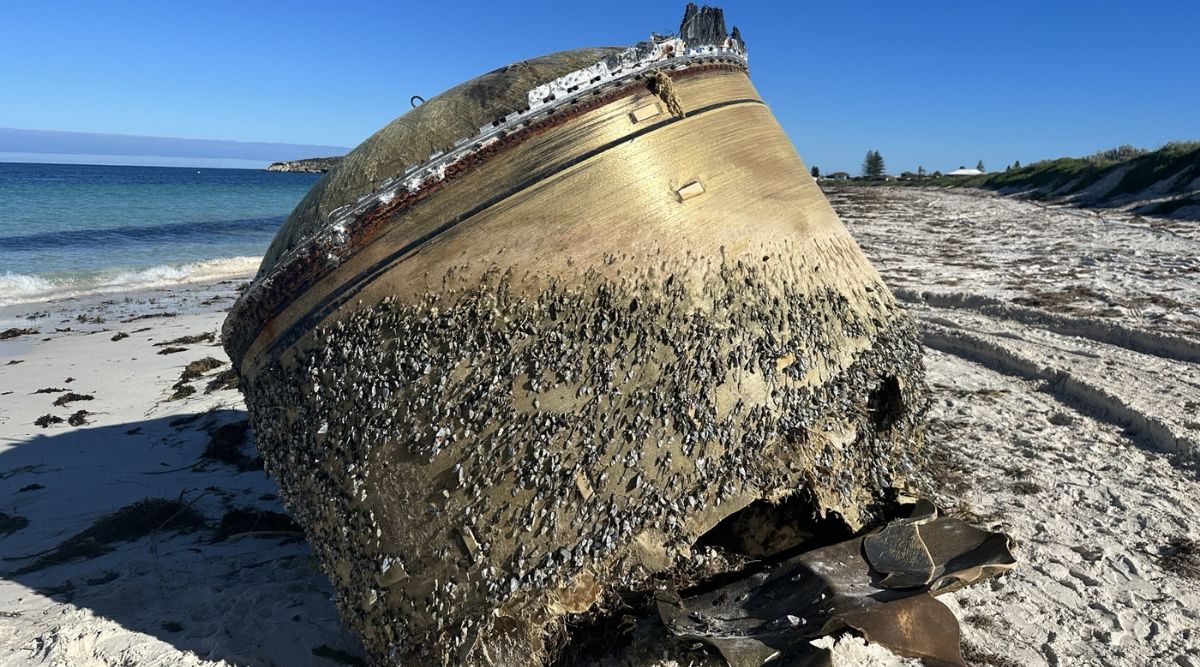 This could be part of a PSLV rocket launched two months ago. (Australian Space Agency via Twitter)
 Around the middle of July, a massive metal object washed up on a beach near Jurien Bay in Western Australia. It was surmised at the time that the massive copper cylinder was part of some country’s rocket launch vehicle but the Australian Space Agency on Monday confirmed that it was most likely debris from a used third stage of the Indian Space Research Organisation’s (Isro) Polar Satellite Launch Vehicle (PSLV).
The debris is in storage and the Australian Space Agency is working with ISRO to determine the next steps, considering both countries’ obligations under the United Nations space treaties.
We have concluded the object located on a beach near Jurien Bay in Western Australia is most likely debris from an expended third-stage of a Polar Satellite Launch Vehicle (PSLV).
The PSLV is a medium-lift launch vehicle operated by @isro.
[More in comments] pic.twitter.com/ivF9Je1Qqy
— Australian Space Agency (@AusSpaceAgency) July 31, 2023
An Isro official said the object is most likely an unburnt part of a PSLV rocket that launched a navigation satellite for the IRNSS constellation two months ago. “That satellite was launched in the southward direction. It is possible that one of the parts of the rocket did not burn completely while dropping back into the atmosphere, and fell into the ocean. It could later have been swept towards the Australian shore,” said the official.
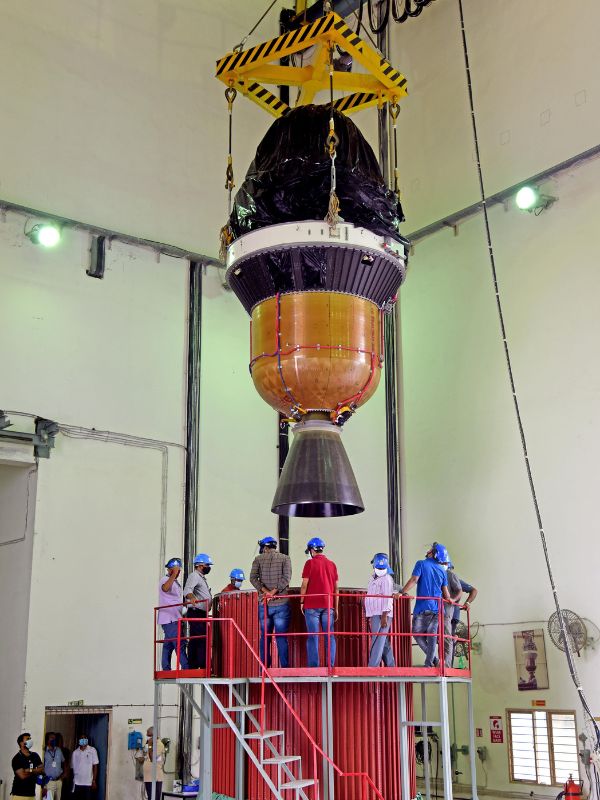 PSLV’s third stage hoisted up in the air. (Wikimedia foundation)
Based on the United Nations’ Convention on International Liability for Damage Caused by Space Objects, countries will have to bear responsibility for all space objects that are launched within their territory. This means that in this particular case, Australia can sue India for any damages that happened, and the latter will be liable for all the damages the object caused, if any.