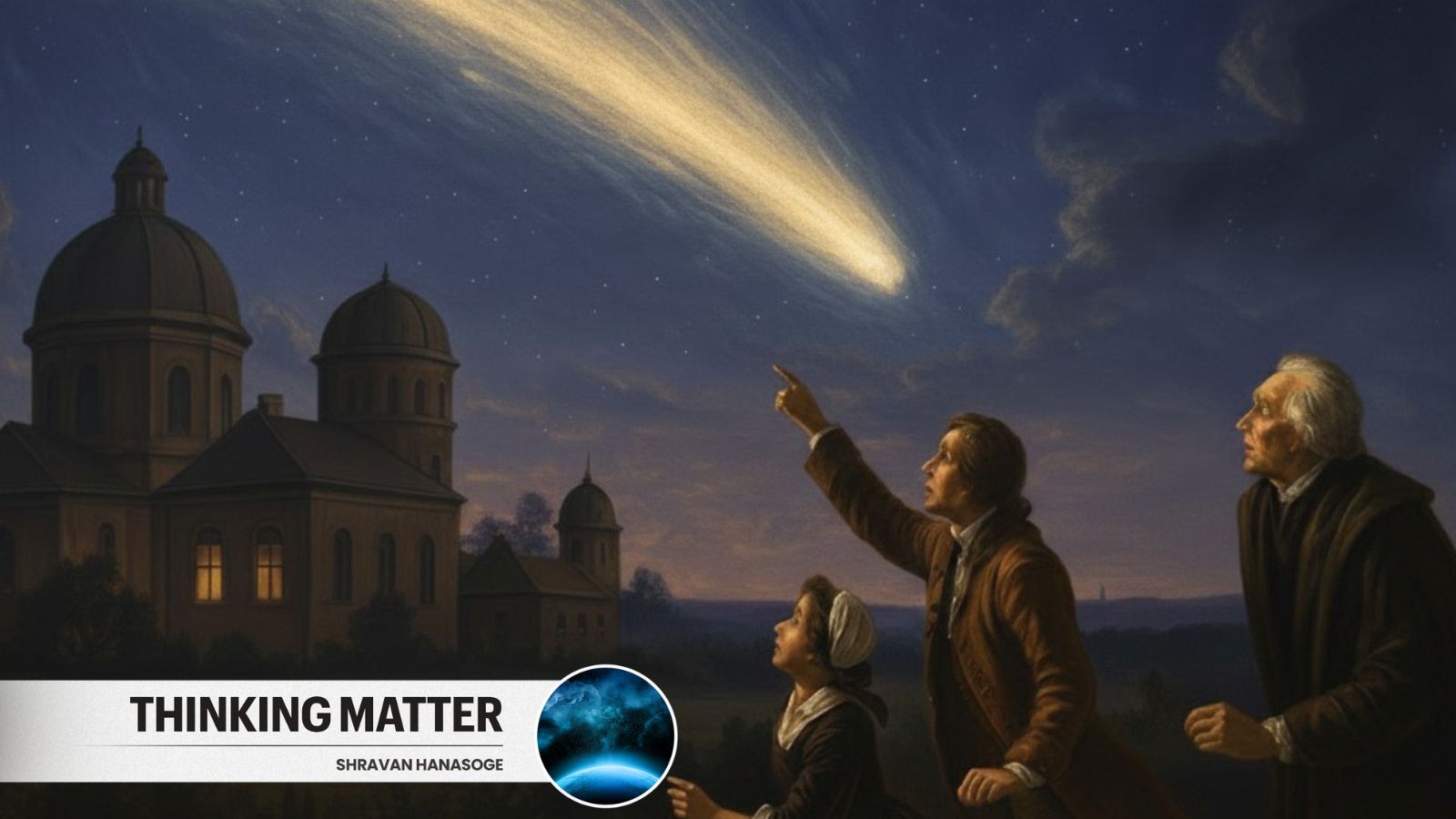
That revelation still resonates. Comets and asteroids are more than space rocks. They are messengers from deep time, capable of bringing life, ending life, and – just occasionally – raising questions we are not entirely prepared for.
Did life come from comets?
Every time a comet swings close to the Sun, it heats up, releasing gas and dust that have remained unchanged since the solar system formed 4.6 billion years ago. These grains are chemical time capsules. When ESA’s Rosetta probe landed on Comet 67P in 2014, it discovered amino acids and complex organic molecules – stuff uncannily similar to the building blocks of biology.
This revived ideas of panspermia, the hypothesis that life’s chemistry may have been seeded from space. Carl Sagan once mused that comets “may well have been the delivery system for the ingredients of life.” They are, after all, packed with organics and water, and early Earth endured heavy bombardment from exactly such objects.
Whether they delivered life or merely started the chemical stirring, comets gave Earth gifts both miraculous and catastrophic.
The rock that ended the dinosaur era
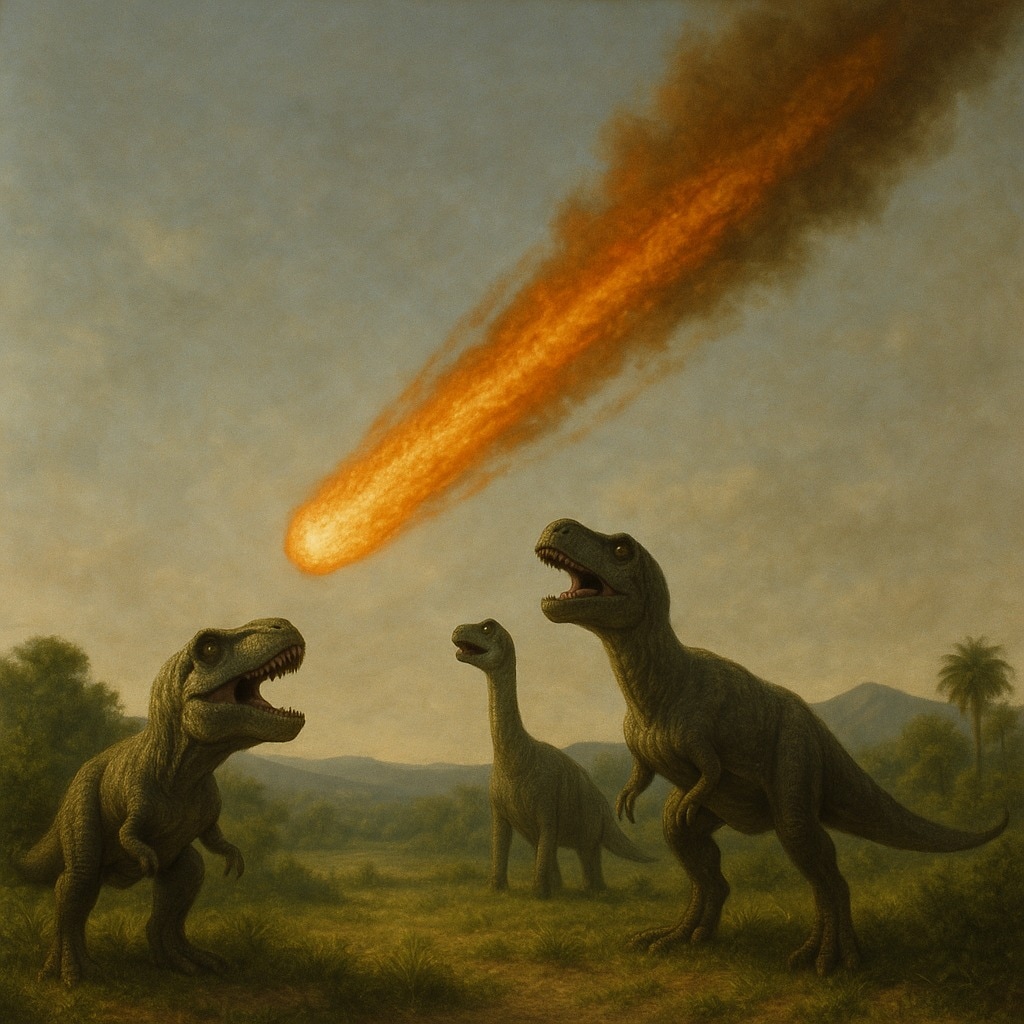
Sixty-six million years ago, an asteroid about 10 kilometres across slammed into what is now Mexico, carving the Chicxulub crater and extinguishing the dinosaurs. The blast released energy equivalent to billions of nuclear bombs. Dust veiled the sky, temperatures plunged, and the age of reptiles ended abruptly.
Story continues below this ad
The discovery of this impact was itself dramatic: in 1980, physicist Luis Alvarez and his son Walter were testing ancient rocks for iridium, an element rare on Earth but common in asteroids, when they realized the entire planet bore a thin iridium-rich layer. A cosmic murder weapon had been found. It was the most terrifying reminder yet: sometimes, the visitors from space do not pass quietly.
Cigar-shaped visitor from another sun
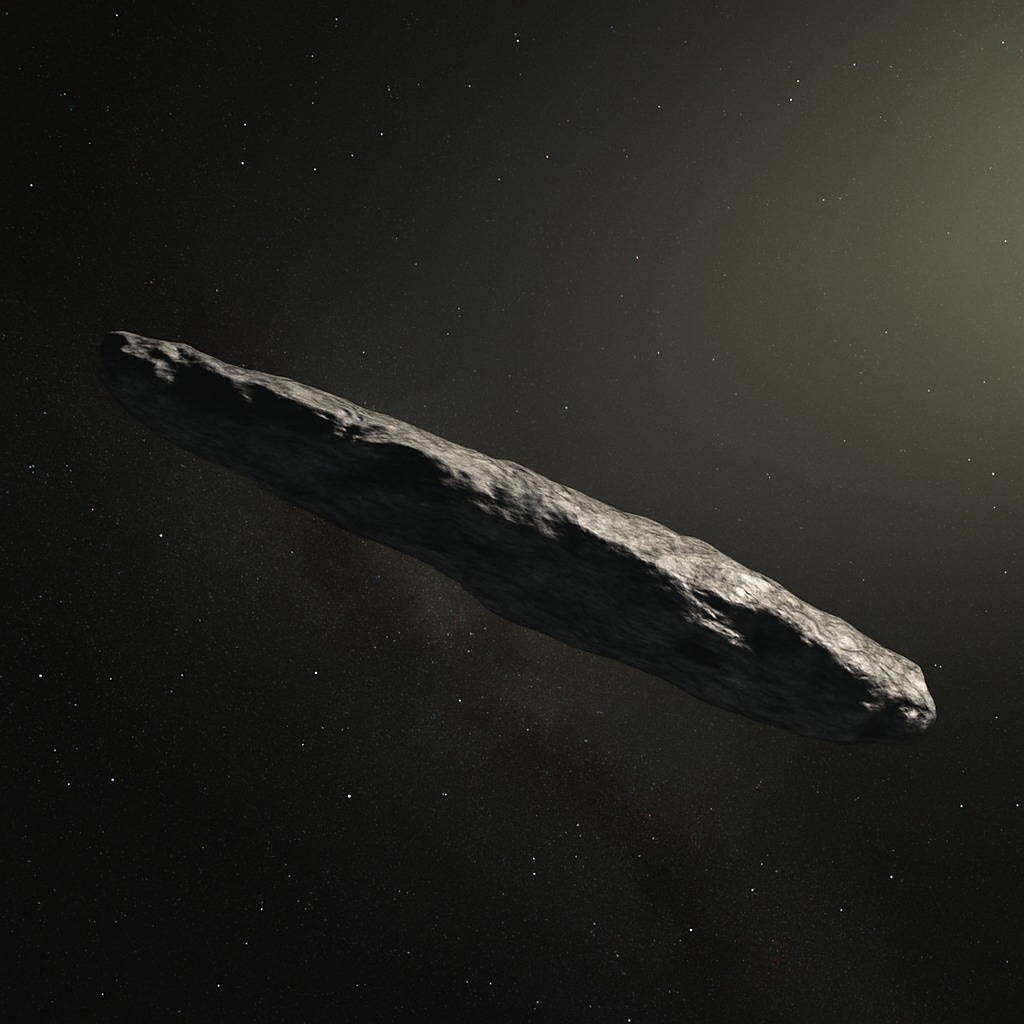
Then came 2017, when astronomers spotted a truly bizarre object hurtling through the solar system. The Pan-STARRS telescope in Hawaii tracked a faint, fast-moving speck with a trajectory that proved it came from outside the solar system. They named it ‘Oumuamua, Hawaiian for “a messenger from afar arriving first.”
‘Oumuamua behaved like nothing seen before. It was elongated – perhaps ten times longer than it was wide – tumbled strangely, and accelerated slightly without a visible tail. Most scientists concluded it was a natural shard of something from another star.
But Harvard astrophysicist Avi Loeb argued otherwise. In his book Extraterrestrial (2021), he wrote: “Nature doesn’t typically make objects with the extreme shape of ‘Oumuamua.” He suggested, controversially, that it might be alien technology – perhaps a lightsail pushed by starlight.
Story continues below this ad
Most astronomers disagree, but the debate itself was electrifying: for the first time, an interstellar visitor had forced scientists to confront whether intelligence elsewhere might occasionally toss debris – or probes – into interstellar space. Whether natural or artificial, ‘Oumuamua taught us that the universe is far stranger than we imagined.
When a hidden asteroid exploded above a city
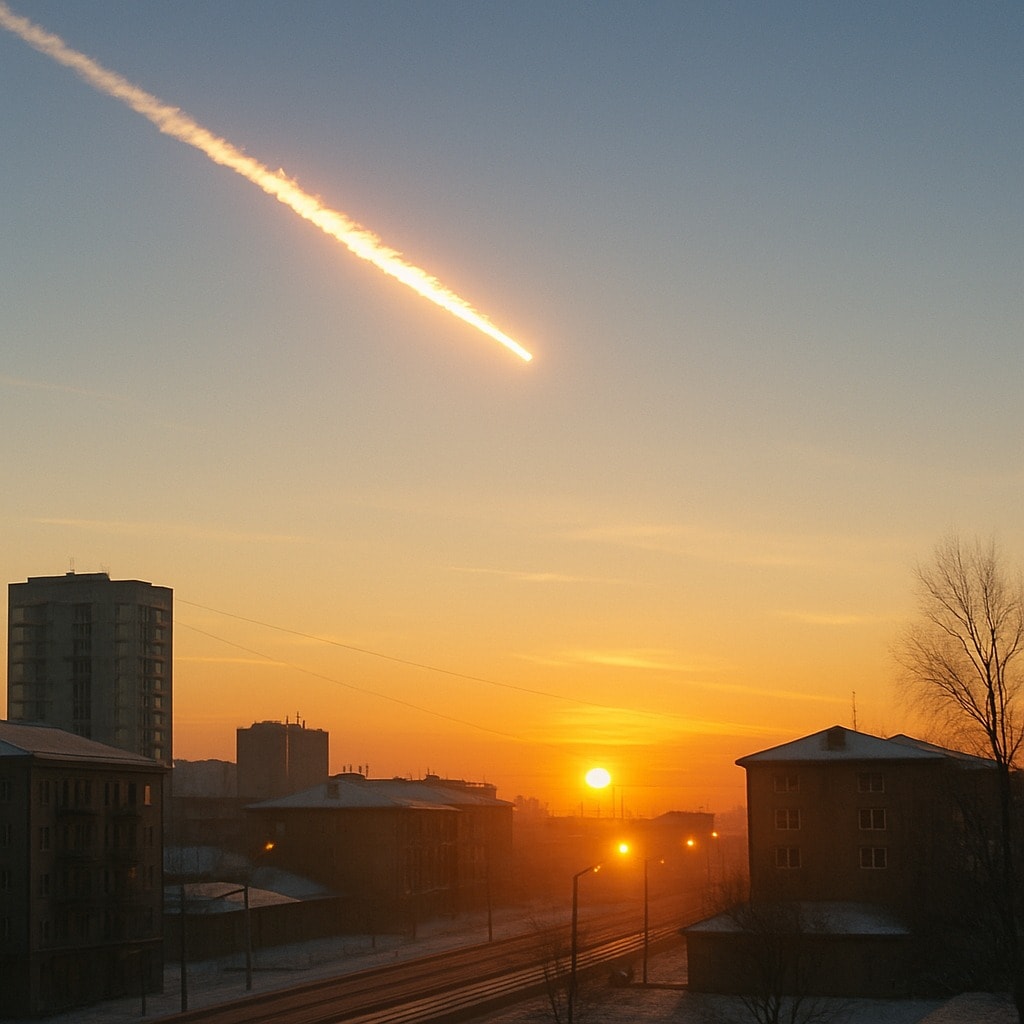
In 2013, the city of Chelyabinsk, Russia, experienced a harsh reminder that not all cosmic surprises are charming. A 20-metre asteroid entered the atmosphere at more than 60,000 km/h and exploded high above the city. The shockwave shattered windows across six towns, injuring over a thousand people.
NASA’s planetary defense officer Lindley Johnson later said, “It was a wake-up call for our entire species.” The asteroid had approached from the direction of the Sun – effectively hiding in the glare until the last moment. Chelyabinsk showed that even the small ones matter.
(AI-generated image for representational purpose.)
What these wanderers teach us
Asteroids are fragments of rock; comets are icy travellers from the solar system’s frozen outskirts. But both hold clues to questions humans have asked forever:
Story continues below this ad
📌Where did Earth’s water come from?
Some comets and water-rich asteroids match Earth’s chemical signature closely.
📌What ingredients existed before life began?
Organic molecules on comets suggest that the chemistry of life is not unique to our planet.
📌How stable is Earth’s cosmic environment?
Not very. History proves that planetary habitability is precarious.
Comets and asteroids remind us that life sits at a delicate intersection between cosmic kindness and cosmic chaos.
Story continues below this ad
Looking ahead: More messengers to come
In coming years, telescopes like the Vera Rubin Observatory will reveal tens of thousands of new asteroids and comets, including more interstellar visitors. Future missions may even collect samples from comets thought to originate near other stars — time capsules from across the galaxy.
Meanwhile, efforts such as NASA’s DART mission demonstrate that we might finally learn to defend ourselves. By nudging the orbit of the asteroid Dimorphos in 2022, DART proved that humanity is not helpless against the cosmos.
But these wandering bodies also remind us of something else: that the story of life on Earth may have begun with a gift from a comet, that its continuity was once threatened by an asteroid, and that its future may depend on understanding both.
The universe, it seems, doesn’t only whisper through distant starlight. Sometimes it sends icy, dusty, mysterious visitors that force us to look up and wonder what else is out there.
Story continues below this ad
Shravan Hanasoge is an astrophysicist at the Tata Institute of Fundamental Research.


 6 min read



 (AI-generated image for representational purpose.)
 (AI-generated image for representational purpose.)
 (AI-generated image for representational purpose.)