


Tags:


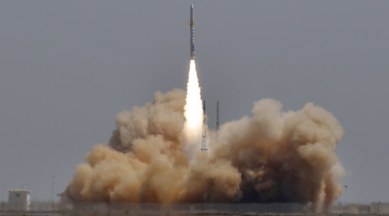
A rocket developed by iSpace put satellites into orbit after a launch from a state facility in northwestern China on Thursday, marking the first successful orbital launch by a privately funded Chinese firm. iSpace’s Hyperbola-1 rocket blasted off from the Jiuquan Satellite Launch Centre at 1 p.m. (0500 GMT) Thursday, sending two satellites and payloads into a predetermined orbit, the company said in a statement on its official Wechat account.
The successful orbital launch was preceded by two failures since late last year by other startups. Beijing-based Landspace attempted to deliver a satellite into orbit in October 2018 but failed. In late March this year, a rocket developed by OneSpace also failed to reach orbit.


The next step was to send a payload into orbit, which is partly inspired by the recent technological success of U.S. firms, such as SpaceX and Blue Origin.
The State Council, or cabinet, said in a white paper in December 2016 the space industry was an important part of China’s overall development strategy.
One of China’s near-term tasks is to develop major satellite systems of remote sensing, communications and broadcasting, and navigation and positioning. President Xi Jinping has made becoming a space flight superpower a priority for the government since coming to office in 2012. The government aims to send a permanent manned space station into orbit by around 2022.


