What Samsung Galaxy Z Flip means for the foldable phone segment?
The Galaxy Z Flip’s design is less controversial than the Galaxy Fold’s candy-bar shape with a 4.6-inch display that turns into a tablet with a 7.3-inch screen.
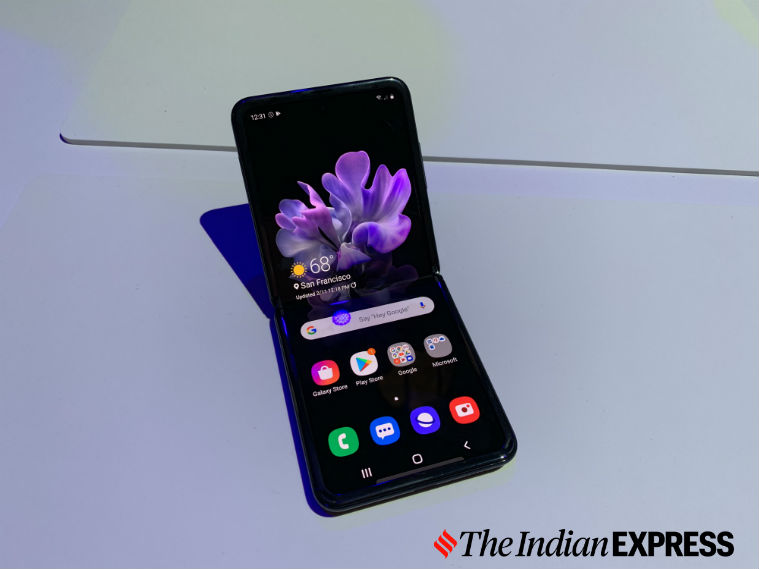
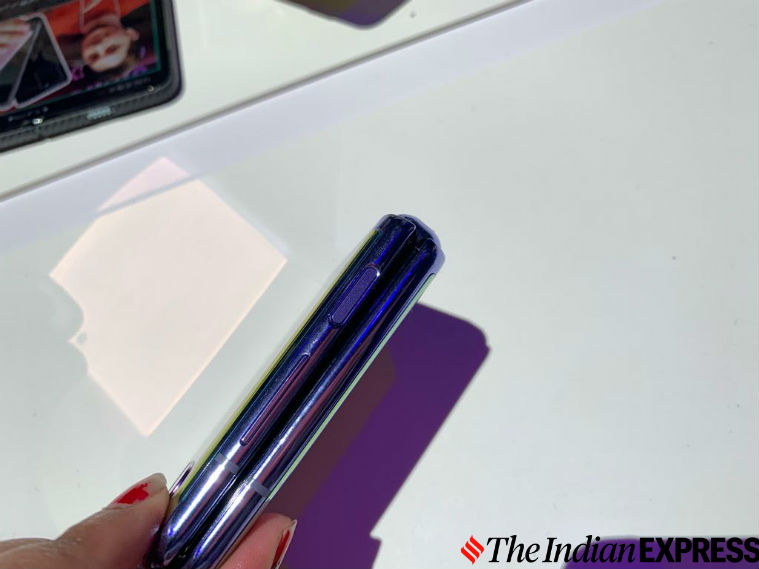
Samsung Galaxy Z Flip, which is reminiscent of the design of the Motorola Razr, folds in half like a flip phone from yesteryears. (Image credit: Sneha Saha/Indian Express)
The Galaxy Z Flip, the $1400 foldable phone, Samsung’s second attempt at this form factor, is now on sale in the US and South Korea.
Last year’s Galaxy Fold proved to be a PR disaster for Samsung. Even before its availability, the $2000 foldable phone was trashed by tech reviewers for its erratic screen. But the Galaxy Z Flip, based on our early hands-on, gives us a positive impression about the future of foldable smartphones.
You’ve Read Your Free Stories For Now
Sign up and keep reading more stories that matter to you.
With the Galaxy Z Flip, which is reminiscent of the design of the Motorola Razr, folds in half like a flip phone from yesteryears. The phone feels solid, the screen is made of ultra-thin glass and not plastic, and the hinge appears to be stronger than ever. The Galaxy Z Flip sells for $1400, way less than the $2000 you would pay for the Galaxy Fold.
The Galaxy Z Flip could well have been Samsung’s debut foldable smartphone and not the Galaxy Fold. The Galaxy Z Flip’s design is less controversial than the Galaxy Fold’s candy-bar shape with a 4.6-inch display that turns into a tablet with a 7.3-inch screen.
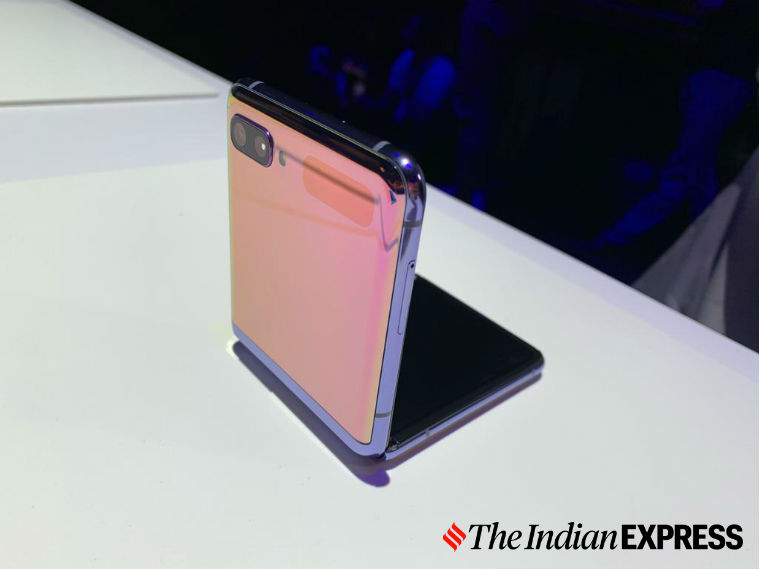
The Galaxy Z Flip is one of the first foldable smartphones to feature an ultrathin glass covering instead of plastic. (Image credit: Sneha Saha/Indian Express)
Yes, both phones have different designs and as a consumer, I would like to see new form factors and different price points in the foldable phone segment. That said, Samsung took a risk to launch the Galaxy Fold as its first foldable smartphone because the device was a lot more complicated to design and manufacture. It was a different breed of a smartphone, a hybrid device that’s somewhere between smartphones and tablets.
The Galaxy Z Flip, in contrast, is a safer design. That doesn’t mean there is something wrong with the clamshell-style foldable smartphones. A lot of people I spoke to actually favoured the Galaxy Z Flip over the Galaxy Fold. They said the Galaxy Z Flip appears to be a regular smartphone and small enough to fit in a shirt or pants pocket than the Galaxy Fold, which even I agree with.
When the Galaxy Z Flip is completely opened, the display appears to lay flat over the hinge, like a regular Galaxy Note 10 smartphone. (Image credit: Sneha Saha/Indian Express)
The phone actually has a vertical display that measures 6.7 inches on the diagonal (similar to any modern-day smartphone) and a small 1.1-inch secondary display on the exterior for notifications and call reminders. But of course, the big difference between this phone and my iPhone 11 is that the Galaxy Z Flip folds horizontally like old-school flip phones. That’s a big deal.
Story continues below this ad
The idea behind the Galaxy Z Flip, which I think we all agree with, was to launch a foldable phone that looks and feels like a normal smartphone. I think Samsung couldn’t establish this narrative with the Galaxy Fold due to the phone’s unconventional design. So, in a way, the Galaxy Z Flip is a part of a broader strategy to capture a wide range of customers that might be interested in foldable smartphones.
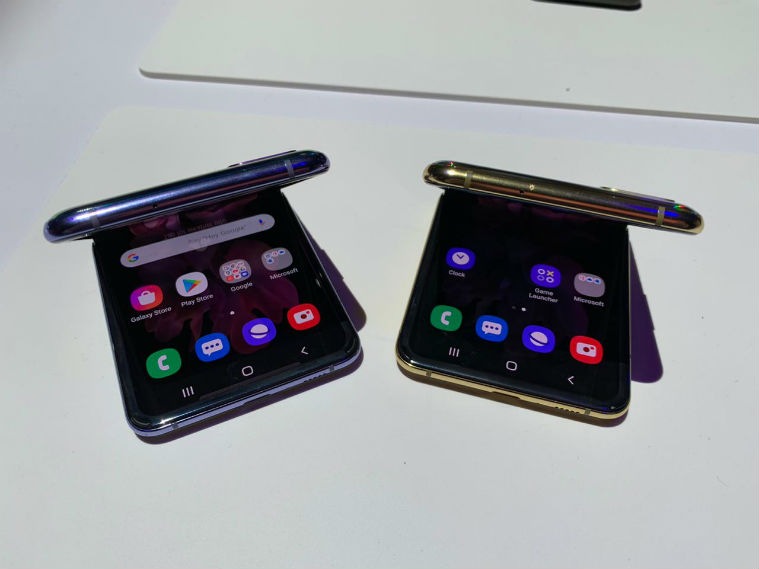
The Galaxy Z Flip can be used in a tabletop mode with the bottom half flat on a surface and the top half standing up, like a laptop. (Image credit: Sneha Saha/Indian Express)
The ad campaign of the Galaxy Z Flip and Samsung’s recent association with the New York-based designer Thom Browne on a special edition of Galaxy Z Flip establish the South Korean major’s focus on two large demographic groups: tech enthusiasts and fashion influencers.
At $1400, the Galaxy Z Flip is still expensive. It is too early for a foldable smartphone to come cheap. From a new form factor, a glass flexible display, premium design, new software experience and flagship-level specifications, Samsung has every right to charge $1400 for the Galaxy Z Flip. You get what you pay for with the Galaxy Z Flip, and what you pay for is a smartphone that folds in half.
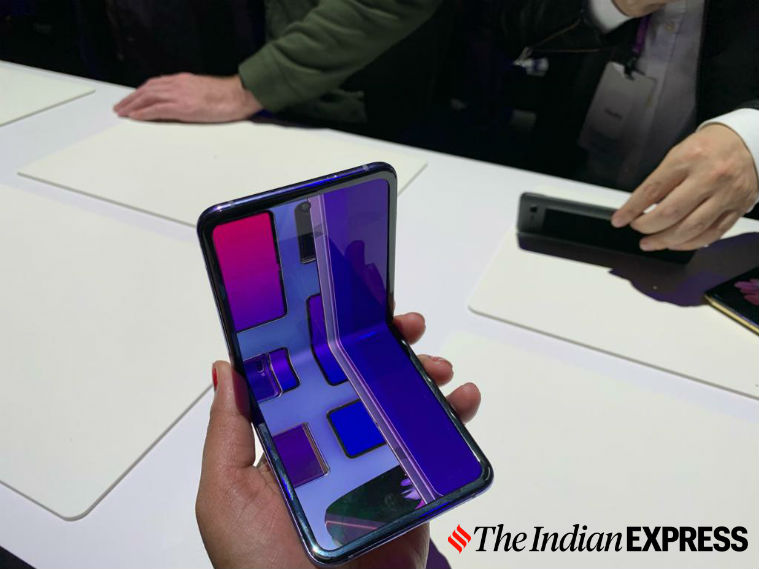
You can still see a visible crease on the Galaxy Z Flip’s display when opened. (Image credit: Sneha Saha/Indian Express)
The Galaxy Z Flip might not be the first flip-style foldable smartphone (that credit goes to new Motorola Razr which went on sale last week in the US for $1500), but it’s the first folding phone that sets the direction for foldables in the coming years. The problem with the first-generation foldable phones is that they are directionless and to some extent, unpolished.
Story continues below this ad
The Galaxy Z Flip, as I would like to believe, appears to be a better version of the Motorola Razr. That clamshell-style foldable, by the way, has been panned by major tech reviewers.
The Galaxy Z Flip is powered by a Qualcomm Snapdragon 855+ processor with 8GB RAM, 256GB storage and features a 3,300mAh battery.
The Galaxy Z Flip is an interesting take on foldable phones. But I just hope it lives up to the hype the phone has so far generated, considering it is Samsung’s second push at foldable phones. Obviously, a lot depends on the new hideaway hinge, whether or not this glass display can withstand 200,000 folds as Samsung claims, and so on. Since the phone is untested, I have a ton of questions on the Galaxy Z Flip’s long-term use.
For Samsung, the Galaxy Z Flip is more than eye candy. The success of the Galaxy Z Flip will ultimately decide the fate of foldable smartphones. If the Galaxy Z Flip fails to take off, it could seriously dent the reputation of Samsung, which is trying to make foldables mainstream. Further, the impact will be felt on the entire smartphone industry, which is under pressure to innovate.
Anuj Bhatia is a seasoned personal technology writer at indianexpress.com with a career spanning over a decade. Active in the domain since 2011, he has established himself as a distinct voice in tech journalism, specializing in long-form narratives that bridge the gap between complex innovation and consumer lifestyle.
Experience & Career: Anuj has been a key contributor to The Indian Express since late 2016. Prior to his current tenure, he served as a Senior Tech Writer at My Mobile magazine and held a role as a reviewer and tech writer at Gizbot. His professional trajectory reflects a rigorous commitment to technology reporting, backed by a postgraduate degree from Banaras Hindu University.
Expertise & Focus Areas: Anuj’s reporting covers the spectrum of personal technology, characterized by a unique blend of modern analysis and historical context. His key focus areas include:
Core Technology: Comprehensive coverage of smartphones, personal computers, apps, and lifestyle tech.
Deep-Dive Narratives: Specializes in composing longer-form feature articles and explainers that explore the intersection of history, technology, and popular culture.
Global & Local Scope: Reports extensively on major international product launches from industry titans like Apple and Google, while simultaneously covering the ecosystem of indie and home-grown tech startups.
Niche Interests: A dedicated focus on vintage technology and retro gaming, offering readers a nostalgic yet analytical perspective on the evolution of tech.
Authoritativeness & Trust
Anuj is a trusted voice in the industry, recognized for his ability to de-jargonize trending topics and provide context to rapid technological advancements. His authority is reinforced by his on-ground presence at major international tech conferences and his nuanced approach to product reviews. By balancing coverage of the world's most valuable tech brands with emerging startups, he offers a holistic and objective view of the global technology landscape.
Find all stories by Anuj Bhatia here.
You can find Anuj on Linkedin. ... Read More