12 min read


© IE Online Media Services Pvt Ltd



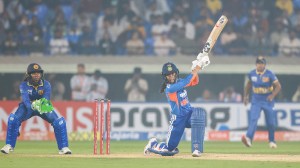
 L-R: Shreyas Iyer, Sunil Narine, Pat Cummins, Heinrich Klaasen and the 1932 Indian Cricket Team in England
Leaning back in his chair, framed by the soft glow of a Zoom screen, lawyer Nandan Kamath reflects on a career path that may have been. “Back in my day, the odds of building a career in cricket were razor-thin,” he says with a faint smile. “I played as a junior, but with only 11 spots to aim for, I chose the path of education instead. But if someone had told me I could be one of 120, like in the IPL? That changes everything,” says Kamath, the author of Boundary Lab: Inside the Global Experiment Called Sport.
Ever since the Indian Premier League (IPL) was launched in 2008, it has brought cricket to the forefront of entertainment, blending sport with spectacle. While some traditionalists view leagues like the IPL as a departure from the essence of cricket, with shorter formats seen as compromising the game’s depth and legacy, supporters highlight its evolutionary potential.
Fans argue that the IPL has democratised the sport, improving infrastructure and creating opportunities for emerging talent across the country. Its fast-paced matches and wider reach have given players from the most remote corners of India a chance to shine, bridging the gap between aspiration and achievement.
“Back in my day, people would skip school or work to watch Test Cricket—imagine that! Now? Not so much. After all, who wants to sit through five days of uncertainty, often to end with no result? In today’s fast-paced world, especially in a nation like ours, we crave results—quick ones. It’s a shift rooted in time,” says Kamath.
Here’s a look at the evolution of cricket, from its traditional roots in Test matches to the extraordinary growth of the IPL.
A game born in England, cricket was a comforting pastime for the British, offering a sense of familiarity amidst the strangeness of the colonial world. Yet, by the mid-19th century, it was Bombay that first embraced the sport. Long before the creation of a national team, the Parsi community led India’s entry into the world of cricket. They quickly established their presence in cricket, founding the Oriental Cricket Club in 1848, which later became the Zoroastrian Cricket Club in 1850. Through the 1850s and 1860s, the city saw the rise of at least 30 Parsi cricket clubs.
By the 1880s, Parsi teams had begun making regular trips to Britain, further solidifying their cricketing legacy. Historian Prashant Kidambi, in Cricket Country: An Indian Odyssey in the Age of Empire, mentions how their commitment to the Victorian ideals of ‘civilized’ masculinity drove their efforts, along with their ambition for recognition within the imperial cricketing world. In 1889, they triumphed over the Bombay Gymkhana, solidifying their position as the best cricket team in India.
However, by 1911, the Parsi teams began facing stiff competition from other Indian communities. It was around this time that the Palwankar brothers, Baloo and Shivram, overcame caste discrimination to emerge as the leading Dalit cricketers of their time.
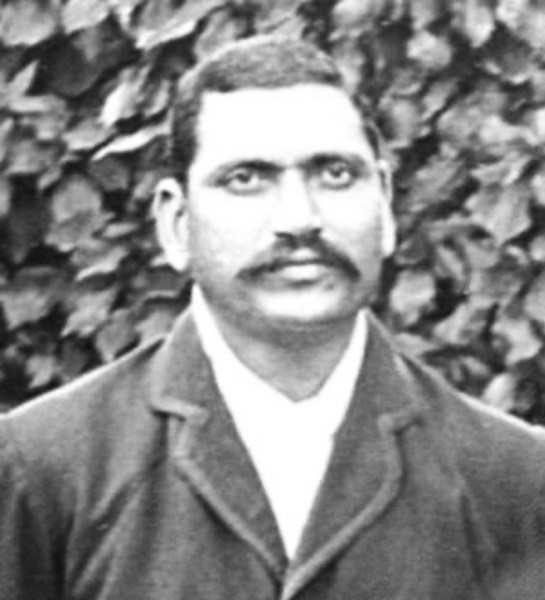 Palwankar Baloo (Source: Wikimedia Commons)
In his book, Kidambi observes that from its very introduction, cricket “was vigorously pursued by Indian middle-class youth residing in towns and cities,” becoming “a site of exclusively male sociability in schools, colleges, offices, and clubs.”
Historian Ramachandra Guha, in A Corner of a Foreign Field: The Indian History of a British Sport, attributes the emergence of cricket as an urban game in India to several factors: caste divisions, the need for proximity to Englishmen to observe and learn the game, and the concentration of British influence in urban centres. “The cricket field was both a theatre of imperial power and of Indian resistance,” Guha notes.
Kidambi refers to how violent actions by young Indians against British officials had caused widespread unrest between 1907 and 1909. To counter this, Bombay’s business elites, along with Indian princes and zamindars, suggested sending a cricket team to Britain to restore their influence as their political power waned.
India’s first cricket team made its debut in Britain in 1911, led by the 19-year-old Maharaja Bhupinder Singh of Patiala. The team comprised six Parsis, five Hindus, three Muslims, and, notably, two Dalits—an unprecedented inclusion in a society deeply divided by caste. Although the tour fell short of expectations, Kidambi observes, “Their aim was to use sport to promote a positive image of India and to assure imperial authorities that the country would remain a loyal part of the British Empire.”
One of the earliest formats of cricket was the Test match — a game lasting five days (it was four days when it began), with six hours of play each day. This leisurely pace, Guha suggests, aligned with the Indian way of life. Even after such an extended duration, there may be no definitive winner—just a draw. Guha argues that this uncertainty resonates with Indian culture, where myths often emphasise negotiation and compromise over clear-cut victory or defeat.
Test cricket evolved from first-class matches played in the 18th century. The first official Test match took place from March 15 to 19, 1877, between England and Australia at the Melbourne Cricket Ground (MCG). Initially played with four balls per over, this timeless match concluded after four days. In 1889, the format changed to five balls per over, followed by the introduction of the six-ball over in 1900.
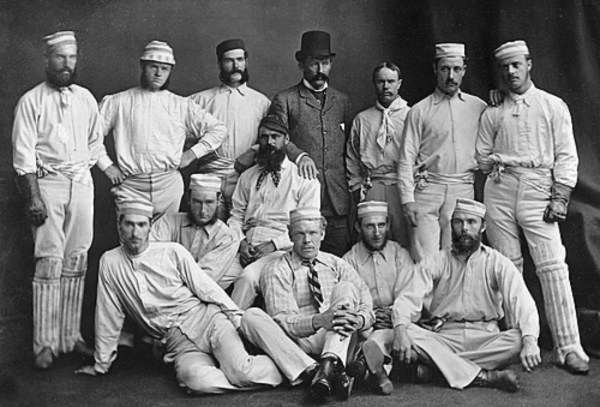 First Australian Test Team (Source: Wikimedia Commons)
The ICC Test Rankings were introduced in 2003, and in 2019, the World Test Championship was launched, adding a competitive dimension akin to the World Cup for One Day Internationals (ODIs) and Twenty20 formats.
While there is a growing perception that Test cricket is losing ground to shorter formats, scholars Sachin Prakash and Sandeep Bhalla argue in their 2021 article ‘History of men test cricket: An overview’ that it remains “the game’s highest standard” and the ultimate test of a team’s endurance.
Girish Ramchandani, professor of Applied Sport Management at Sheffield Hallam University in England, acknowledges the varied preferences of fans. “Older viewers, who have long followed Test cricket, often hold it in higher regard than younger, newer fans,” he explains in an interview with indianexpress.com.
During the 1940s and 1950s, young Indian cricketers were often encouraged to prioritise academics over sports as higher education was considered the pathway to stable employment. However, when the Indian Railways and the State Bank of India began offering jobs to cricketers, it enabled them to pursue their passion while ensuring financial security.
“In our days, cricket was not a stable career. Representing the state earned us government jobs, which became a major incentive to pursue something as unconventional as sports,” says cricket Coach Sudip Mitra.
By the 1970s, public sector companies broadened these opportunities, offering positions that allowed cricketers to continue playing professionally.
The 1970s also saw a faster and more exciting format of cricket making its debut – the one-day international (ODI). The first ODI held on January 5, 1971, between Australia and England at the Melbourne Cricket Ground was designed to finish in a single day, offering a quicker alternative to five-day Test matches. Favoured by television and commercial interests, ODIs also reduced weather disruptions and guaranteed results. Their popularity soared with the first Cricket World Cup in 1975, securing the format’s place in international cricket.
The financial prospects of Indian cricketers, however, experienced a major shift with the launch of World Series Cricket in 1977–78 by Australian media mogul Kerry Packer. By offering lucrative contracts, Packer attracted top players from Australia, the West Indies, England, and Pakistan. In 1979, when he turned his attention to Indian cricketers, the Board of Control for Cricket in India (BCCI) responded by increasing match fees fivefold to retain players’ loyalty.
 Kerry Packer (Source: Indian Express Archives)
“To this day, Indian cricketers contracted with the BCCI are prohibited from playing in foreign leagues to ensure they prioritise domestic competitions,” says Mitra in an interview with indianexpress.com.
Guha notes that the global spread of television, combined with India’s integration into the world market, solidified cricket’s bond with “consumer capitalism”.
This transformation is evident in the rise of the Indian Premier League (IPL).
Launched in 2008, the IPL evolved from the 20-over format introduced by the England and Wales Cricket Board in 2003. Businessman Lalit Modi, drawing inspiration from American sports culture, transformed the IPL into a glamorous spectacle. It quickly became a commercial success in India, particularly in cities benefiting from the country’s economic boom.
Cricket enthusiast and aspiring player Aditya Bhagchandani tells indianexpress.com, “I treat the IPL like a daily soap for cricket fans—missing an international match is a real blow, but missing an IPL game? Not so much. Still, nothing beats the thrill of watching it live!”
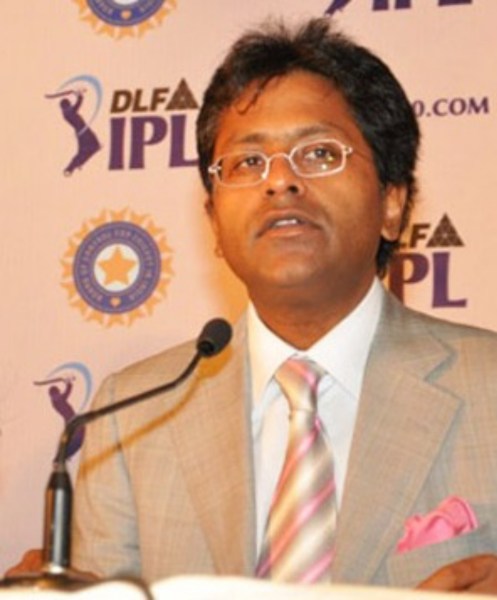 Lalit Modi (Source: Wikimedia Commons)
Kamath notes, “Across socio-economic backgrounds, there’s a growing recognition that time and attention are valuable commodities, and viewers expect something in return. While Test cricket’s slower pace appeals to some, the newer generation finds it less engaging.”
Kamath believes this shift reflects changes in both the spectator and player economies. In T20 cricket, career opportunities have expanded, with many players earning Test selections based on IPL performances. “A player like Bumrah (Jasprit Bumrah), for example, might not have gained the same level of recognition without the platform provided by the IPL,” says Kamath.
According to Guha, in the late 1970s, Australian scholar Richard Cashman observed that most Indian cricketers originated from urban or regional towns and often had formal education. Today, however, the demographic has shifted, with many players now emerging from middle-class backgrounds.
This shift in demographic has been significantly fuelled by the commercialisation of cricket, which Mitra believes has been a game-changer. “The IPL has opened up countless opportunities, compensating for the limited spots in the national team and offering financial security to many players,” says Mitra.
The IPL has also levelled the playing field, according to Kamath. “Since the IPL, the barriers to participation have lowered, making the game more skill-based, allowing specialists to excel, unlike in Test cricket where the emphasis was once on all-rounders,” he adds. The IPL has enabled players like Varun Chakaravarthy, who, in his 30s, might have missed international recognition. As Bhagchandani notes, the IPL compels the board to reevaluate a player’s potential.
Beyond individual success, the IPL has also attracted new fans to the sport, particularly women and children. Ramchandani and Kamath highlight this, noting the growing popularity of the Women’s Premier League (WPL). “The IPL has also engaged fans in innovative ways, reaching audiences who were once excluded from the sport,” Kamath adds.
The impact of franchise cricket has redefined the sport’s place in society. “The shift from sport being a leisure activity to a career reflects the move from amateurism to professionalism,” says Kamath. “As athletes are compensated for their time, they are increasingly seen as workers, rewarded with fame, money, and celebrity status,” he adds.
What began as a business effort to merge cricket with the entertainment industry has now become a key force in shaping the future of Indian cricket. “The IPL was never intended to improve Indian cricket,” Ramchandani states. “But it has given players the confidence to perform in front of large crowds, preparing them for the pressures of international cricket. It helps them feel like they belong, pushing for the democratisation of the sport.”
During the height of the Victorian era, a team of English cricketers led by Dr W G Grace embarked on a tour of the United States. At the end of their visit, Guha notes that the team wrote a letter critiquing American culture, stating: “With all respect for baseball and its disciples, we believe that it principally encourages the two leading failings of American character – ultra-rapidity…and ardent speculation.”
This critique echoes purists’ concerns about the evolving direction of the IPL today. As Mitra emphatically states, “Test cricket is the ultimate test of character. One cannot become a Tendulkar or Kohli by playing only franchise cricket.”
References: