


© IE Online Media Services Pvt Ltd
Tags:


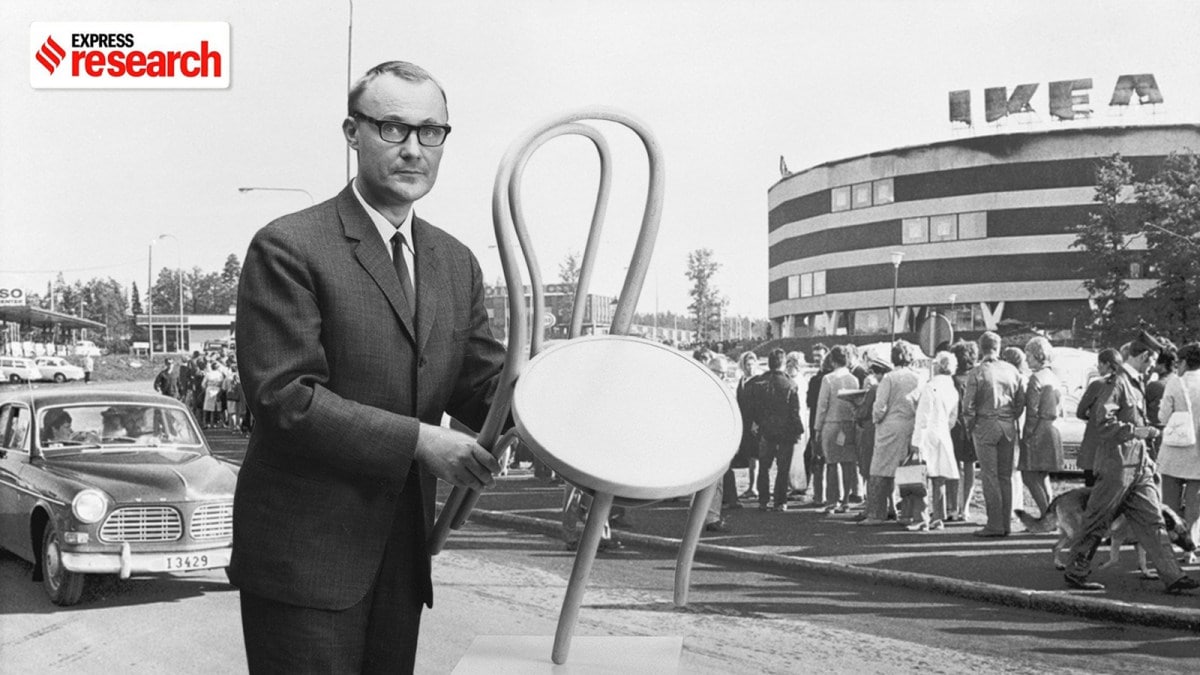
If you are setting up your college dorm room, building a home with your partner, or moving to a new country, chances are you have had multiple tabs of IKEA furniture open on your laptop. Even in a country where inexpensive labour makes ‘do-it-yourself’ (DIY) a hard sell, IKEA has still managed to win over the crowd.
Rajratna Jadhav, architect and professor at the Academy of Architecture, Mumbai, tells Indianexpress.com, “The concept of DIY furniture is unique in India. In that sense, IKEA has a market space. However, in my understanding, IKEA’s market is typically urban young professionals due to its modern and minimalistic styling and its light and quick assembly design…”

The Swedish-born multinational conglomerate now operates stores worldwide, including six in India across Mumbai, Delhi, Hyderabad and Bengaluru.
But furniture is not IKEA’s only claim to fame. It is also their meatballs. As the brand celebrates 40 years of its iconic dish this year, we turn back the pages to see the history of IKEA, its founder, and how a meatball recipe became one of its most powerful business tools.
The story of IKEA began in a small Swedish town in the 1940s with its founder, Ingvar Kamprad. Born in 1926 in Älmhult, Kamprad grew up with his younger sister, Kerstin, and their parents, Berta and Feodor. He spent his early years with his family before attending boarding school. At school, he often wondered why there was such a large gap between factory prices and shop prices. When he bought pencils from his wholesaler, they only cost half an öre each, yet in the grocery store, a pencil sold for 10 öre.
In 1943, he left Småland to study at a business college in Gothenburg. Later, his father rewarded him for doing well in school with a small sum of money — funds he used to start his own company. In 1943, at 17, he founded IKEA. “Initially Kamprad sold all sorts of wares including matches and pens, but he soon decided to concentrate on home furnishings. IKEA is an acronym made up of the founder’s initials together with the initial letters of the names of Elmtaryd and Agunnaryd, the farm and the village where he grew up,” writes Swedish writer and professor Sara Kristoffersson in Design by Ikea: A Cultural History (2014).
But why furniture? Småland, his home county in Sweden, was heavily forested with stony soil. “For those who have never been to Småland and seen Lake Möckeln surrounded by thick forest,” reads the company’s website, “it was a place with many small furniture factories. In fact, most of Småland was full of skilled carpenters making furniture. So the move from imported pens from Paris to wooden furniture from Småland was not really such a big leap. The opportunity was right there…” IKEA was officially registered on July 28, 1943.
Another possibility, indicated by Per-Olof Svensson, Archive & Collection Manager at the IKEA Museum, in his interview with Indianexpress.com, was the rural-to-urban migration occurring in Sweden at the time. “Right from the beginning, Kamprad observed what was happening in Swedish society: many people were moving from the countryside to smaller villages and larger towns. This movement created opportunities for people to start new lives, and relocating from one place to another often included the desire to build a new home.”
The next five years, beginning in the summer of 1943, were very busy for Kamprad. He worked briefly as an office clerk and then completed his military service in Växjö, southern Sweden. Meanwhile, his business continued to grow. In a 1948–1949 issue of the brochure “ikéa-nytt,” as cited on the website, he explained how IKEA was able to keep its prices so low: “Our low prices – by far the lowest in the land – are possible thanks to a high turnover, direct delivery from the factory, and very low overheads.”
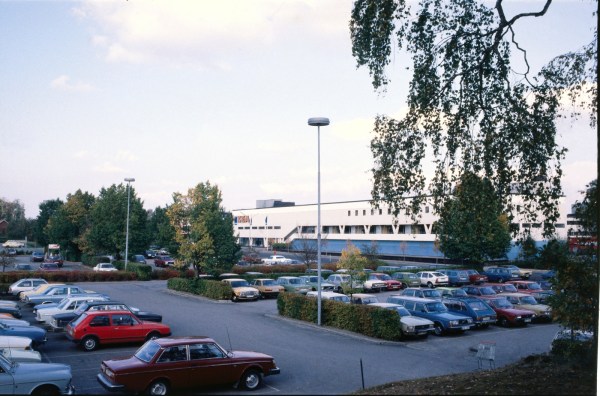
Kristoffersson writes, “IKEA started to sell so-called ‘knock-down furniture’ by mail-order back in 1956. This was furniture that was delivered in a package and that customers assembled themselves from parts. Two years later the doors opened at the first IKEA shop located in the small southern Swedish town of Älmhult.” In a Zoom interview with Indianexpress.com, Daniel Yngvesson, Global Food Designer Inter IKEA Group, says that from the outset, IKEA stores were located outside the city — the iconic Swedish “blue box,” which meant people had to travel some distance to get there. “What Ingvar did was celebrate everybody who came to the forest and physically visited the store; he actually gave them a coffee and a cookie as a thank-you.”
By the summer of 1960, the store had a proper restaurant called IKEA Baren— ‘The IKEA Bar’. “The idea comes from something Ingvar observed,” the website notes, “people left the store at lunchtime to eat in one of the restaurants or street kitchens in Älmhult. This interrupted the whole buying process. He realized that hungry customers buy less. Or as we often say, it’s tough to do business on an empty stomach.” It initially served only coffee and cold dishes, but after investing in a Radar oven (similar to a microwave) from America, the menu expanded. Everything from hot snacks such as hamburgers to á la carte dishes was served.
According to Kristoffersson: “Another concrete national symbol is the food at IKEA. The company does not just sell home furnishings but is also Sweden’s largest exporter of processed foods. The store restaurants serve meatballs and there are rusks and preserved herrings on the shelves of the food store.” Kevin Johnson, Country Food Manager, IKEA India, says in an interview with Indianexpress.com, “We have the restaurant for three reasons. First, to demonstrate our affordability. Second, to showcase our Swedish heritage. And third, for families — IKEA is a family-friendly shopping destination. Globally, about 70 per cent of our visitors are families, and it’s likely similar in India.”
“In Sweden, the economically successful decades between the end of World War II and the oil crisis in 1973–74 are known as the record years. Constant economic growth made social reforms possible and also led to a large increase in people’s standard of living. All the indicators pointed upwards,” notes Kristoffersson. The higher incomes led to a rise in consumer spending — people now wanted to furnish their homes in their own way, causing a boom for IKEA.
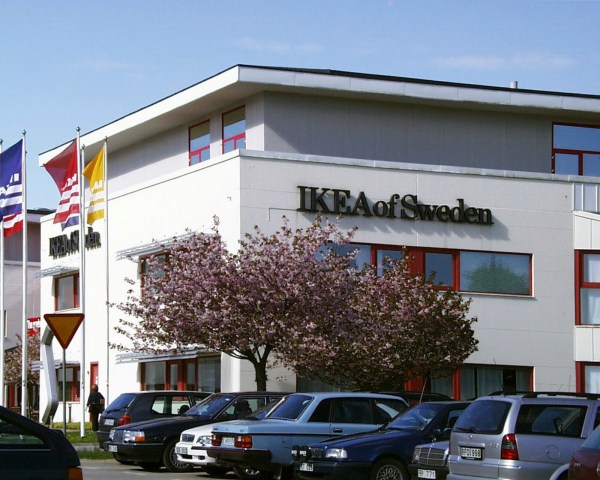
Despite ongoing stability, however, things halted in the wake of the 1979 oil crisis. Sweden, then heavily dependent on imported oil, faced energy costs, inflation, and mounting pressure on industry. Companies like IKEA, faced with cash-flow problems, were forced to streamline production and slow down new investments. With this pause, the company now had time to reflect and reorganise. In 1979, IKEA launched 12 project groups made up of junior and senior co-workers from across Europe. One group was tasked with travelling across the continent to study the restaurants in all 23 IKEA stores.
Among the group was Swedish chef Severin Sjöstedt, who later developed the meatball recipe – the first proprietary recipe to be secured by IKEA. It was tested over several years by many people, including Kamprad himself. After extensive testing, the first renovated restaurant opened at IKEA in Västerås, central Sweden, with 175 seats. In 1987, the company decided that all restaurants would follow the updated IKEA Restaurant & Café concept. With more than 1 billion sold globally every year, IKEA’s meatballs have become popular worldwide. Today, chicken, vegetarian and vegan versions are also available, the latter introduced in 2020.
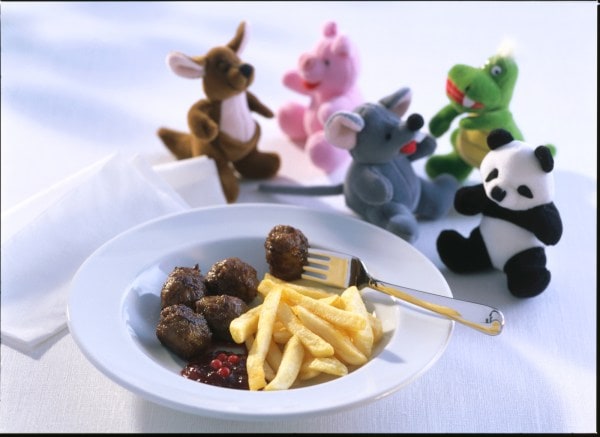
Kristoffersson notes, “IKEA does not merely sell design. It sells Sweden and, indeed, Scandinavia too…while the products have names that associate them with Sweden or Scandinavia; and Swedish food is served in IKEA’s restaurants under the device ‘A Taste of Sweden.’”
The 1970s at IKEA, interestingly, were also marked by innovation and expansion. The company constantly opened new stores and introduced a raft of now-iconic products. In the midst of this expansive decade, Kamprad and his family decided to move to Denmark. To preserve IKEA’s culture, Kamprad decided to write down the ideas that shaped the company in nine principles. Summarising his vision for IKEA’s future, he created The Testament of a Furniture Dealer, published in 1976. The document laid out important cornerstones of the IKEA business.
Today, IKEA food has grown into one of the world’s biggest grocery operations, serving more than 700 million customers annually. “While we have expanded into other markets — China, Japan, South Korea, and the US, about 35-40 per cent of our range is locally tailored, allowing us to engage with a broader audience,” says Johnson, adding, “There’s a phrase at IKEA: there’s no IKEA without food, and there’s no food without IKEA.”
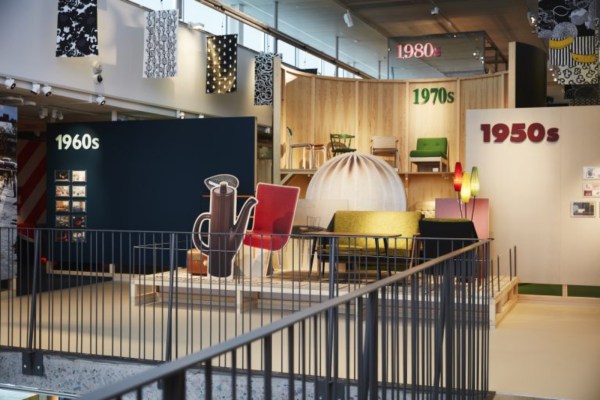
Much of this legacy is preserved and showcased by Per-Olof Svensson and his team, who oversee the IKEA Museum in Älmhult. “The vision behind the museum is, for us, to open up and share the history and journey of IKEA. But we also emphasize using history for learning… So it’s not just a journey into the past— It’s also about showing IKEA in the present”.
Yet, there is always scope for improvement. As Jadhav notes, “Information in the public domain suggests that IKEA has been slow in its growth in India. I am informed that they would like to be more localised in their customer outreach rather than following the American model of a large store on the outskirts of a city, which they adopted in Hyderabad and Mumbai. This, I think, is a good strategy. Customers in urban India do not have time to spend half a day at a furniture shop…”
“To expand in India, IKEA would have to understand Indian needs beyond DIY, unless they would like it to continue to be their only focus… IKEA would have to work on the perception of longevity of their furniture to expand to other segments of the Indian customer base…” beyond urban professionals, he says.


