6 min read


© The Indian Express Pvt Ltd



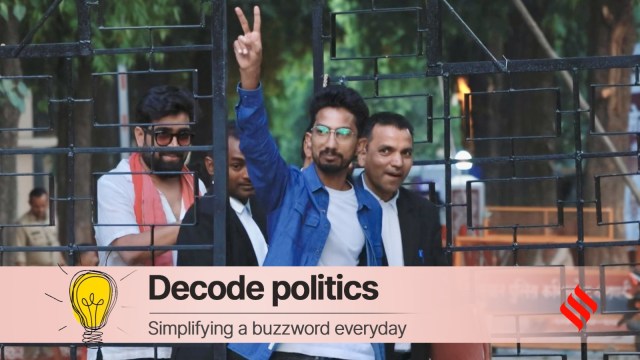 Shyam Rangeela after filing his nomination. (Photo:X @@ShyamRangeela)
The Returning Officer (RO) for the Varanasi Lok Sabha constituency on Wednesday rejected comedian Shyam Rangeela’s nomination on the grounds that it was “incomplete”.
Varanasi, from where Prime Minister Narendra Modi is seeking a third term, goes to polls in the last phase of the Lok Sabha elections on June 1. Rangeela, who was once seen as a staunch supporter of the PM and has made his name mimicking Modi, had this time announced that he would contest against him as an Independent. After his nomination was rejected, he alleged that the right of citizens to contest polls had been snatched, and that while he did not hope to win, he wanted to send out a message.
Rangeela claimed that the RO had accepted his nomination before the 3 pm deadline on Tuesday, the last day of filing nominations for Phase 7. However, on Wednesday, the day designated for scrutiny of the nominations, he was told that his nomination had been rejected as he did not take oath, as mandated by the Constitution.
Responding to Rangeela’s post on X Wednesday about this, Varanasi District Magistrate and RO S Rajalingam said the nomination papers had been scrutinised in Rangeela’s presence and the latter informed of the “deficiencies”. “Your nomination paper has been cancelled because the affidavit submitted by you was incomplete and you did not take the oath/affirmation, a copy of the order of which has also been made available to you,” the DM said.
As per Article 84 of the Constitution, a citizen who wishes to contest elections must take an oath in the presence of a person authorised by the Election Commission (EC), to bear “true faith and allegiance to the Constitution of India as by law established, and uphold the sovereignty and integrity of India”.
Usually, the RO or the Assistant RO is the authorised person for the purpose of the oath. The EC’s Handbook for ROs, 2023, says the oath or affirmation should be made and subscribed before the date fixed by the EC for the scrutiny of nominations. In the case of Varanasi, that means the oath should have been taken before Wednesday.
“… the oath or solemn affirmation can be made and subscribed by a candidate only after his nomination paper has been delivered and cannot be so made and subscribed on the date of scrutiny. The RO should, therefore, advise the candidate to make the oath or affirmation immediately after presenting their nomination papers and in any case not later than the day previous to the date of the scrutiny. As such an oath taken at any time on the day previous to the date notified for scrutiny of nomination paper should be treated within time,” the handbook says.
The EC rules also mandate the candidate to sign the form on which the oath is written in the presence of the authorised person.“It should be borne in mind that mere signing on the paper on which the form of oath is written is not sufficient. The candidate must make the oath before the authorised person. The latter should ask the candidate to read aloud the oath and then to sign and give the date on the paper on which it is written… The authorised person will forthwith give a certificate to the candidate that he has made and subscribed the oath before him on that day at a particular hour. The certificate will be given to the candidate without his applying for it. This will avoid all controversy later on as to whether the candidate had taken the oath or not,” the handbook states.
According to Rangeela, he and other aspirants were not allowed to enter the District Magistrate’s office when they tried to file their nominations on Monday. Then, on Tuesday, the same day as Modi visited the office to file his nomination, he was not allowed to enter till the last minute, he says. As per rules, only one candidate at a time, with up to four people accompanying him or her, is allowed to file nominations.
According to the EC’s rules, the nominations are accepted from 11 am to 3 pm. Rangeela says his nomination was accepted at 2.58 pm, with 2 minutes for the deadline to end. He says the RO then pointed out to him that a required affidavit was missing and so he had the document made and submitted later on Tuesday. He claims the RO never told him about the requirement of the oath till his nomination was rejected.
As per the handbook, the RO is supposed to check if all the columns of the form are filled upon receipt of the nomination papers, as incomplete forms are liable to get rejected. “In case any of the columns are left blank by the candidate, the Returning Officer or the Specified Assistant Returning Officer will mention it in the checklist and hand it over to the candidate against proper receipt. In such cases, the candidate will have the opportunity to file a fresh affidavit complete in all respects by the time fixed for commencement of scrutiny,” the handbook says.
The scrutiny of nominations by the RO is considered a quasi-judicial function. “The Returning Officer therefore has to discharge this duty with complete judicial detachment and in accordance with the highest judicial standards. The Returning Officer must not allow any personal or political predilections to interfere with the procedure that he/she follows or the decision he/she takes in any case,” the RO handbook says.
However, if a candidate thinks the RO has been unfair, he or she can file an election petition challenging the rejection of nomination.