
Opinion India and Seoul: Then and now
In the Eighties,around two thirds of Indian industry was freed from output and price controls. But the trade and cooperation potential of this was ignored abroad.
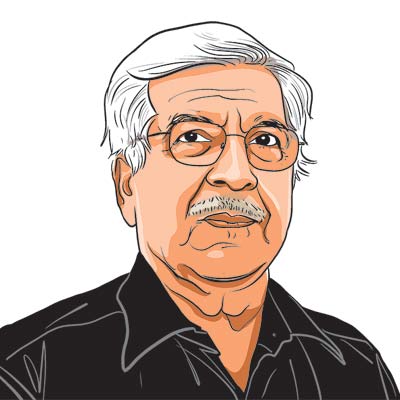

In the second half of the Eighties,Rajiv Gandhi was to develop the concept that India would grow fast as a part of a globalising world. There was a refreshing youthful emphasis on technology and the newer organisations and social institutions in which it would be embedded as the flip side of the problems of low growth,poverty and shortage of renewable resources. There was a break with the past in operationalising decentralising paradigms of growth. In fact,India did grow fast in that period and that reinforced the world view at home. The World did not believe that and India was then perceived as a basket case. The fact that India was growing fast was recognised in the global media only by 2003.
In the Eighties,around two thirds of Indian industry was freed from output and price controls. But the trade and cooperation potential of this was ignored abroad. South Korea was one of the earlier countries to have recognised this. In 1988,their President sent an emissary to meet PM Rajiv Gandhi. They wanted to diversify their trade links from Japan and USA and saw the decade of the Nineties as the decade of India. I was sent by the PM. The policy-maker Park,then central bank governor,in response to a question on Comparative advantage said dont talk that language. Do what you want to do but do it well. The present authors description of this episode sponsored at the highest level in both countries and encouraged by the Korean policy-maker Hak Chung Suh,became a part of the literature on strategic policy-making and reform. Suh,the Secretary of the Korean Economic Panning Agency,was to go as Vice President ADB and invited me to write a paper on India as a newly industrialising economy. In that,I quoted the Park sentence. Devesh Kapur,now chair of the the Center for South Asia Studies,at the University of Pennsylvania was to mention this to Robert Wade who quoted me on it in his first and one hundred and one reference in his famous 1992 article on East Asian Policy Making. This episode was important in the understanding that Indias growth was broad based and had a paradigm behind it.

Beginning with South Korea and Singapore,the concept of concentric circles of influence and prosperity is transformed today in Indias proactive stand in East Asia. The ADB President invited me to Seoul for a meeting on India Asia and the G20. I stayed at the same hotel the Shilla as in 1988. As we build the agreements with Malaysia and Japan,Indias strategic connections are important.
 Share
Share


