
Opinion The wrong impulse
Imports on government account has not helped rein in runaway dal inflation


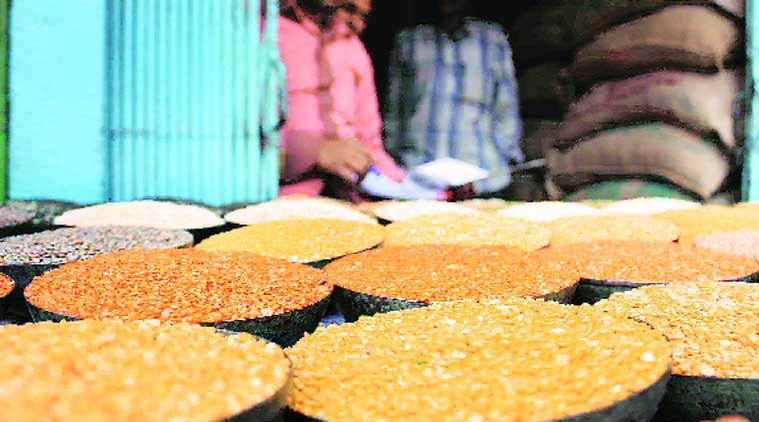 The fact about pulses is that India’s normal production of 18-19 mt and consumption requirement of 22-23 mt is more than the global annual trade of around 15 mt.
Skyrocketing dal prices are causing consternation to consumers and policymakers alike, even becoming a talking point in the ongoing Bihar Assembly elections. The Centre has announced plans to import more pulses and use its Rs 500-crore price stabilisation fund to subsidise these by paying for their transportation, handling and milling.
Watch Video: Has Dal Become The New Pyaaz? Explaining The Rise In Pulse Prices

Finance Minister Arun Jaitley has said that the Centre would create a buffer stock “preferably by imports”. This is a flawed strategy that is unlikely to work even in the short run. Prices have gone up — urad and arhar dal are now retailing at Rs 150-160 per kg levels — largely because of a second consecutive monsoon failure, impacting production in major producing states. There is a shortfall of at least 2 million tonnes (mt), whereas government imports have so far been limited to a few thousand tonnes. The stated intention to contract more imports on government account, far from cooling down domestic prices, has only led to a flaring up of international prices.
The fact about pulses is that India’s normal production of 18-19 mt and consumption requirement of 22-23 mt is more than the global annual trade of around 15 mt. In 2014-15, the country imported 4.6 mt. There isn’t really much scope to increase this. Given the limited global supplies, it is better that the government leaves imports to the private trade, rather than causing a further hardening of world prices through repeated floating of tenders. True, high domestic dal prices today may not win votes. But if they send the right signals to farmers to expand pulses acreage, that would be a more sustainable solution to bring down prices. Subsidising imports will only distort these signals.
The Centre should immediately announce a significant increase in the MSPs of pulses to be sown in the coming rabi season. Given that consumers are already paying Rs 70-100 per kg for chana and masoor dal, there is leeway for granting a substantial MSP hike over current levels. There should also be a freeze on the MSP of wheat, so that farmers even in Punjab, Haryana and other irrigated regions are induced to switch to pulses. But this can happen only if the government also guarantees to procure pulses, as in the case of paddy and wheat. India’s growing pulses demand can ultimately be met only through increased domestic production and higher yields. And that can come only from areas with assured irrigation where farmers have incentive to grow only paddy, wheat or sugarcane.
 Share
Share


