
Opinion Power yoga
If the Modi government loves yoga, it must set it free.
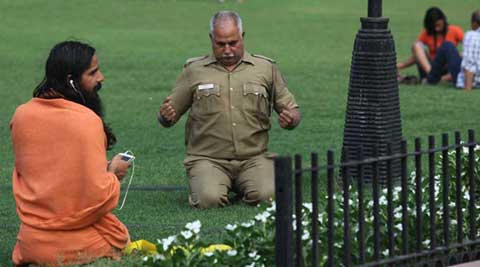


Just as the innovation of an International Yoga Day was degenerating, in India, into a politically and communally charged skirmish over the imposition of yoga, Yogi Adityanath has magically cleared the air by ranting that those who would distance themselves from the sun should either be cast into the sea or immerse themselves in darkness. Precisely such arm-twisting is the surest way to destroy yoga. By all accounts, Adityanath prescribed this strong medicine in reaction to the All India Muslim Personal Law Board, which had opposed compulsory yoga in schools, while clarifying that it had nothing against yoga but rejected the imposition of cultural paraphernalia associated with it. In turn, that was a reaction to an extraordinary claim by Shripad Yesso Naik, MoS for Ayush, who stated that namaaz includes eight yogic postures (he has since recanted).
This public discussion can be traced back to February, when BJP veteran Murli Manohar Joshi declared that Muslims do yoga five times a day and that the Prophet had been a great yogi. The government could have nipped such peculiar insights in the bud, but the ministers for home and Ayush did so only yesterday, by which time these ideas were flourishing in full flower and threatening to bear bitter fruit. In scant months, a well-conceived plan to promote yoga globally had turned into a Guinness record bid on Rajpath and, in schools, had raised minority anxieties about the imposition of a popular physical practice with heavy nationalist, religious and cultural overtones. It may be argued that imposition is routine in schools, where everything from syllabi to physical education are rule-bound. But schools make — or should make — their practices culturally agnostic.

The controversy over the promotion of yoga is unfortunate. Wellness has taken over part of the space ceded by religion, making yoga a promising brand ambassador for India. It has been spread by private enterprise for decades, usually without the help of government. In the US, for instance, Bikram yoga is a brand which flourishes despite scandals and setbacks. In the last half-decade, the TV evangelism of Baba Ramdev has converted middle India to yoga, a fine achievement that somewhat offsets other, indefensible exploits. If the government really values yoga, it should let it grow in a culture of openness. It should encourage its appropriation by a broad spectrum of entrepreneurial and other interests, instead of trying to appropriate yoga itself. The popularity of yoga cannot possibly grow if it feels like an imposition.
 Share
Share


