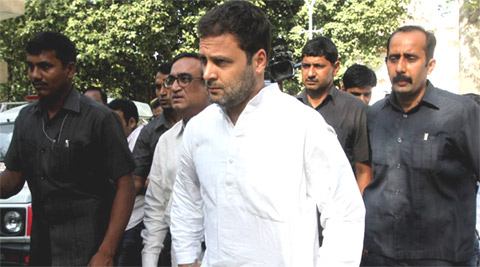

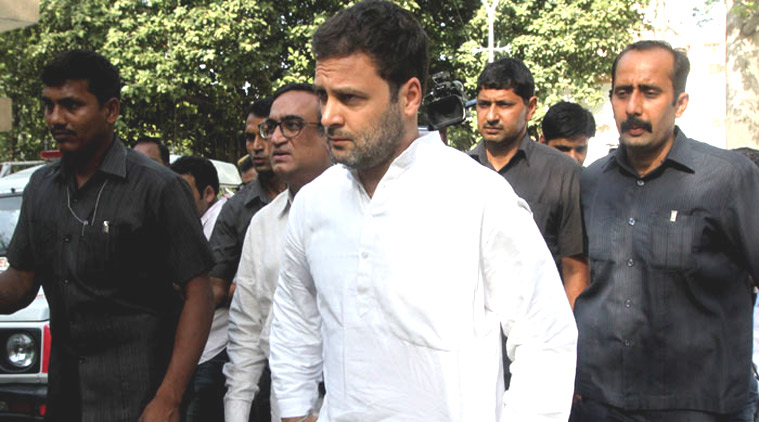
A day after he made a feisty return to Parliament, Congress vice president Rahul Gandhi raised the issue of net neutrality in the House, arguing for the principle that internet service providers (ISPs) be barred from prioritising data in exchange for money. This paper agrees that this principle must be defended if the open and innovative nature of the internet is to be preserved. However, as with his intervention on the land acquisition bill, Gandhi did so by casting private corporations in the role of evil marauders and accused the Narendra Modi government of trying to “carve out the Net and hand it over to some corporates”. That’s rich, coming from a leader whose party’s government was embroiled in scandal over its preferential allocation of 2G spectrum to select telecom providers.
However, Communications and Information Technology Minister Ravi Shankar Prasad’s response, too, failed to illuminate the pros and cons of net neutrality, reiterating only the opaque platitude that his government’s “aim is that the country’s 125 crore people should have internet”.


On internet related issues, neither the BJP nor the Congress has a robust record. Both adopted indefensible positions on the now-defunct Section 66A of the IT act. Their claim to being the guardian of internet freedom is, therefore, suspect. Now, they could make up for past mistakes by enshrining net neutrality in law. But internet governance is an ongoing project — will either party take up the cudgels for, say, the right to privacy, the enactment of which could curtail the state’s snooping capabilities?


