
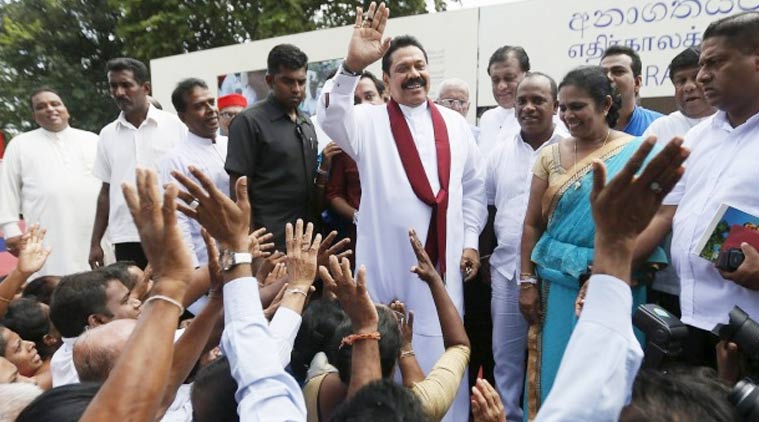
The main question hanging over the Sri Lankan parliamentary elections on August 17 is whether Mahinda Rajapaksa, ousted as president in January, will make a comeback eight months later as prime minister. Maithripala Sirisena, who defeated him in the presidential election and also succeeded him as the head of the Sri Lanka Freedom Party, surprised many by giving him a party ticket, but refused to name him as the PM candidate. In the Sri Lankan system, the PM is chosen by the president after the elections. If sufficient numbers in Rajapaksa’s group within the SLFP, and its coalition partners — known collectively as the United People’s Freedom Alliance — are elected to parliament, Sirisena is bound to come under pressure to name the man he ousted earlier this year as the head of government. But before that, the UPFA must have the numbers in the 225-seat parliament to make a bid for government formation.
Even though Sri Lankans ousted him as the president at the beginning of this year, Rajapaksa has himself been confident that the same voters will bring him back to form the next government. He has been playing on Sinhala nationalist anger against the international community for pressing the Sri Lankan government on human rights abuses and war crimes during the final military operation against the LTTE. But he has found it hard to erase voter impressions of his authoritarian tendencies and the allegations of corruption, nepotism and cronyism against him.


