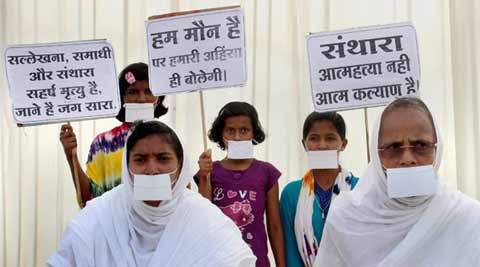

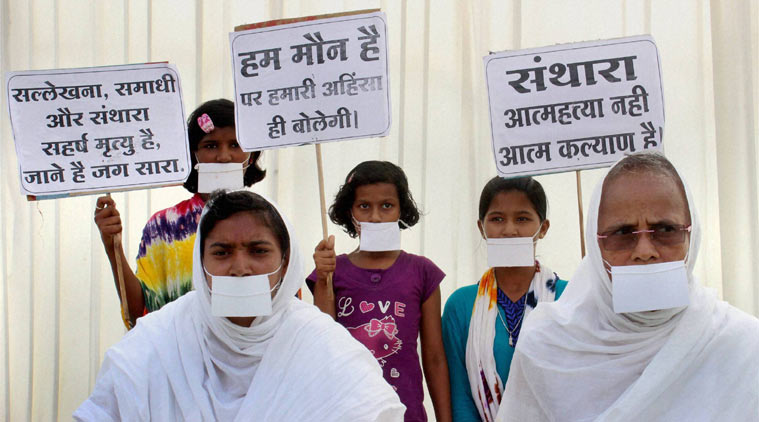
India is confronted by the ultimate question in all its forms. While the Law Commission has recommended the revocation of the death penalty for all offences barring terrorism, the case of Nikhil Soni versus Union of India, concerning the Jain practice of santhara, has drawn attention to the legality of suicide. In staying the order of the Rajasthan High Court criminalising the practice, the Supreme Court has shown commendable reluctance to summarily intrude upon the personal domain. However, the case presents yet another opportunity to examine end of life issues, which are insufficiently clarified in the Constitution. Article 21 only guarantees the right to life, and the penal code divides death into two categories — natural and unnatural. As humanity rejects destiny and strives for free will and control over nature — including the “natural” span of a human life — such a blunt approach will be increasingly unsatisfactory.
[related-post]


It is time to reconsider the legal, moral and societal status of suicide, on two counts. One, while medical science is expected to see extraordinary developments in the prolongation of human life, forcible extension at the expense of quality of life may be unethical. And two, since civilisation has chosen the path of individualism based on free will, the standing of the will to die must be re-examined. This debate must include the difficult question of assisted suicide, where the fear of rampant misuse for financial gain is not at all misplaced. But then, the anguish of hopelessly waiting to die is real, too. Last year, the Law Commission had recommended decriminalisation of attempted suicide. It is now time to consider the question in its widest sense, as a matter of life and death.


