
Opinion Fear and Fascism
Prince Charles gives voice to widely-held concerns in Europe. But imagining the solution will be harder
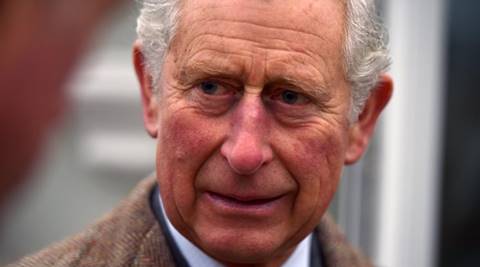 Britain's Prince Charles visits with people whose homes were flooded by the recent Storm Desmond, in Carlisle, England, Monday, Dec. 21, 2015. (Alan Davidson/Pool Photo via AP)

The stench rising from the political swamps of Europe seems to have breached the windows of Buckingham Palace. In a BBC Radio 4 broadcast, Prince Charles, heir to the British throne, has warned about “the rise of many populist groups across the world that are increasingly aggressive to those who adhere to a minority faith”. “All of this”, the Prince of Wales continued “has deeply disturbing echoes of the dark days of the 1930s”, when Fascist parties began their triumphant rise across Europe. Though the Prince of Wales was too polite to say just what had provoked his concern, his speech could not but be read in the context of the electoral triumphs of Donald Trump, and the growth of far-right forces across the continent. Prince Charles’ words have given voice to widely-held concerns — but it is important to note he provided neither a diagnosis of the problem, nor an agenda for action.
Key to the problem is this: The right is not rising in a vacuum, like some kind of pathological bloom. Technological change, and the dismantlement of the welfare state, today threaten the immiseration of great swathes of the Western middle and working classes. Entire sectors of employment will have given way to automation inside a generation. Left-liberal parties have, for the most part, failed to engage with the growing desperation of this mass of people, leaving the field open for demagogues and ethnic-religious nationalists.

Fascism, it is true, shares many features with the new right-wing populism, but it is important to note the historical context is vastly different. In the 1930s, Fascism broke from the moribund traditional right to defeat communism. Today’s European populists differ only in aesthetics, not ideological substance, from Margaret Thatcher or Ronald Reagan. They are saviours of the traditional right, not a breakaway. The backward-looking romanticism of Prince Charles, with its rejection of technology and yearning for traditional religious order, offers no means to defeat them. For ethnic-religious bigotry to be defeated, long-forgotten progressive ideas of community and welfare must be given centre-stage again, but grounded in the realities of our changed industrial-technological landscape. Imagining such an alternative is harder than calling Trump a fascist — but spitting abuse at the right, it has long been clear, is doing nothing to stop its rise.
 Share
Share


