
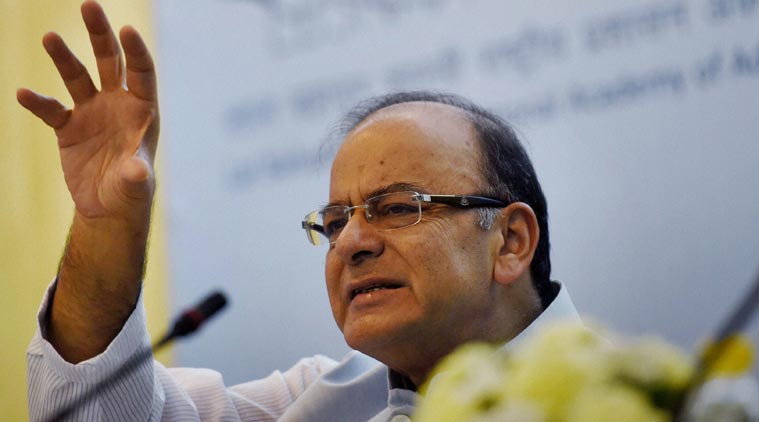
In a post on social media, Finance Minister Arun Jaitley has excoriated the Supreme Court for shooting down the National Judicial Appointments Commission, which was to replace the collegium system. Critics may say that the government could have studied the court’s ruling and pursued political and legal options, rather than resorting to an unusual mode of communication — a cabinet minister speaking his private mind in the public domain. One should, however, view his opinion more as part of an important public debate that the issue of judicial freedom has initiated. While Jaitley’s post may precipitate a needless confrontation between the executive and the judiciary, it is healthy for the pillars of Indian democracy to be slightly at odds with each other. Indeed, excessive agreement and proximity should be read as danger signals.
Jaitley has been a law minister and a prominent member of the People’s Union for Civil Liberties. As a student leader, he opposed the Emergency and enjoyed the discomforting hospitality of Tihar Jail. He knows that Indira Gandhi could suspend civil rights because, barring a few notable exceptions, the higher judiciary buckled and failed to protect the citizen from unbridled executive power. So the views he has expressed are unexpected. He has said that Indian democracy cannot be the “tyranny of the unelected”, in which the judiciary reifies its status and diminishes the other pillars of democracy. The fact is that no entity, whether elected or not, can be allowed to establish a tyranny in India, and the courts are expected to stand between the people and the tyranny of the elected. Besides, Jaitley’s comment conveys the impression that unelected institutions are inherently less legitimate than elected bodies like Parliament. This is a spurious argument, since both categories derive their legitimacy from the very same Constitution.


