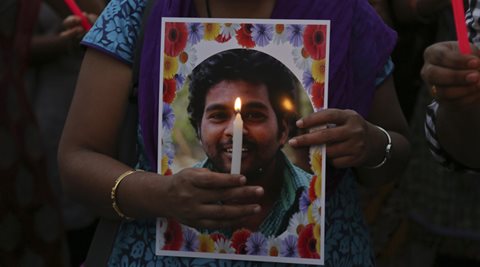
Thomas Piketty is apprehensive about the growing levels of inequality in India that he sees as a harbinger of more political and social unrest. So, where does the solution lie, particularly for a country that has seen rising democratic consciousness expressed through voter turnouts in recent times and is also home to a large population, nearly two-thirds of it below the age of 35? Piketty has a short answer: “The most powerful way to reduce inequality is diffusion of education and knowledge… investment in education is the number one policy solution.”
His diagnosis is not off the mark for two reasons. First, not only does India have high and rising levels of income and wealth inequality, the country is right at the bottom when it comes to educational inequality. In a 2008 paper, Pranab Bardhan, professor of economics in the University of California, Berkeley, used World Bank data to show the Gini coefficient — a popular measure of inequality, in which zero denotes no inequality and one shows extreme inequality — of the distribution of adult schooling years in India’s population to be 0.56. This was not just higher than China’s (0.37), but even more than for almost all Latin American countries (Brazil, 0.39). Secondly, the quality of education, whether at primary or college level, continues to be poor. It leaves a large section of the country’s so-called educated manpower ill-equipped to participate in a globalised market economy. Successive governments have held back from committing the resources required for universal quality education, while simultaneously thwarting enlightened private-sector initiative through bureaucracies like the University Grants Commission.


