

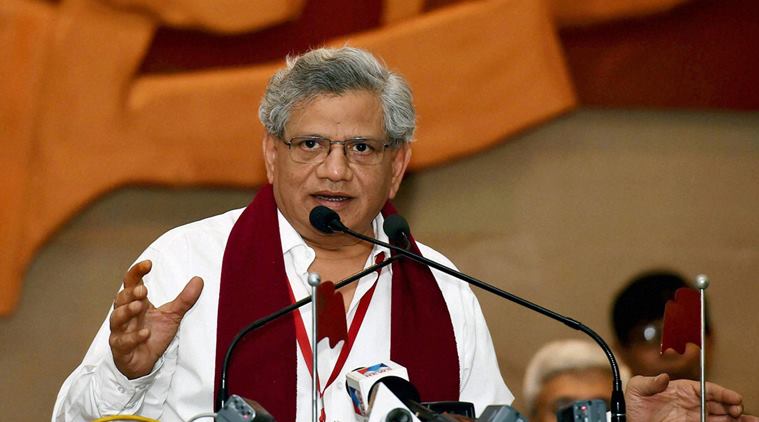
By all accounts, the CPM plenum that concluded on Thursday introspected about the party’s recent failures and inability to grow beyond its strongholds. The leadership admitted that the party is not truly representative of many sections of society. Promises were made that steps would be taken to have more women, Dalits and youth — there was even a proposal to introduce a 10 per quota — in leadership positions. There was criticism that the party leadership was alienated not just from the people but even from the cadres. Yet, on the threshold of two crucial assembly elections this year, in West Bengal and Kerala, CPM deliberations did not go deep enough.
The old slogans of socialism have lost their power to attract or energise the young and new political formations are moving into the space being vacated by the Left. The communist Left has been on the decline since the 1990s, even though the CPM managed to stay politically relevant by becoming a part of the anti-Congress, anti-BJP coalitions till 2009. Political and economic changes in the last quarter century have fragmented social constituencies that once identified with the Left.


In its obsession with big ideas like capitalism and imperialism, the CPM has also ignored locally relevant governance and livelihood issues even as the emergence of the AAP, for instance, indicates that a large section of people do want alternatives to the mainstream political formations.
The party has embarked on innovative outreach programmes in Kerala, a state where it has consistently grown, even if riven by factionalism. However, the leadership has been shy of showcasing or theorising the success of such experiments. The challenge before the CPM is to speak in a language that resonates with the people.


