
Opinion Baba Fadnavis
Maharashtra chief minister must focus on governance, not wield slogans to threaten people of his state.
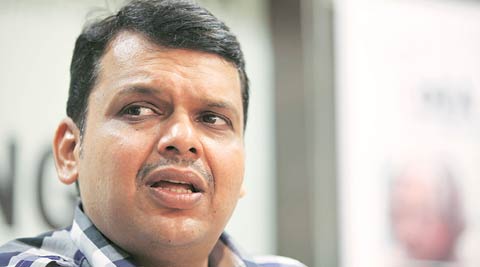 Chief Minister Devendra Fadnavis

 Maharashtra Chief Minister Devendra Fadnavis
Devendra Fadnavis’s statement at a BJP rally on Saturday that people who refuse to chant “Bharat Mata ki Jai” have no place in India is unbecoming of a chief minister. A day later, in Rohtak, Baba Ramdev claimed he would have decapitated those who found the slogan unacceptable but for the law. The yoga guru’s remark borders on incitement to violence. But in a time when an elected leader who also holds the constitutional office of chief minister makes a statement that violates both the letter and the spirit of the Constitution, and gets away with it, the question could be: Why single out Ramdev?
The Indian Constitution does not prescribe the chanting of any slogan or any other rituals as a condition of citizenship. In fact, it doesn’t envisage the Indian state in terms of a motherland — or fatherland, for that matter. It is imagined on the premise of equal rights to its citizens. Fadnavis, later, “clarified” that his government is guided by the Indian Constitution where every citizen has equal rights and would get justice. But recent actions of his government might suggest otherwise. Last month, a state BJP minister — supported by MLAs from all parties, including the Congress and NCP — piloted a resolution in the Maharashtra assembly for the suspension of AIMIM MLA Waris Pathan for refusing to chant “Bharat Mata ki Jai”. Political appropriation has turned the slogan contentious and its polarising impact is also reflected in a fatwa issued by the Darul Uloom Deoband. Individuals like Ramdev and institutions like Deoband are free to debate their ideas of nationalism and its appropriate manifestations as long as the debates do not incite violence or threaten public order. Elected officials, however, should, at the very least, ensure that their views are in consonance with the Constitution.

A city like Mumbai attracts global capital and talent because, despite being home to a vicious streak of nativist politics, it is broadly seen to be cosmopolitan and accommodative of religious, ethnic and cultural diversity. Hypernationalism, especially with religious overtones, threatens to disrupt this narrative and hurt the economy.
 Share
Share


