

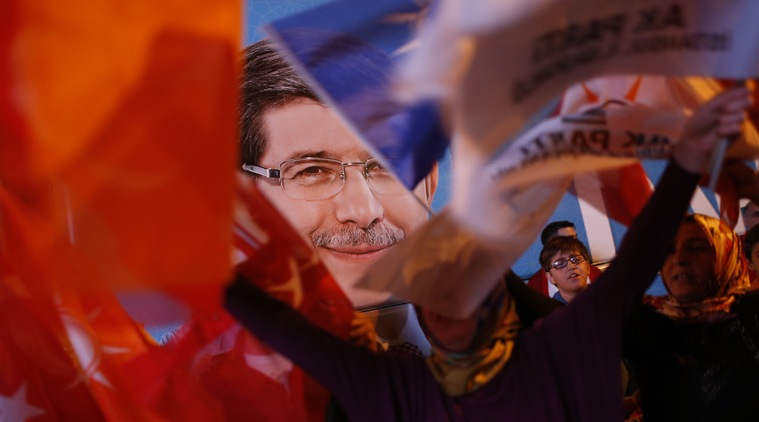
With Turkish Prime Minister Ahmet Davutoglu handing back his mandate to form a government to President Recep Tayyip Erdogan on Tuesday, Turkey looks set for fresh polls in November. Although there’s still room for the opposition to stitch together a coalition within the August 23 deadline, it’s most likely that a caretaker government will soon take office in Ankara. The June parliamentary election had ended the 13-year majority of the ruling Justice and Development Party (AKP), as voters tactically cast their ballot to preclude Erdogan’s attempt to transfer sweeping powers to the presidency by amending the constitution. However, the AKP’s failure to form a coalition is precisely what Erdogan wanted, since a new election could give the party an opportunity to regain lost ground.
This development may push Turkey towards a period of instability at a time when it’s threatened by the Islamic State (IS) and a reinvigorated Kurdish insurgency. The country has been witnessing a steady spate of terror attacks, even as its military carries out strikes against the IS in Syria and bombs camps of the Kurdistan Workers’ Party (PKK) in Iraq. On Monday, a few weeks after Erdogan finally allowed the US access to Turkish bases for strikes against the IS, the militant group released its first Turkish-language video, calling on Turkish Muslims to overthrow Erdogan and reject democracy. But Erdogan’s regime still sees the Kurds as the bigger threat and has been attacking the very Kurdish forces — apart from the PKK — doing much of the fighting on the ground against the IS.


