
Opinion An uphill fight
The anti-IS strategy is coming up short. It will need greater coherence and coordination.
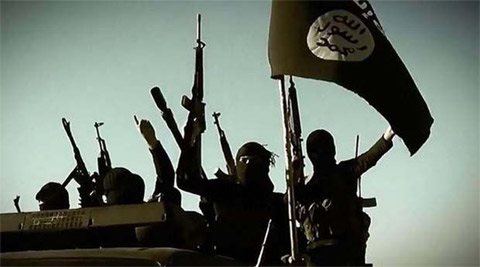


The Islamic State (IS) has challenged American claims that the aerial bombing campaign has weakened and divided the militants, provoking the Iraqi government’s push to recover territory. Over the last couple of weeks, Ramadi in Iraq’s Anbar province and Palmyra in Syria have fallen to the IS. Soon after thousands of civilians fled Ramadi, the IS took the inhabited town next to the ancient Roman ruins of Palmyra, a Unesco world heritage site close to oil and gas fields. Much depends now on the success of the ground operations launched by pro-government forces on Tuesday to retake Ramadi. The fate of Palmyra continues to rest in the IS’s hands, where the spectre of a Bamyan-style destruction looms.
The US took Baghdad to task after its 1,500-strong troops abandoned Ramadi in the face of only 150 IS fighters, exposing their lack of commitment and incompetent leadership. Others allege that the exhausted Iraqi troops, having defended Ramadi for more than a year, without ground reinforcements or support from the US-led coalition, cannot be faulted for overestimating the strength of the IS assault. But the uncontested fact is that the anti-IS strategy is coming up short.

The Iraqi government has also been less adept than the IS in publicising its successes, such as preventing the IS from breaking out eastward for Baghdad from Ramadi, or retaking the oil town of Baiji. As a result, there’s widespread scepticism about its ability to retake Ramadi soon. There are also concerns about the Shia militias now deployed in the Sunni-dominated Anbar province. In the long term, Iraq may face an unbridgeable sectarian divide. In the short term, more Sunni civilians may join the IS. It would seem that Baghdad is paying for the US decision to dismantle Saddam Hussein’s army completely, which deprived Iraq of its military expertise and also the Sunni commanders who now lead the IS.
In the aftermath of the Arab Spring, the Arab world is witnessing a collapse of states whose borders were artificially drawn by the colonisers. Syrian President Bashar al-Assad’s troops now defend contracting patches of territory, while the moderate rebels remain weak. It is difficult to see how the US-led coalition will defeat the IS without a workable arrangement with Assad and more formal coordination with Iran.
 Share
Share


