
June 7, 2023. It is 9 am on a typical English morning in Kennington, London. India wins the toss and with a view to capitalise on the green pitch and overcast weather conditions, elects to bowl. In comes the shock. As Rohit Sharma announces the playing XI, a very obvious selection error becomes evident — R Ashwin, the number one Test bowler, does not find a place in the playing XI. Instead, India goes in with a four-pronged seam attack with Umesh Yadav playing, and Ravindra Jadeja as the lone spinning all-rounder. Other than the Indian team, and its management/support staff, everyone (including Indian, Aussie and English cricketing legends in the commentary box) is flummoxed at this omission as Australia plays five left-handers with four in their top six batters. But the fans, in their usual “bleed blue” fervour, continue to root for India, hoping that their fortunes at ICC events will be reversed this time. Alas, it is not to be. India chokes.
The team was outplayed on the first day and did not show the gumption to fight back. On a pitch with a lot of juice and weather conditions that could seduce bowlers out of retirement, India conceded almost 500 runs in the first innings. Shami & Co failed to put the ball in the right areas. They sprayed the deliveries all over, allowing Steve Smith and Travis Head to stabilise from the initial jolts and counter-attack. Both batsmen posted match-winning centuries. Our famed batting line-up, too, was found wanting as their inept technique could not nullify the pace, bounce and seam that the Aussie bowlers extracted on a relatively easier Day 2 and 3 pitch. Granted — Rahane, Jadeja, Siraj and Shardul did contribute — but it was not enough to win sessions consistently over five days. There was simply no resistance put forth by Team India to lay claim to the coveted Test Title, which it has had the distinction of losing twice in as many years.


Being the captain, Rohit Sharma was tasked with parrying the jabs of the sabre-wielding journalists in the post-match interview. The questions that came his way were quite predictable: What went wrong? Why can’t our batters score runs in seaming conditions? What is the plan now, after having conceded such a huge lead to Australia? Why did the Indian team arrive one week prior to the Test? What was the approach toward team selection? Why were the players busy with the IPL instead of preparing for finals? (This is a question I find particularly pertinent. Indeed, why could our national team players not have skipped a season/part-season of the IPL to be better prepared for the finals of WTC? Surely, it’s national allegiance over the IPL franchise? Or are we living in times where cricketers are plain mercenaries, selling their skills to the highest bidder?)
Sharma responded with his usual devil-may-care attitude. He opined that after the first session on Day 1, team India was in a great position to go ahead but did not capitalise on the opportunity. He carefully dodged the question about reasons for this and instead asserted that it can happen to any team. He also added that at this level, he can’t teach the batters and bowlers how to play — a rebuttal that is understandable, but stinks of empty rhetoric. He admitted that there was a lack of preparation given the short duration Team India had, to get ready for the game, and confessed that a 3-4 week camp would have been ideal prep time for a game of such magnitude.
The head coach, Rahul Dravid, dealt with some loaded questions from Sourav Ganguly, one of them being, why has Indian batting time and again performed dismally in overseas conditions, particularly in England? To preface this discussion, it is pertinent to start with numbers. The Indian top order barely averages 0 runs per innings in England, with only Sharma averaging 40+ in seven Tests. Kohli averages a lowly 33 in 17 Tests; Pujara and Rahane a miserable 29 in 16 Tests. These are not the numbers you want going into a championship clash. Contrast this with Australia’s batting order that averages a cumulative 39.2 in England with two of their batsmen, Travis Head and Marnus Labuschagne, averaging 42, and Steve Smith securing supreme returns at about 60. Despite this data, Dravid gave credit to his team for fighting hard on the last two days. He conceded to the top order’s consistent failures in England but defended them because of their “legendary” status in Indian cricket — asserting that they set high standards of performance and will be the first ones to be scrutinised for their inadequacies. Interestingly, Dravid stated that batting performances have come down across teams due to the result-oriented wickets that are being curated, thereby dismissing the suggestion that this malady is specific to Indian batters (but as shown above, this is not accurate). Even so, he did admit that India did not play well.
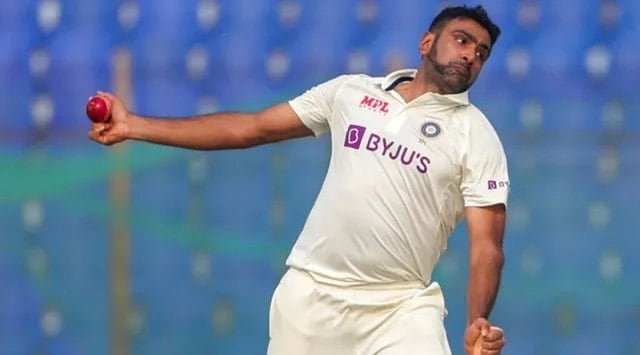
Although Ashwin’s exclusion was not directly dealt with by Dravid, Paras Mhambrey (India’s bowling coach) pretty much summed up the reasons for his decision citing pitch and weather conditions and India’s positive overseas record with four seamers. Sachin Tendulkar, our greatest icon, issued a tweet lamenting Ashwin’s exclusion. He tweeted, “…skilful spinners don’t always rely on turning tracks, they use drift in the air and bounce off the surface to disguise their variations [to get wickets]”. Having relied on Kumble and Harbhajan for overseas victories for almost two decades, this is an aspect which not just the master blaster but also Dravid should have been acutely aware of.
Looking at it from another angle, we can see that Ashwin, the number one Test-ranked bowler, has better figures than not just his immediate contemporary Jadeja, but also Umesh Yadav, who presumably got the nod ahead of the wily off-spinner. Ashwin has 18 wickets in seven tests in England at an average of 28.11, as against Jadeja’s 27 wickets in 12 Tests at 43.48 and Yadav’s 11 wickets in three Tests at 31.18. Interestingly, for all the eyeballs Jadeja attracts for his batting, he scores a meagre five runs extra per innings when pitted against Ashwin in England (Umesh Yadav being a non-starter in this discussion). Why then was he overlooked? Is it to do with his independent outlook towards cricket or his constant desire to improve as a cricketer, often interpreted as “overthinking”? Or is it because he doesn’t look to curry favours with the captain or team management? Whatever the reason, it is certainly not his performance which, as shown above, out-classes not just his peers in the bowling department but also matches the top-order in the batting department. (At least in terms of numbers. Not for a moment am I suggesting that he should be opening). In a recent interview with Venkata Krishna B of The Indian Express, he confessed to being “traumatised” due to being frequently dropped for overseas matches.
The idea behind highlighting this double standard, which has existed in Indian cricket for decades, is not just my attempt to raise a collective voice within the cricket-loving community to hold the BCCI and team accountable but to also usher a change in guard. Our “so-called” batting legends who have failed consistently for the past decade and more at ICC events should not continue to feel insulated from any and all scrutiny based on their IPL reputations and robust batting performances in home conditions. Only when the benchmark for scrutiny and accountability is uniform across the spectrum, only when bowlers and batsmen are treated alike, and only when the thought process behind team selections is forever changed, will we be able to not just compete but consistently win at world events.
I hope that the higher powers in BCCI are listening to the voice of a cricket-frenzied nation. I hope they sense our desperate desire to witness team India claim their rightful place in the annals of cricketing history — that of being a cricketing superpower — not just in terms of revenue generation, but also on the basis of championship trophies. As the Dutch impressionist painter Vincent van Gogh wrote, “for my part, I know nothing with any certainty, but the sight of stars makes me dream”.
The writer is a former captain across formats for UP, Dwivedi has represented 4 IPL franchises and played over 120 Domestic matches. He now practices law before the Indian Courts


