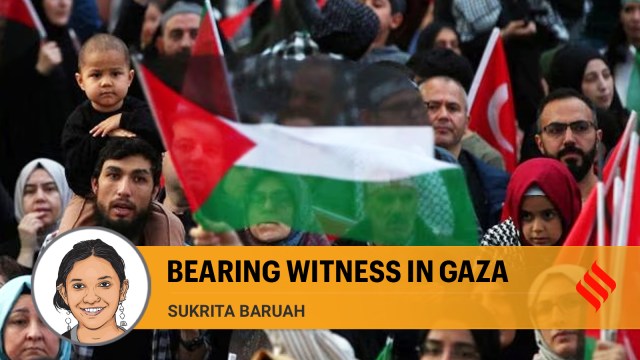
The journalists of Gaza bear witness differently. For those closely observing the horrific developments unfolding day after day in that thin strip of land, some names have become far more than those belonging to bearers of “news” — Wael Al-Dahdouh, Plestia Alaqad, Motaz Azaiza. When 22-year-old Plestia’s Instagram handle — where she has regularly been posting her reportage and updates — went silent for three days because she had lost internet connectivity, panicked followers flooded her comment sections asking if she was alright, if she was still alive. Wael, Al Jazeera’s Gaza Chief of Bureau, was live on air when his wife, son, daughter and 18-month-old grandson were killed in an Israeli airstrike. Cameras were trained on him at the hospital when he saw and held their lifeless bodies. Less than 24 hours later, he was back on air, saying, “I saw that it was my duty, despite the pain and the bleeding wound, to return in front of the camera and communicate with you on social media as soon as possible.”
In ways that they would have never wished for, they are as much subjects of their own reportage as the rest of Gaza. And as they bring to us image after image, update after update of death and despair, they don’t just want to inform us of the magnitude of suffering. They also hope that something in these images and updates will move something, will help halt the juggernaut of destruction so that their families and friends may live. These are not just facts for our information presented by professionals, these are also cries for help by civilians. There are no foreign journalists in Gaza. Their own phones, cameras and voices are all they have and they have been valiantly pushing against staggeringly difficult odds to push out their images and words.


At this peak of human tragedy, has any ideal of the power of testament crumpled? But they continue through grief, fear and the spectre of death to bear witness for a world that watches as everything they know is destroyed.
Through this heartbreaking display of courage, the most moving image for me was when it wavered to lay bare what has been suppressed — when journalist Salman Al-Bashir pulled off his blue press helmet and jacket, breaking down while reporting on the killing of his colleague Mohammed Abu Hatab:
“No one is seeing us or the size of this catastrophe and the crime we are experiencing in Gaza… We are victims, directly on live television. We are losing souls one after the other… We are martyred victims in a matter of time, we wait our turn, one after the other.”
sukrita.baruah@expressindia.com


