
Opinion The Jharkhand juncture
It is a bridge between the BJP’s conquests in Chhattisgarh and its ambitions in Bihar.

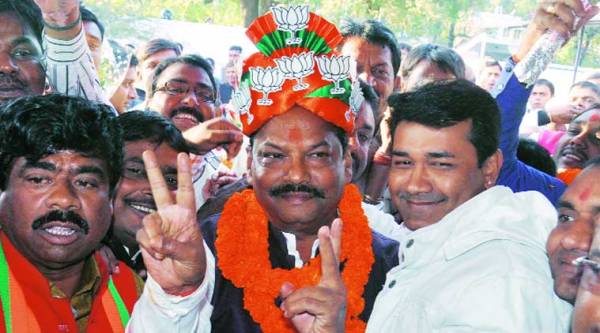 While the demand for Jharkhand emerged from Adivasi movements in the early-20th century, the creation of the state in 2000 owes much to the BJP-led Centre at the time.
By: Uday Chandra
Last Sunday, Raghubar Das became Jharkhand’s first non-Adivasi chief minister. Das is the 10th chief minister in a state that is only 14 years old. It would be an understatement to say that the political history of this fledgling state has been turbulent. Jharkhand’s recent past has been marked by spectacular corruption, administrative incompetence and a splintered Maoist insurgency. A decisive majority for the BJP-AJSU coalition in the Jharkhand assembly, following the BJP’s victory in 12 of the 14 Lok Sabha constituencies in the state, is thus a critical moment in the state’s history.

Activists, speaking on behalf of Adivasis, have objected to Das’s appointment as chief minister because he is not an Adivasi himself. Party sources, however, point to the humiliating loss of the three-time chief minister, Arjun Munda, in his constituency, Kharsawan, which made it difficult to elect him as leader of the new government. The Narendra Modi-led BJP is also keen to develop new leaderships in the states, as we have seen in Maharashtra already, and Das is believed to be on good terms with both Modi and Amit Shah. With Adivasi organisations protesting on the streets of Ranchi, the voting public is now being assured that the deputy chief minister will be an Adivasi legislator.
There is undoubtedly more at stake here than the chief ministership. The controversy over Das’s election goes to the heart of a deeper contradiction. While the demand for Jharkhand emerged from Adivasi movements in the early-20th century, the creation of the state in 2000 owes much to the BJP-led Centre at the time. Of course, there is no straight line connecting the mobilisations led by Jaipal Singh Munda, the great Adivasi leader from the region, in the 1940s and the political machinations of the 1990s that ended with the BJP delivering on its electoral promise to create smaller states out of Uttar Pradesh, Madhya Pradesh and Bihar. By the time Jharkhand was created, the demands of leaders like Ram Dayal Munda, a vocal campaigner for an Adivasi state over the previous two decades, had been overshadowed by the BJP’s growing electoral interests in regions where they had a poor track record.
The Jharkhand that emerged in 2000 was far from being an Adivasi state. The contours of the new state excluded the Adivasi-majority districts of Chhattisgarh, Odisha and West Bengal, which had been part of the demand for Jharkhand even during the states’ reorganisation in the mid-1950s. As a consequence, according to the 2001 Census, only 26.3 per cent of the new state are recorded as ST. The 2011 Census shows that little has changed in the state’s demographics: Adivasis are now 26.2 per cent of the state’s population. Insofar as demographics play a part in the creation of electoral constituencies, it ought to surprise no one that just 28 of the 81 Vidhan Sabha seats are reserved for ST candidates while 44 are unreserved constituencies.
The relationship between Adivasis and the BJP today is based on future expectations. If Adivasis have voted decisively for the BJP, not once but twice this year, we need to understand why. The success of the BJP government in neighbouring Chhattisgarh has played a significant role in the political calculations of ordinary Adivasis. Chhattisgarh boasts of a well-functioning public distribution system, for instance, which Jharkhand’s poor can scarcely find believable. In contrast, the JMM has offered little except fiery words over the past decade. The other parties are not large enough to lead a stable government in the state. Counter-insurgency has pushed the Maoists to the brink. The presence of the Chhattisgarh chief minister at Das’s swearing-in ceremony was no accident. The BJP understands what Adivasi voters expect from it in Jharkhand.
The BJP also understands what the non-Adivasi majority in Jharkhand expects. Das belongs to an oil-pressing (Teli) caste, classified in Jharkhand as a mercantile or Bania community. This is an upwardly mobile social group within the state, though Das’s family hails from what is now Chhattisgarh. That Jharkhand is not an Adivasi state has been underlined by the BJP’s decision here. There is also no doubt that the decision to back Das over his rivals has much to do with the assembly elections in Bihar next year. The support of Banias, approximately a 10th of the population in Bihar, will be crucial for the BJP if it is to defeat the combined might of Lalu Prasad and Nitish Kumar. To sum up, Jharkhand is a bridge between the party’s conquests in Chhattisgarh and its ambitions in Bihar. Das’s tussle with the challenges of corruption and social unrest over the next five years must be seen against that backdrop.
The writer is with the department of religious diversity at the Max Planck Institute for the Study of Religious and Ethnic Diversity, Gottingen
express@expressindia.com
 Share
Share


