
Opinion The future is a plan away
Reforming the Planning Commission to be a thought catalyst.

When the pace of change exceeds the pace at which organisations adapt,they risk obsolescence. Such has been the fate of dinosaurs,business organisations and empires. Speaking to the National Development Council in July,Prime Minister Manmohan Singh called upon all government institutions to adapt to the changed environment in which they must deliver results to their stakeholders,and to innovate. Leading the way,under his direction,the Planning Commission had earlier embarked on its reform. It had asked thought leaders across the country what should be the purpose of a national planning commission in the 21st century.
These leaders were unanimous that whereas the Planning Commission must not continue operating as it is,the country needs an institution to foresee forces shaping its future and to project scenarios to guide policymakers and implementers in the Centre,the states,and the private sector. Change globally,and within the country,is much faster and less certain. Therefore more,rather than less,navigation is required than before. And while there cannot be a predictive map for the unknown,new techniques,such as scenario planning,can provide a compass. They also recommended that the Planning Commission must anticipate new challenges that will come about as the world and the country change and think through options for policymakers to respond to these challenges. To perform this role effectively,it must become a central node in a network of thought-leaders,experts and think-tanks within the country and outside. Also,whereas the Planning Commission must not be an implementer,which is the role of the executive,it must be a good diagnostician with solutions for systems reforms that will enable effective implementation. Finally,it must be,in the prime ministers words,an essay in persuasion to make change happen.

The commission must transform itself to perform such leadership functions while continuing to perform other essential functions such as money allocations. Thus the plane must keep flying even while it is being redesigned. The next major scheduled flight of the commission is the preparation of the Approach to the Twelfth Plan. It is developing the Approach in the new ways mentioned: more systemic and more strategic. The commission is also preparing communication channels to consult more widely with citizens in the preparation of the Approach and the Twelfth Plan. On its website it is asking for suggestions,even for how it should perform its functions.
The nations goal is to achieve faster,more inclusive and environmentally sustainable growth. The commission has lifted itself out of sectoral silos to prepare an Approach to these inter-linked objectives. It is looking at the big picture through ten cross-cutting lenses. These include the forces of citizens expectations,innovation and enterprises,demographics and skills and land and water stress. These forces pervade the whole system and,through their interactions,shape it. Descriptions of these forces will also be on the website for all to see and contribute perspectives. The gauges on the planners (and implementers) dashboards must be designed to monitor not only overall growth in money terms GDP,savings,investments,inflation,etc but also the pace and quality of inclusion,the condition of the environment and the quality of governance and implementation. Such quadruple bottom line ESEG measurements (of the economy,society,environment and governance) are necessary for sound,balanced,and sustainable growth.
The Planning Commission,with its many divisions,and its multiple linkages into Central and state governments,is a complex organisation. Change has begun. Reforming an organisation is not easy,as leaders of even simple business organisations and NGOs will attest. Nor is it accomplished in a day. A necessary condition for successful change is a personal commitment by the leadership of the organisation to make it happen. The leadership of the Planning Commission its deputy chairman,its members and its senior staff are working to make change happen. They welcome constructive criticism and there is plenty of late!
Complex problems require balanced solutions. Multiple trade-offs must be recognised and resolved before action. It must be the planners job to point out these trade-offs to implementers,lest they rush to action that may have unintended consequences. Therefore all great organisations and societies nurture institutions within themselves think-tanks,philosophers and thought-leaders to keep themselves on track towards their goals. The challenge for India,the worlds largest and most diverse democracy,is to obtain consensus and get multiple,independent-minded experts and constitutionally independent organisations to work together. By facilitating an effective dialogue on goals,challenges and options,the Planning Commission will play its role as an essay in persuasion and a catalyst for systems reform.
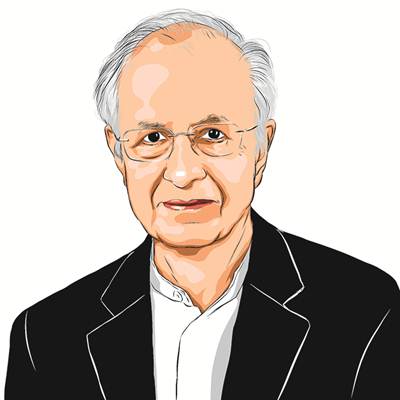
The writer is a member of the Planning Commission
 Share
Share


