
Opinion Taking the cheap out of China
Labour costs are rising in China,potentially levelling the global manufacturing field


Labour costs are rising in China,potentially levelling the global manufacturing field
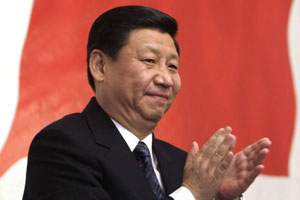
When Chinas vice president,Xi Jinping,visited the White House on Tuesday,President Obama renewed calls for China to play more fairly in the world economy. But while Chinas industrial subsidies,trade policies,undervalued currency and lack of enforcement for intellectual property rights all remain sticking points for the US,there is at least one area in which the playing field seems to be slowly levelling: the cheap labour that has made Chinas factories nearly unbeatable is not so cheap anymore.

China has experienced sporadic labour shortages,which in turn have driven up its once rock-bottom labour costs. This trend is particularly evident in the weeks following Chinas Spring Festival,or New Year. Although nearly two weeks have passed since the Lantern Festival that officially marks the end of the 15-day holiday,cities across China are still facing a serious labour shortfall. In order to lure new workers and retain the old,some companies give employees sizeable bonuses just for coming back to work,while others offer cash for every new employee they bring along with them. Despite all this,cities like Beijing,Shenzhen and Guangzhou are still short of hundreds of thousands of migrant workers.
Numerous factors underlie Chinas mounting labour woes. Until now the country has been able to achieve its stunning economic growth by shifting a large numbers of farmers into non-agricultural jobs. Over the past several years economists have warned that China may be reaching the so-called Lewis Turning Point the stage at which the rural surplus labour pool effectively runs dry and wages begin to rapidly increase.
Chinas population has been steadily ageing,and by 2020 the nation will have more than 200 million people over age 60. Furthermore,rising living costs in urban China coupled with markedly improved conditions in rural areas are encouraging many would-be migrant workers to look for opportunities closer to home. In addition to a shortage in the sheer number of available workers,Chinas labour problems are further exacerbated by a shift in the quality and character of its work force. For the older generation,there is very little a factory or foreman can dish out that seems too difficult to deal with,given that they witnessed,or grew up with parents who had witnessed,the nations rocky ride through the Communist Revolution,collectivisation,the disastrous Great Leap Forward and the Cultural Revolution. These are the people who pioneered the model of migrant labour on which Chinese manufacturing has come to depend: long hours in substandard conditions,all for a fraction of what US workers earn.
According to the government report, 70 per cent of rural migrants are now under 30. That means they are members of the so-called after-80s generation a euphemistic term to describe those who grew up during the nations economic revival and have never experienced real deprivation or acquired a taste for the chiku (eating bitterness) work ethic championed by previous generations. In the past,Chinas migrant workers were just thankful not to go hungry; today they are savvy and secure enough to start being choosy. Higher salaries,basic benefits,better working conditions and less physically taxing jobs are only the beginning of their demands,and for many factories,these are already too costly to be tenable.
For China,having spent the last three decades building the nation on the back of its cheap labour force without having to pay too much attention to its welfare,all this is uncharted territory. It is also a serious blow to the comparative advantage that has helped make its factories an international juggernaut.
Its no wonder then that the day after meeting with Xi,Obama showed up at a Master Lock plant in Milwaukee declaring that the time for manufacturing jobs to return to America had arrived. Not too long ago such a statement would have been nearly unthinkable,but now,thanks to Chinas rising labour costs,it looks as if America might be back in the manufacturing game sooner than expected.
MICHELLE DAMMON LOYALKA is a journalist who lives in Beijing,is the author of Eating Bitterness: Stories from the Front Lines of Chinas Great Urban Migration
 Share
Share


