
Opinion Ram Madhav writes: On terror, we need a calm and mature discussion
Debate over terrorism should be free from ‘I am the victim’ versus ‘I said so’ narratives and focus on reforming religious doctrines themselves
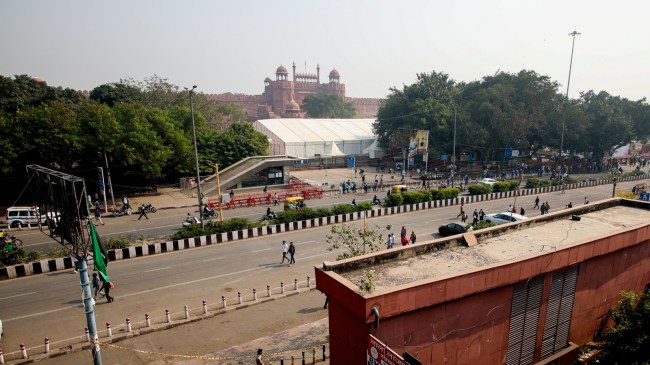 The Delhi bomb blast site after safety inspections and cleaning by authorities, outside Red Fort in New Delhi.

A month has passed since the deadly car bomb explosion near the Red Fort in Delhi, which killed 13 people and injured scores of others. The incident created shockwaves, especially after the news that the Haryana and Jammu & Kashmir Police had led a joint operation at locations linked to Muzammil Ahmad Ganai, a Kashmiri doctor working at Al-Falah University in Faridabad, and others. They recovered explosive material sufficient to cause a series of blasts across the country. Prime Minister Narendra Modi called a meeting of the Union cabinet, which condemned the blast as a “heinous terror incident, perpetrated by anti-national forces”. The National Investigation Agency, which took over the investigation, suggested it may have been a suicide attack perpetrated by a “white-collar” module, with alleged links to Pakistan-based terror outfits like Jaish-e-Mohammed.
In the immediate aftermath, animated discussions ensued with allegations and counter-allegations. But a month later, it is time to calmly dissect. In a refreshingly introspective article in The Milli Chronicle, Mumbai-based author Osama Rawal makes some profound arguments about the lessons one should learn from the incident rather than continuing with the “deep intellectual dishonesty that is rampant in our public life”. Rawal rues the fact that the wider narrative “sidesteps the central truth — that the perpetrator acted in the name of an ideology, a self-declared inspiration that many refuse to confront”.

Two important lessons must be drawn from the latest incident. First, the myth that education and economic development are the panacea for terrorism needs to be discarded. Umar Nabi, the alleged suicide bomber, was a doctor, as were three of those arrested, while another was a technical expert in the use and modification of drones.
Globally, several high-profile terrorists have been highly educated. Osama bin Laden was an engineer; his deputy, Ayman al-Zawahiri, was a surgeon; Mohamed Atta, the lead hijacker in the 9/11 attacks, was also an engineer who studied urban planning in Germany. Among Indian
terrorists, Riyaz Bhatkal was an engineer; Ahmed Abbasi, convicted for the Gorakhnath temple attack in 2022, was an IITian. The important lesson is that, to quote Rawal again, “radicalisation is not the child of poverty, it is the child of conviction”.
That brings us to the second unsettling fact. Such conviction can often stem from religious ideologies. Umar Nabi recorded a video in which he claimed that what the world calls “suicide bombing” is in fact an “act of martyrdom”, and that such acts are rooted in Islamic tradition and have been religiously validated.
It is unfair to profile the people of an entire religion as terrorists. But the uncomfortable reality cannot be brushed under the carpet either. It is here that the Muslim intelligentsia has a greater role to play. There are growing voices within the Muslim community that no longer fall for the deceptive propaganda of “Islam in danger” as an indirect justification of terror, and openly decry such acts.
In the recent instance, Citizens for Fraternity (CFF), led by eminent citizens like Najeeb Jung, S Y Quraishi and Lieutenant General Zameer Uddin Shah, issued a statement calling the terror incident an “assault on our nation”. The Shahi Imam of the Jama Masjid, as well as All India Majlis-e-Ittehadul Muslimeen (AIMIM) leader Asaduddin Owaisi, and the leadership of both the Jamaat-e-Islami and the Jamiat Ulama-e-Hind, along with many others, came forward to decry Umar Nabi’s contentions about Islam.
Globally, such efforts are being spearheaded by leaders like Mohammad Al-Issa, secretary general of the Muslim World League in Saudi Arabia and Yahya Cholil Staquf, chairman of the executive council of Nahdlatul Ulama (NU) in Indonesia. Both leaders strongly condemned the Delhi blasts. While Al-Issa called them “heinous acts” and reaffirmed Islam’s firm stance against all acts of terrorism, the NU leadership emphasised India and Indonesia’s common values and called for “shared counter-terrorism strategies”.
Mature debate over terrorism should be free from “I am the victim” versus “I said so” narratives and focus on reforming religious doctrines themselves.
The writer, president, India Foundation, is with the Bharatiya Janata Party

 Share
Share


