
Opinion Justice Katjus timely lament
Article 32 in our Constitution enables a citizen to approach the Supreme Court directly in case of violation of fundamental rights....
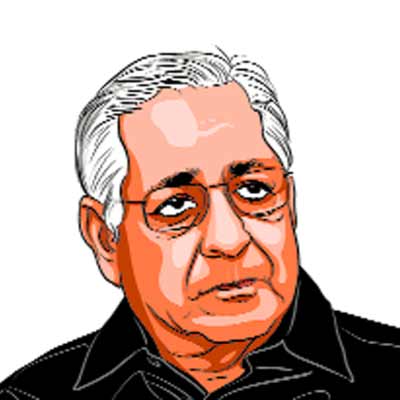

Article 32 in our Constitution enables a citizen to approach the Supreme Court directly in case of violation of fundamental rights. This article was described by Dr Ambedkar as the heart and soul of the Constitution. Today,Article 32 is not an animated soul and has lost its capacious heart owing to insistence of the Supreme Court that the aggrieved citizen should first approach the High Court. The reason for this,apparently,is the worry about the growing burden of arrears which ironically is largely the Courts own creation thanks to the extravagant exercise of its special leave jurisdiction.
Justice Markandey Katju,speaking for a Division Bench of the Supreme Court comprising himself and Justice Lodha,rightly laments the Courts grant of special leave in cases which do not warrant interference,like a High Court order allowing an amendment or condoning delay or extending time for filing written statement. No question of law of general importance is involved in these cases. The Supreme Courts jurisdiction undoubtedly is unlimited but that precisely necessitates self-imposed limitations on its exercise. Otherwise the Court will be flooded with all kind of special leave petitions and a time will come when functioning of this Court will become impossible. The Bench has not stated anything novel,but reiterated what needed to be said in a forthright manner in view of the Courts tendency to overlook its decisions where it has been repeatedly stressed that the Supreme Court was never intended to be a regular court of appeal and in the vast majority of cases the High Court orders must become final even if they are erroneous. Justice Mathews views expressed in 1982 are apposite: The effort then must therefore be to voluntarily cut the coat of jurisdiction according to the cloth of importance of the question and not to expand the same with a view to satisfy every litigant…. It is high time these wise admonitions are seriously heeded.

I had strongly advised a client not to file an SLP against a High Court order passed in a summary suit for deposit of a certain amount within a certain time. To my embarrassment I was told triumphantly that the Supreme Court had interfered and reduced the amount of deposit. This impelled my article in the Illustrated Weekly of India in January 1985,where I remarked that it is easier to spot a winner at the Mahalakshmi race course than to predict the fate of a special leave petition.
Broad guidelines for exercise of special leave jurisdiction as suggested by the Bench are imperative. One of these,grave miscarriage of justice,is unexceptionable. Unfortunately judges do not share a uniform conception of grave miscarriage of justice. Subjectivity is inevitable. And therein lies the rub. The remedy lies in judicial discipline observed by the great US judge Louis Brandeis who refused to be seduced by the Quixotic temptation to right every fancied wrong because then the Court will be unable to correct wrongs which require to be righted.
Elegant judgment
Court judgments generally make dull heavy reading but there are exceptions. A notable one is a judgment of the Patna High Court. The issue was about cricket. A fierce controversy emerged between the Bihar Cricket Administration and the Board of Control of Cricket in India. Justice Ravi Dhavan,since retired,elegantly portrayed the forensic battle scene in court in pictorial terms: The court has heard arguments simultaneously from three Advocates on both sides and all have bowled in the same over and each seems to be throwing a body-line. Sabre rattling counsel fling at each other without ball and bat but their verbal volleys seem like fours and sixes. The argument match is very unconventional and the style of pleading was not confined within the boundaries of traditional submissions. It is more a frenzy amongst onlookers at the stadium stands. Justice Ravi Dhavans description could well apply to proceedings before certain benches of the Supreme Court where,regrettably,lung power and heated interruptions dominate rather than logic and decorum.
 Share
Share


