
Opinion Ashutosh Varshney writes: James C Scott, scholar of resistance
He grew up in a generation that was fascinated with peasant rebellions, not simply on the left but also on the right
 Revolutionary excesses aside, there was also an opposite challenge to deal with. (Illustration by C R Sasikumar)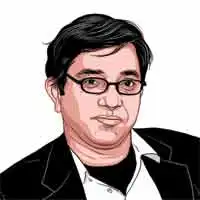

“If the revolution cannot even deliver the petty amenities and minor humanities that animate the struggle of its subjects, then there is not much to be said… All the more reason, then, to respect… the weapons of the weak. All the more reason to see in the tenacity of preservation — … in truculence, in irony, in petty acts of noncompliance, in foot dragging, in dissimulation … in the disbelief in elite homilies, in steady, grinding efforts to hold one’s own against overwhelming odds — a spirit and practice that prevents the worst and promises something better.” These stirring words were written by James C Scott, Yale professor of political science, who died on July 19, aged 87. They are also the closing lines of Weapons of the Weak (1985), a modern-day masterpiece of social science, which not only reshaped the study of peasant resistance, but subaltern resistance in general. It gave the powerless a new kind of agency.
What was Scott trying to say about peasant behaviour? Where did he make his empirical discovery? What impact did it have? Was he right? Scott grew up in a generation that was fascinated with peasant rebellions, not simply on the left but also on the right. After the Communist revolution of China and the great resistance in Vietnam, the right was willing to argue: Give the peasantry a piece of the land and it will be the most conservative class in society, but if you deprive the peasant of land, he will rise in rebellion and topple the order.

By the 1970s, large parts of the left, though ideologically in favour of peasant (or collective) ownership, were also beginning to doubt the utility of peasant rebellions. The agrarian convulsions under Mao Zedong, the most towering peasant leader of the 20th century, were coming to light. The Maoist polity was supposedly based on peasant power, but between 30-40 million peasants starved to death during the Great Leap Forward (1958-61), and a few million during the stringent early years of the Cultural Revolution (1966-70). Yet Mao paid little attention to “the petty amenities and minor humanities” that the peasants deserved.
Scott on the left found such revolutionary excesses agonising. His earlier great work, The Moral Economy of the Peasant (1979), was archives-based. To understand peasant life first-hand, he spent nearly two years immersed in a Malaysian village. He absorbed the local dialect, and learned about peasants “from the moment (he) opened his eyes in the morning until (he) closed them at night… working by a kerosene lamp and bitten by bugs”, though sometimes succour did come in the form of Jane Austen, Zola and Balzac.
Revolutionary excesses aside, there was also an opposite challenge to deal with. Antonio Gramsci — a Marxist critic of fascism, who died in Mussolini’s prison in 1937 — had become popular in left circles for his concept of hegemony. Gramsci’s basic idea was that the underprivileged didn’t rebel against the powerful because they shared their worldview. Why would the powerless rebel, which the left expected them to, if they voluntarily subscribed to the dominance of the powerful?
So what did nearly two years of village living teach Scott? There was a vast gulf between the public/collective and private/individual aspects of peasant behaviour. Peasants engaged in no public confrontation for it would have invited “dangerous retaliation”. But resistance was common, and its forms unexpected: “foot dragging, dissimulation, false compliance, pilfering, feigned ignorance, slander, arson, sabotage and so forth”. He called them “everyday forms of resistance”. Such “tenacity of preservation … prevented the worst”.
A similar strategy was applied to Islamic tithe. Instead of giving only rice as tax, Muslim peasants would add dirt to the rice bags, fulfill the quota of tax, and save some rice for the family. This attack on the theory of hegemony reshaped the studies of development and subaltern resistance. Absence of collective protest did not mean acceptance of the worldview of the powerful. It was simply too hard to rebel. “Petty acts” of resistance served self-preservation better.
The next big book was Seeing Like a State (Yale, 1998). It was a critique of “high modernism”, by which Scott meant the modern state’s project of “legibility”, its imposition of top-down versions of progress on powerless citizens, and its neglect of “metis”, the local forms of wisdom, knowledge and solutions developed over decades of practice. Examples of “legibility” included the emergence of permanent last names in Britain (only in modern times), “cadastral surveys” in France (an agricultural field measured in acres and hectares, as opposed to how many cows it could sustain), the use of the census everywhere (19th century onwards), and the grid-like structure of modern cities (New York and Chicago have numbered streets) compared to the complex structure of pre-modern cities (Paris streets are labyrinthine). The neglect of “metis” was reflected, most of all, in the rise of monoculture in agriculture, destroying localised knowledge of what worked in which setting.
Finally, top-down schemes were to enhance human welfare. Most, however, only brought untold destruction, including the collective farms in the 1930s’ Soviet Union, the construction of Brasilia as Brazil’s capital city, the “forced villagisation” of 1970s’ Tanzania. Only some top-down schemes, such as state-led vaccinations, were uplifting. Scott also studied Le Corbusier’s Chandigarh, India’s most grid-like city, but did not uncover systematic destruction.
So was Scott right? Let us concentrate on the magisterial Weapons of the Weak. Did they “prevent the worst and promise something better”? They certainly did the former in the extreme power-laden conditions. A collective protest, clearly, would run the risk of injury, incarceration, even death.
But the history of modern societies also demonstrates a longer-run truth, which puts a different light on this short-run pragmatic gain. Peasant welfare can’t be durably enhanced by keeping peasants on land. It is an empirically grounded law of development that agriculture simply cannot grow as fast as the non-agricultural sectors. That does not mean that agriculture can be crushed, only that peasant families would do better outside agriculture. Societies that create non-agricultural opportunities for peasants and facilitate their transition and migration also serve them best.
Ironically, that is what finally happened in Malaysia. Imparted education by the state, and using the state road and transport network, younger peasants headed to towns and cities. Poverty has disappeared in Malaysia.
The writer is Sol Goldman professor of International Studies and the Social Sciences at Brown University, where he also directs the Saxena Center for Contemporary South Asia at the Watson Institute

 Share
Share


