
Opinion IFFI is bigger than ever. So why hasn’t it made a global impact yet?
Unlike the major film festivals at Cannes and Venice, IFFI’s selections attract neither the attention nor the regard of a wider section of cinema-lovers
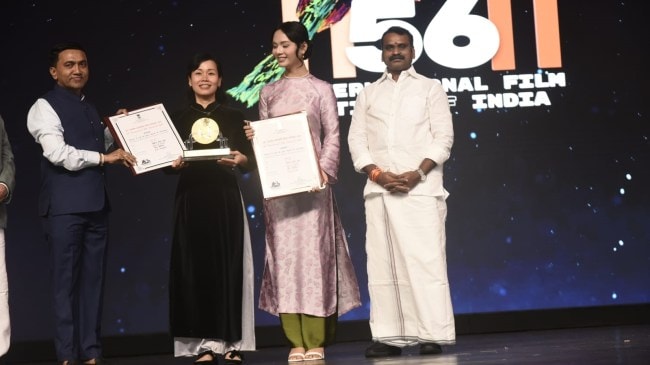 IFFI has grown in size and ambition. However, to create a remarkable international impact, the festival needs to develop a distinct vibe with cinema firmly at its core



Over the last decade, the International Film Festival of India (IFFI) has evolved into an event that aims to engage a wide spectrum of visitors, not just cinephiles who register as delegates. This year was no different. With an extravagant carnival parade marking its inauguration, a special fiesta featuring musical and cultural performances, a buzzing market geared toward co-production opportunities, insightful conversations on cinema and industry trends, screenings of about 240 films, including some of the year’s best, and a grand closing ceremony — the recently concluded 56th edition of IFFI had all the elements of a successful festival.
IFFI has come a long way since its first edition in January 1952, held in Mumbai, where world cinema classics such as Bicycle Thieves (1948) and Rome, Open City (1945) were screened alongside Awara (1951) and Patala Bhairavi (1951). After being held irregularly until 1975, it became an annual event, with the venue alternating between Delhi and other major Indian cities until 2004, when Goa was declared the festival’s “permanent home”. The coastal state — which hosted IFFI for the 22nd consecutive year in 2025 — was envisioned as India’s answer to the picturesque international festival venues like Cannes.

Though IFFI has always been a government-run festival, the I&B Ministry’s involvement has increased in recent years — a shift that has certainly played a role in bringing prominent stars to IFFI and expanding the festival activities. Following India’s first-of-its-kind World Audio Visual and Entertainment Summit (WAVES), held in Mumbai in May, there has been a fresh push for international creative collaborations. At the opening of the summit, Prime Minister Narendra Modi described this moment as “the dawn of the Orange Economy in India — Content, Creativity and Culture, the three pillars of the Orange Economy”. Others, including L Murugan, Minister of State for Information & Broadcasting, have reiterated the significance of this “Orange Economy” on multiple platforms. The entertainment sector, for some time now, has also been positioned as one of India’s key forms of “soft power”. Post-WAVES, the entertainment industry has been enjoying renewed importance, especially because it is seen as a bridge between India and international creative forums. Yet, IFFI’s global influence remains limited.
Major international festivals such as Cannes, Berlin and Venice are famous for championing the next big cinematic voices and works. Both of Chaitanya Tamhane’s features — Court and The Disciple — premiered at the Venice Film Festival and won awards there. Similarly, the Cannes Film Festival selected both of Neeraj Ghaywan’s films, Masaan (2015) and Homebound, for its Un Certain Regard section. After earning global acclaim, Homebound is now in the running for the Golden Globes and the Oscars.
Closer home, the MAMI Mumbai Film Festival — which skipped its 2025 edition — and the Dharamshala International Film Festival have gained a reputation for championing the best of Indian indie cinema and emerging filmmakers. While IFFI’s ‘Indian Panorama’ section showcases both feature films and documentaries, its selections fail to attract the attention and regard of a wider section of cinema-lovers. By selecting and supporting some excellent movies which go on to be part of cinema-related discourses, it can boost its relevance. Staying away from controversies — this year’s jury was criticised for having only male members — will also help keep the spotlight on the selection/cinema.
IFFI has grown in size and ambition. However, to create a remarkable international impact, the festival needs to develop a distinct vibe with cinema firmly at its core.
alaka.sahani@expressindia.com

 Share
Share


