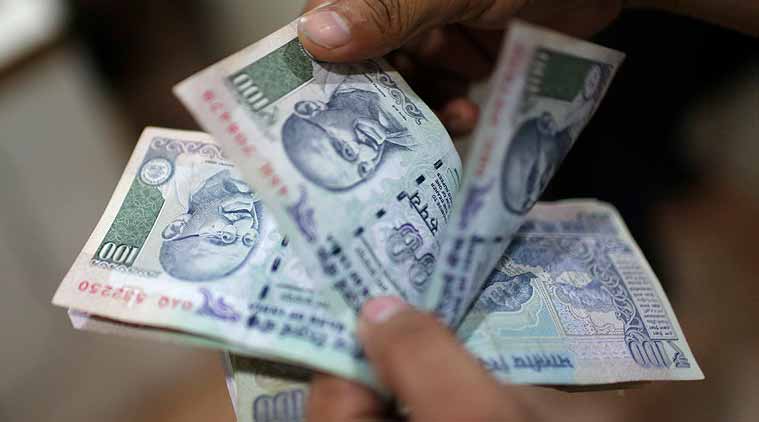


The “downward adjustment of the rupee” (a euphemism for devaluation) in July 1991 continues to attract attention and excitement. In his recent book, Jairam Ramesh provides a graphic description not only of the circumstances but also the decision-making process and the political convulsions associated with the decision. But the narrative is Delhi-centric. Unlike earlier devaluations, the July 1991 decision was not announced by the government. It was done as part of the daily adjustment of the exchange rate that the RBI was making. No one had expected this and therein hangs an important tale.
The deterioration in India’s balance of payments (BoP) during 1990 and 1991 is well-documented. The sharp rise in crude prices due to the Gulf crisis was a severe jolt to India’s BoP situation, already under stress. India’s current account deficit (CAD) had already touched 2.7 per cent of the GDP in 1988-89. From mid-1990, financing the CAD became arduous. Traditional sources of financing started drying up. It became difficult to roll over short-term finance. Non-resident deposits, which contributed significantly to bridge the CAD, had started flowing out. Serious negotiations with the IMF started only in December 1990, even though in a detailed letter, the RBI had urged the government to approach the IMF as early as in August 1990. Had India done so, the negotiations would have been much smoother. By the time India went to the IMF, it was desperate for relief. By end-December 1990, foreign exchange reserves were enough for only three weeks of imports. Deepak Nayyar and I went to Washington to start the negotiations. Initially, they were related to only the Compensatory and Contingency Financing Facility. Later, they were widened to cover other types of facilities. Other efforts were also made to raise funds. Some help came, but the position remained grim.


The decision was to effect a downward adjustment that was to be done in two stages with a gap of two to three days. As mentioned earlier, this was to be done by the RBI in the course of the daily fixation of the exchange rate. Technically, the rate was to be fixed in relation to the value of a basket of currencies within a given margin. We had long before gone outside the margin. A sharp downward adjustment would take it even further outside the limit. Since the adjustment was to be made in two stages, the code name for the exercise was “Hop, Skip and Jump”. Why two stages? To test the market with an initial dose and then follow it up. The first announcement would prepare the market. After the political clearance, the signal was given to RBI Governor S. Venkitaramanan and me to go ahead.
At the time, I was in charge of exchange rate adjustments.
On July 1, 1991, I made the first change. The foreign exchange market welcomed the move but was a bit shaken. But then speculation started on where the process would end. There were editorials that talked about devaluation much beyond what we had in mind. It was then decided to advance the date of the second adjustment, and not give too much of a gap. So, on July 3, the next adjustment was made. The depreciation worked out to 17.38 per cent against the intervention currency, the pound sterling. I am not aware of the government having second thoughts in the intervening period. Somehow, devaluation is always regarded as a quasi political decision. The new government, hardly a few weeks old, could have been subject to various pressures. I did not hear anything from the finance minister. On July 3, however, I got a call from Manmohan Singh at around 9.30 am. He put to me a neutral question regarding the situation, and I simply said, “I have jumped.” He said, “Fine.” And that was the end of that episode. Manmohan Singh gave interviews and spoke in Parliament about why the decision to devalue had to be taken. After the announcement on July 3, the market had to be assured that there would be no further sharp downward adjustments. This was necessary to prevent exporters from postponing bringing in receipts or NRIs from delaying sending deposits. Our action in the next one week in terms of the adjustment of the value of the rupee reassured the market. In fact, on August 2, I addressed a gathering in Bombay and gave a detailed account of the reasons behind the adjustments. I reiterated that there would be no further sharp changes.
The decision to make the downward adjustment was bold. It required courage. But devaluation has also been done in the past. What was, in fact, bolder was the ushering in of reforms in general and particularly in the external sector. The dismantling of quantitative controls on imports, reduction in import tariffs, introduction of EXIM scrips, adoption of a dual exchange rate, and switch to a market-determined exchange rate system all happened in a short span of 18 months, and transformed the external sector regime. The rupee became convertible on the current account in 1994. India’s external sector has never been as strong as it has been since 1991-92.
The writer, chairman, Madras School of Economics, is a former RBI governor.


