
Opinion How uncertainty of food inflation affects RBI’s policy going forward
Food inflation is influenced by climatic factors and is beyond the control of the central bank. However, it has a strong bearing on household inflationary expectations, which in turn can feed into actual inflation
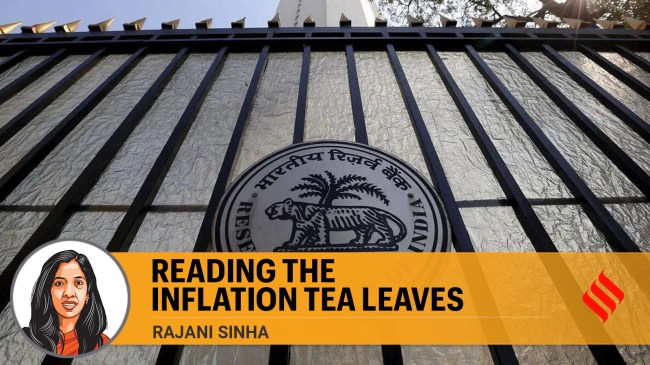 MPC cannot ignore food prices. But their unpredictability makes RBI’s future policy uncertain.



The RBI’s Monetary Policy Committee left the policy rate and stance unchanged in its August meeting. This was on expected lines and the RBI governor highlighted in his speech that there is good convergence between market expectations and MPC policy. However, what is lacking is convergence in the market view on the MPC’s future course of action. The RBI has highlighted concerns around high food inflation, while core inflation (excluding food and fuel) remains muted. Food inflation is influenced by climatic factors and is beyond the control of the central bank. However, it cannot ignore food inflation as it has a strong bearing on household inflationary expectations, which in turn can feed into actual inflation. This is what makes RBI’s future policy uncertain and complex.
CPI inflation has been hovering around 5 per cent for the last six months, higher than RBI’s target of 4 per cent. This is mainly because of spikes in prices of food items, which has a high weight of 46 per cent in the CPI basket. High inflation in cereals (8.8 per cent), pulses (16 per cent) and vegetables (29 per cent) have been keeping food inflation elevated at around 8 per cent. The RBI is concerned about the strong bearing of food inflation on household inflationary expectations, which is currently at a high of 8 per cent (as per the RBI Household Survey). So far, the high food inflation has not become broad-based and core inflation has been below RBI’s target of 4 per cent for the last six months.

Interestingly, the latest Economic Survey suggested that the MPC should consider targeting CPI inflation excluding food prices. The share of food and beverage in India’s CPI basket is much higher than developed countries (15 per cent in the US and 20 per cent in the EU) or even emerging economies like Brazil, China and South Africa (weight ranges between 20-25 per cent). It is relatively easier for developed countries to have an inflation-targeting monetary policy given the low share of food in the inflation basket, but it is challenging for India. This is because food prices are volatile and influenced by weather conditions, making it challenging to have monetary policy targeted around CPI inflation (including food). Monetary policy generally affects demand-side factors and is somewhat ineffective in controlling supply-driven food inflation.
At the current juncture, RBI needs to take a holistic approach to CPI inflation targeting. While the focus on supply-induced and demand-side inflation should continue, it is critical to assess the likely nature of supply-induced inflation. For instance, it is important to critically assess components of food inflation like vegetable prices that could be transitory. CPI inflation excluding vegetable prices is currently around 3.7 per cent and it has been below RBI’s 4 per cent target for the last five months.
If the monsoon’s progress is satisfactory, we can expect some moderation in food inflation in the months to come. However, achieving RBI’s target of 4 per cent on a durable basis will still be a challenge. RBI has retained its average inflation projection at 4.5 per cent for FY25, with quarterly inflation projection remaining above 4 per cent till Q1 FY25. Our CPI projection for FY25 is marginally higher at 4.8 per cent.
The RBI has retained its GDP growth projection at 7.2 per cent in FY25. High-frequency indicators like IIP, auto sales, GST collection, PMI-Manufacturing and Services continue to remain healthy. However, concern remains around consumption demand and relatively muted recovery in private investment. Rural demand is showing signs of improvement as reflected by the FMCG sales. A healthy monsoon and the consequent moderation in food inflation should somewhat aid consumption recovery. With a rise in capacity utilisation, private investment is likely to pick up, though at a moderate pace. We expect the GDP to grow at 7 per cent in FY25.
As far as the global economy is concerned there is increased geo-political turmoil even while growth concerns linger. There is monetary policy divergence, with central banks in the EU, Canada, Sweden, Brazil and China initiating a cutting cycle even while their counterparts in Japan and Indonesia have hiked policy interest rates. The US Federal Reserve is expected to start cutting rates from September. The Indian economy is relatively well poised on the external sector front, with expectations of a comfortable current account deficit and healthy capital inflows in FY25. High forex reserves of $675 billion are a big source of comfort — nevertheless, we need to remain cautious amid the global turmoil.
The RBI has highlighted the issue of bank deposit growth trailing credit growth and the liquidity risk that it poses for the sector. With bank credit growing at 14 per cent (excluding merger impact) and muted deposit growth of 11 per cent, the credit deposit ratio has risen to 77.4 in July. This is due to the diversion of household savings into other asset classes like equity, which have been offering higher returns. Another important issue that the central bank has highlighted is a sharp growth in some parts of the personal loans segment. Bank retail loan growth moderated after the RBI tightened regulatory norms, but it is still growing at a high pace — around 19 per cent. While there is a need to exercise caution around these risks, some of these are due to structural changes in the consumption and investment pattern of households, aided by digitisation in the economy.
Going forward, the RBI will continue to watch trends in inflation. The direction of food inflation would have a strong bearing on RBI’s future policy decisions. It is critical for the RBI to assess what part of food inflation could be transient. With domestic core inflation remaining muted, RBI could go for a shallow rate cut towards the end of the calendar year, provided food inflation shows signs of moderation.
The writer is chief economist, CareEdge Ratings

 Share
Share


