

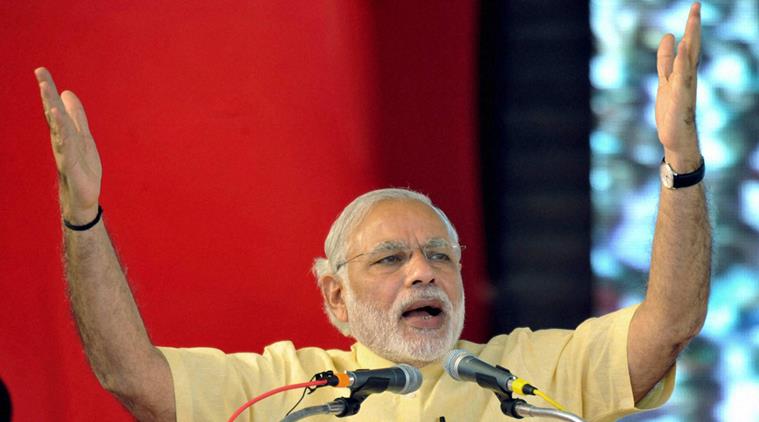
In Washington on his first visit as Prime Minister, Narendra Modi told an audience of businessmen that he saw no reason why India had continued to remain a poor country. I was in the audience, and his words came as music to my ears because in this column I have pointed this out ad nauseam. India has every reason to be a very rich country. Some of our poorest states are so rich in natural beauty, natural resources and ancient monuments that investment in tourism infrastructure alone would bring unimaginable wealth. So it is my considered, very un-socialist opinion that the main reason why poverty remains the bane of our degraded existence is central planning.
When this column endorsed Modi, it was because of the hope that he was not a central planner. He gave every indication that central planning was something he did not believe in. He talked of “cooperative federalism” and “minimum government” in those early halcyon months of last year, and I was among those who believed him. Now I am no longer sure that his idea of governance is at all different to the central planners who went before him and ruined India with their five-year plans. Not even after our role model, the Soviet Union, collapsed beneath the weight of its centrally planned economic policies did Indian policymakers change their ways, until imminent bankruptcy in 1991 forced P V Narasimha Rao to end the licence raj. Then, for a brief, shining moment, we saw the burgeoning of prosperity, but Sonia Gandhi and her kitchen cabinet of economically retarded do-gooders took us back to central planning.

[related-post]
It was from this kitchen cabinet that we got MGNREGA and the food security Bill and the Bharatiya Janata Party was stupid enough to not just help pass these laws but to even praise them. This was despite BJP chief ministers, including Modi, pointing out the flaws in centralised welfare schemes. So it is truly puzzling that as Prime Minister he should now have changed his tune.
Last week the Finance Minister boasted about how under the Modi government, the MGNREGA was working better than ever. Really? There is no evidence on the ground that this elaborate form of dole has reduced poverty or created real jobs in rural India. And real evidence that if the thousands of crore rupees that have been poured into this scheme had been spent on improving rural schools, hospitals and roads, the money would have been much better spent. Another centrally planned idea that emanated from the National Advisory Council was that of giving more than seventy per cent of India’s citizens entitlement to cheap food grain under the food security law that is soon to come into effect.
It happens that when the law was being discussed in Parliament in 2013, my travels took me to a small village in Rajasthan, where I had a conversation about it with a local official. Did he think it was a good idea, I asked, and this was his response, ‘We haven’t got enough storage space for the grain that we are already being sent, so where are we going to store more supplies?’ The idea behind the law was an altruistic attempt to alter the shameful fact that every other Indian child is malnourished. But the reality is that malnourishment is usually due to not getting the right food. Street children I work with in Mumbai are malnourished because most of them have never had a glass of milk or eaten green vegetables. The one thing they do get to eat every day is rice and bread. Why has the Prime Minister forgotten that he was among those who once opposed these laws?
The other idea he seems to have forgotten is “cooperative federalism”, so instead of dealing with Chief Ministers, he has started having regular video-conferences with their chief secretaries. This is not cooperative federalism, it is direct interference in federalism, and the consequences are unlikely to be good for Indian democracy. It is also yet another sign that Modi is a central planner, and this is very worrying because if we have another decade of central planning, we can say with certainty that those dreams of prosperity that seemed so achievable during his election campaign will remain dreams.
This is because central planners are incapable of creating real jobs, and real jobs are what young Indians need more than anything else. They do not need 100 days of fake employment a year of the kind that MGNREGA bequeaths them, because in the end what this mostly does is alleviate their poverty, not end it. If Modi continues to adopt policies reminiscent of Indira Gandhi’s ‘ghareebi hatao’ days, he will end up betraying the mandate he was given. It was a mandate for prosperity and jobs, not poverty alleviation and dole.
@ tavleen_singh


