
Opinion Dear students, your missing teacher is working on the SIR
Since independence, government school teachers have obediently served the duties assigned to them. They form a literate, reliable labour force that the government can easily access. They have kept democracy functioning
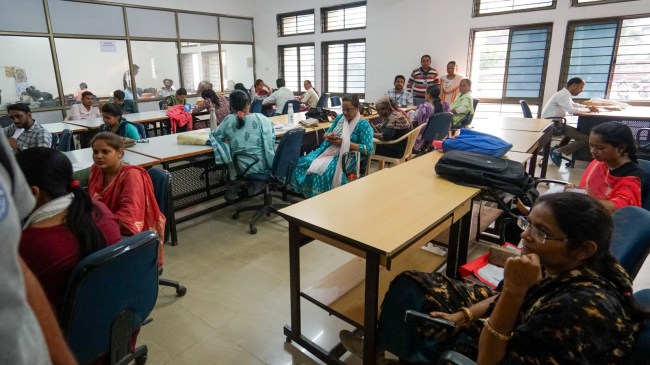 Children who attend private schools are not supposed to suffer any loss of classes. That fate is reserved for children who study in government schools. Depriving them of regular classes evokes no concern.

If you are not familiar with the code of conduct that governs the work life of school teachers in India, you can’t make much sense of news items about the pressure under which teachers are fulfilling their extra-professional duty as “booth level officers” (BLOs). They are updating electoral rolls and preparing the final lists of eligible voters. The deadlines are stringent, the task is tough and demands accuracy. It has nothing to do with teaching. The stress caused by this is compounded by the risks involved in delay. Some of the teachers doing this work are reported to have fallen sick and died.
Teachers and parents are often blamed for the stress and anxiety among children, but stress among teachers is seldom acknowledged. It is a common belief that teaching is a leisurely job. Equally common is the perception that government school teachers don’t work as hard as their counterparts in private schools. That’s why no one questions the use of government school teachers for election duty. Children who study in government schools constitute a national blind spot. How do they cope with their teacher’s absence when they are placed on non-teaching duties?

Every election brings schoolteachers out of school for substantial periods of time. School heads have no choice when the order comes to relieve some of their staff for election duty. It is not the only extra-professional responsibility government school teachers carry out. Various kinds of enumerative work and supervisory duties shape the haphazard lives of teachers.
Their counterparts in private schools are free from this clutter. This dual approach has persisted since colonial times, when village teachers came in handy for all kinds of official work, including the sale of postal stationery. To this day, the government sees nothing wrong in using teachers for “office duty”. They are perceived as sarkari karamcharis, not as professionals. Although someone who wants to become a teacher must possess special qualifications and go through in-service training, the perception of teaching as a soft profession has not changed. Why the government does not use this perception to rope in private school teachers for official work is a valid question that is never asked.
Children who attend private schools are not supposed to suffer any loss of classes. That fate is reserved for children who study in government schools. Depriving them of regular classes evokes no concern. A former student who teaches in a primary school in Delhi said bluntly: “Sir, no teaching is recognised. No teaching is possible. No teaching is expected.” For officers, teaching is not a priority; documentation, digital record-keeping, testing, rehearsing children for events and functions, uploading and online communication are. When teachers are absent, the principal has to “manage” without them. And so must children, even if it is examination time. Their loss is not considered a national loss, though that is exactly what it is. No officer seems to realise that when primary school children face a gap in their learning, it can’t be covered up. It is also discriminatory as their private school cohorts don’t suffer.
Since Independence, schoolteachers have obediently served the duties assigned to them. They form a literate, reliable labour force the government can easily access. They have kept democracy functioning. The cost of this contribution has been paid by the children. Over the past few decades, teacher shortages in various states have meant that the cost paid by children has gone up.
When the Right to Education (RTE) Act was being drafted, there was hope that it would outlaw the assignment of non-teaching work to teachers. However, it included Section 27, which permitted the use of teachers in election-related work. Later, a court verdict permitted teachers’ deployment for various duties in an election before it is notified. The glimmer of hope that RTE would establish teaching as a serious profession faded with time.
Kumar is a former director of NCERT and the author of Thank You, Gandhi

 Share
Share


