
Opinion C Raja Mohan writes: Indian Communism is 100 years old. And it’s too early to write its obituary
The conditions that once gave rise to communism — deep inequality, agrarian distress, precarious labour, the persistence of feudal values, and global economic turbulence — are sharper than ever. There is also renewed global interest in socialist and left-wing ideas, even in advanced economies
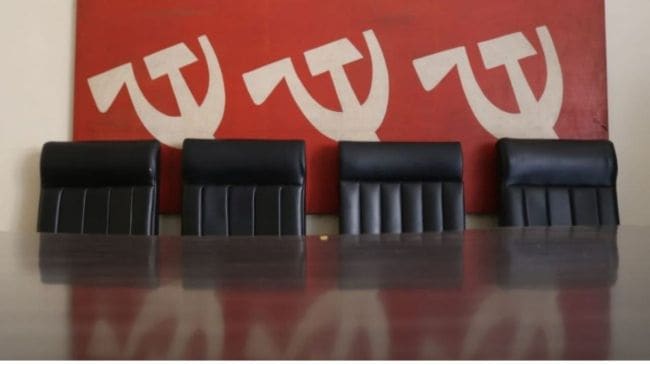 If Indian communists can shed ideological rigidity and rediscover the art of building broad democratic and progressive coalitions, they may yet contribute meaningfully to India’s evolution in the 21st century. (File)


This year marks the 100th anniversary of two very different organisations that have shaped modern India: The Rashtriya Swayamsevak Sangh (RSS) and the Communist Party of India (CPI). The contrast in their centenary moments could not be starker. The RSS, now the establishment, celebrated its milestone with fanfare. The CPI, once a formidable force in national life, passed its 100th year almost unnoticed — too diminished even to mount a modest commemoration.
That silence invites a larger question: Has Indian communism reached the end of its long political journey, or is its apparent eclipse merely another phase in a turbulent history?

Few political movements in India have experienced such a rapid reversal of fortunes over the last two decades. Back in 2005, the Indian communists were riding high.. They had a big say in the decisions of the UPA government, ruled West Bengal and Tripura with unchallenged authority, and remained a powerful force in Kerala. At that moment, the Left seemed poised for renewed relevance across India. It threw this away when it withdrew from the UPA coalition in July 2008 and backed the BJP in trying to pull down the Manmohan Singh government.
Since then, it has been a precipitous fall for the Left. In the 2004 general elections, Left parties commanded around 60 seats in the Lok Sabha. They now hold barely 10. Their vote share has collapsed from about 8 per cent to under 3. Regionally, the Left Front has been ousted from power in both West Bengal and Tripura and governs only in Kerala.
Does this mark the end of a century-old political tradition? Not necessarily. Political ideas rarely disappear simply because parties espousing them decline. If a self-declared socialist like Zohran Mamdani — derided by US President Donald Trump as a “communist” — can win the mayoral race in New York, in a country historically hostile to left-wing politics, it would be premature to write the obituary of communism in India.
The story of Indian communism — its dramatic rise and rapid decline — is far older and richer than its recent electoral setbacks suggest. Sectarianism and internecine warfare have arguably been a major source of its decline. Even the origin story of communism in India is disputed. The CPI(M), which split from the CPI in 1964, traces its founding to October 1920 in Tashkent, when a small group of Indian radicals, including M N Roy, formed a party at a Comintern-sponsored gathering. The CPI dates its birth to a December 1925 convention in Kanpur organised by leaders such as Singaravelu Chettiar, S V Ghate, and S A Dange.
Looking beyond the dispute over dates, there is no doubt that Indian communism emerged from the great global political and intellectual churn unleashed by World War I. The crisis of capitalism, the collapse of empires, the Russian Revolution, and the rise of nationalist movements across Asia created fertile ground for some powerful ideas — nationalism, socialism, and communism. In India, these global currents intersected with intense domestic debates about both the struggle for independence and the nature of the post-colonial state.
The CPI drew strength from a remarkable convergence of revolutionary streams: Ghadar activists in Punjab, associates of Bhagat Singh, Bengali revolutionaries, militant trade unionists in Bombay and Madras, radical peasant leaders fighting landlordism, and social reformers challenging entrenched hierarchies. Colonial repression was relentless, and the communists paid a heavy price for their activism. Yet at its most creative, the CPI turned adversity into opportunity. The Peshawar, Kanpur, and Meerut conspiracy trials of the 1920s became platforms for popularising Marxist ideas among students, workers, and intellectuals.
By the 1930s and 1940s, the party had built an impressive network of mass organisations mobilising workers, peasants, artists, writers, journalists, and students. This gave the communists an influence far exceeding their numerical strength. Their appeal among urban youth, in particular, ensured an outsized impact on India’s intellectual and political discourse.
Despite India’s relatively permissive democratic environment, the communist Left never realised its full potential. Its failures are often attributed to an inability to adapt to moments of profound change: The shifting great-power dynamics of World War II, the trauma of Partition and the nationalities question, the Sino-Soviet split, and later, the rise of the BJP. Equally damaging was the persistent difficulty communists faced in building durable coalitions with other democratic forces, including Congress.
Indian communism struggled to reconcile nationalism with internationalism, caste with class, religious sentiment with secular imperatives, revolutionary violence demanded by the doctrine with the reality of parliamentary democracy, and ideological purity with the pragmatic demands of building broad united fronts. These unresolved tensions repeatedly weakened the movement at critical junctures.
Yet the imprint of communism on modern India is undeniable. It forced land reform onto the national agenda, reshaping rural power structures in several states. The Left emerged as one of the most consistent defenders of secularism and federalism, resisting communal mobilisation and excessive centralisation. India’s expansive welfare architecture bears the mark of sustained communist pressure on the state. In culture, communist movements transformed literature, theatre, and cinema, amplifying marginal voices and embedding rationalist and egalitarian values in public life. More than any other political formation, the communists consciously linked India’s internal challenges to global currents. They shaped India’s understanding of the wider world and its place within it.
Today, the communist Left faces the gravest danger in its history: Prolonged political irrelevance. Yet the conditions that once gave rise to communism — deep inequality, agrarian distress, precarious labour, the persistence of feudal values, and global economic turbulence — are sharper than ever. There is also renewed global interest in socialist and left-wing ideas, even in advanced economies.
If Indian communists can shed ideological rigidity and rediscover the art of building broad democratic and progressive coalitions, they may yet contribute meaningfully to India’s evolution in the 21st century. Uniting the many weak communist and socialist fragments under a single platform would seem an obvious first step. That it has proved so elusive underlines both the enduring challenges and the unfinished business of Indian communism. Successful Left parties elsewhere have understood the importance of preserving organisational unity amid intense differences over ideology, tactics, and strategy.
The writer is a contributing editor on international affairs for The Indian Express

 Share
Share


