
Opinion Beijings NAM
Although China is only an observer at the 15th Non-Aligned Summit this week,Beijings diplomatic,political and economic influence....
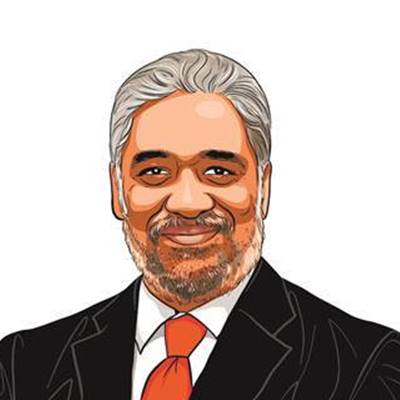

Although China is only an observer at the 15th Non-Aligned Summit this week,Beijings diplomatic,political and economic influence in the developing world has begun to outpace that of Delhi,which claims a leadership role in the NAM.
While India was among the founding members of the NAM,China stood apart from the movement between the 1960s and 1980s. China became an observer of the NAM at the Jakarta Summit in 1992. Since then China has sent high level political delegations to participate in all the NAM gatherings.

As China and India rise in the international system,it is but natural that their policies towards the developing world are being subject to close scrutiny. Both Beijing and Delhi insist that they are part of the developing world.
Their massive size,however,suggests that China and India may be propelled into the ranks of great powers,even before they become developed countries in a traditional sense. It is no surprise,then,at least some in the West are attaching the tag of neo-colonial to the rising Chinese and Indian profile in the developing world. Although there are many similarities between the third world policies of China and India,there are some very important differences too.
If India has been unable to rise above the process-driven NAM trivia,China has maintained a relentless focus on deepening strategic engagement with key non-aligned nations.
For example in Africa,Delhi is way behind Beijing when it comes to a very simple indicator the number of diplomatic boots on the ground. The South Block certainly wants to increase the number of Indian missions in Africa; it will be a long while though before the lethargic Indian system delivers.
When it comes to high level visits,there are many NAM countries where no senior official,let alone a minister,from India have visited for decades. Beijing meanwhile has been sending its president,prime minister,foreign minister and a host of other senior officials on a regular basis to every corner of the world,from West Africa to the South Pacific and from Latin America to the Indian Ocean.
Economic aid
Meanwhile,the gap between China and India on economic diplomacy in the NAM has steadily widened. Consider,for example,Chinas economic assistance to developing nations.
Unlike India,China has no time for anti-imperialist verbiage at the NAM. Instead Beijing has focused on emerging as a genuine economic alternative to the West in many parts of the South. China believes deeds are more important than words.
A recent study from New York University has estimated that Chinas economic assistance to Latin America,Africa and Southeast Asia,has risen from US$1.5 billion in 2003 to US$ 25 billion in 2007. Africa has received the largest increases in Chinas aid budgets.
Most of the Chinese aid has been in the form of government backed investments about 53 per cent. Concessional loans constituted around 42 per cent and the remaining 5 per cent was made up of grants and debt relief. In sectoral terms,44.5 per cent of the aid was directed at the development of natural resources and agriculture while 43 went to the building of infrastructure.
Military inversion
The competition between emerging India and a rising China for influence in the developing world is likely to turn one of the NAMs founding myths on its head.
At the core of the NAM philosophy was opposition to military alliances and a refusal to host foreign military bases. Beijing and Delhi have been great champions of this principle in the past demanding that foreign troops get out of the non-aligned world.
As they develop vital economic interests around the world and create the military capabilities to secure them,might Beijing and Delhi look for bases abroad for their own armed forces?
If you think this question is either premature or far-fetched,do look at the current jockeying between China and India for naval access in the Indian and Western Pacific Oceans. In the not too distant a future,for some nations in the developing world non-alignment may well mean balancing between Beijing and Delhi.
The writer is a Professor at the S. Rajaratnam School of International Studies,Nanyang Technological University,Singapore.
 Share
Share


