
Opinion ‘Adolescence’ isn’t all that it is made out to be. There’s a teenage-girl-shaped hole in it
Privilege and power are built into stories and how they direct your gaze. Which is why it is difficult to call ‘Adolescence’ great television. This is the same old White patriarchal privilege that we have been force-fed for decades through stories
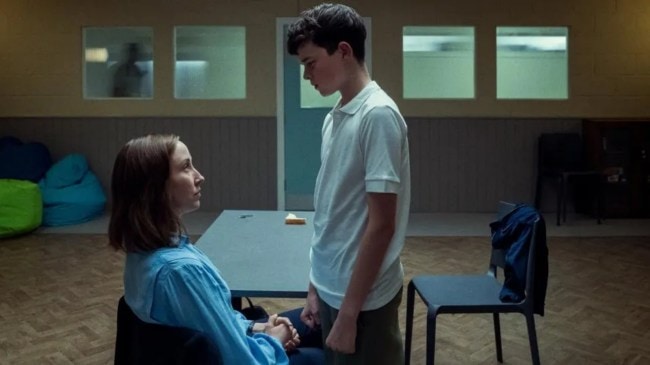 Adolescence streams on Netflix.



I sat down to watch Adolescence because of the rave reviews it was getting: “God level”, “pitch perfect”, “sensational drama”. Rarely has a series been given this kind of worshipful welcome. I was curious.
What I watched though did not live up to the hype. Young boy does bad thing to young girl. We are offered slice-of-life glimpses into the investigation and those involved. With one notable exception. As a female police officer points out right at the beginning, what makes her sick is that it’s all about the boy who did the bad thing. They have to figure out his motive. He’s the one who will be famous. The victim will be forgotten. And having put that token disclaimer in the mouth of a woman, the writers go ahead and do just that. It’s about the boy. What he did. His experience of the school and police system. The impact on his parents.

A 13-year-old girl is stabbed to death. We never see her as more than a photograph during the opening credits. Does a single person express grief for her? No. Does a single person actually tell us anything that takes her from being a mere prop to a real breathing person? No. Not even the angry Black friend who fights for her. The female victim is yet again made invisible.
This is so familiar that there is actually a word for it — “fridging” — from the movie trope where the hero comes home to find his girlfriend chopped up in a fridge. From then on, she stays in the fridge, figuratively speaking, and the movie is all about the man and his angst/revenge/validation journey. All we are told about the victim is that she was a bully — this from the very boy who went on to kill her.
Where is the grief of her parents? Where is their coming to terms with what happened? That could have been an equally or more compelling story — but a choice was made to stick with the male perpetrator. Ask the audience to try and understand him. To try and understand his at-sea parents, grappling with this son they hadn’t known.
Words like “incel” and references to Andrew Tate are flung around a lot in the show. Asking the audience to understand the very serious repercussions of the hypermasculine culture promoted by the likes of rape-accused Tate is excellent. But to do it by using the references as garnish and nothing more is disappointing. Much more has gone into the technique of the series than into any sort of exploration of what is a very serious issue. Dead serious, in fact. And, as is almost the norm, it is the woman who dies. Toxic masculinity deserves a much better exposition than using it as a shallow prop to performance. About all that you will learn about it in this series on Netflix is that there is a secret language of emojis that are used to target those labelled “incels”.
This is not to take away from the technical excellence, or the acting. The single shots are stunning and the performances very moving. But there is a big gaping teenage girl-shaped hole in the middle of this story that we have seen over and over again. Make the girl a prop. Make her invisible. Put in a token line or two. Stick in a disclaimer text at the end about using the girl as a “blank canvas”. Then move on to the man. Focus on him.
Privilege and power are built into stories and how they direct your gaze. Which is why it is difficult to call Adolescence great television. As an audience, your gaze is firmly directed to the boy and you are expected to keep your blinkers on. This is the same old White patriarchal privilege that we have been force-fed for decades through stories. Where White men — actually, make that all men — take up all the space at the heart of storytelling. Even when they are 13 years old.
The girl who was killed has been fridged in Adolescence. And so, despite all the excellent performances, all the marvellous technique, the series left me cold.
Coelho is a Sahitya Akademi Award-winning children’s author and screenwriter

 Share
Share


