5 min read
© The Indian Express Pvt Ltd



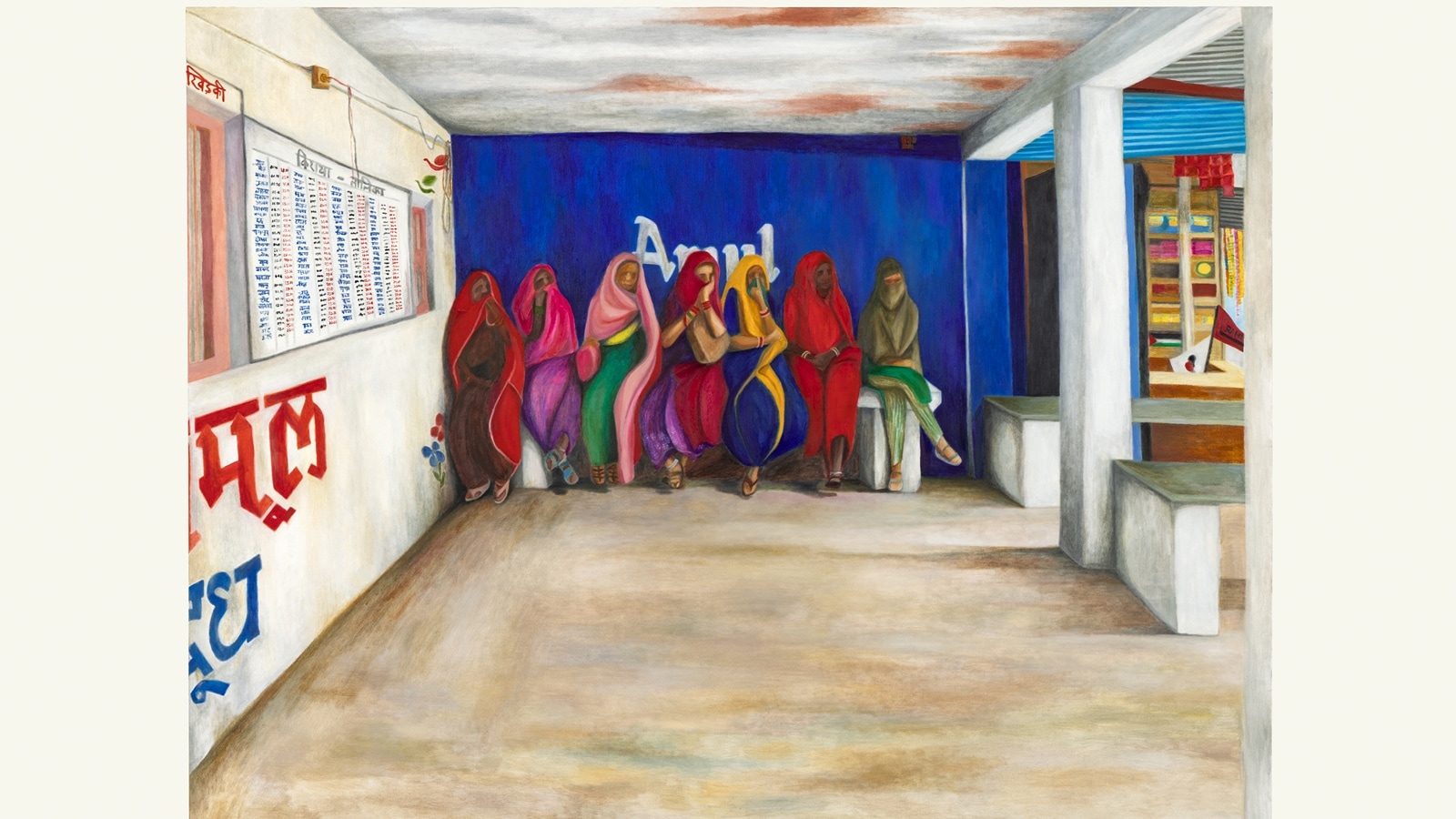 Bhim Bus Stand, Rajsthan (2025)
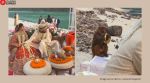
It was, perhaps, the vibrant multihued composition of the diptych that led art critic Gayatri Sinha to write: “At first, you mistake it for a stage” in her curatorial note for Aban Raza’s recent exhibition, “Nothing Human is Alien to Me”. Titled ‘May Diwas, Mazdoor Mela’, the work that anchors Mirchandani + Steinruecke’s new space in Delhi’s Defence Colony, is a recreation of a scene from a labourers’ protest in Bhim, Rajasthan.
Notwithstanding the colourful shamiana and the people huddled underneath it, a visual Sinha uses to argue her claim – “three sides made of vividly coloured red, ochre and green canvas and open on the fourth creates the illusion of a recessed room-like space crowded with many actors, in short a stage” – the 2025 work does not feel performative, especially for those who have witnessed or participated in actual protests. The oil on canvas is unmistakably a depiction of a demonstration. There is no doubt about it.
Sinha’s text is on the wall; it is obvious that the 36-year-old artist does not question or disagree with the curator’s interpretation. “I agree with how she has interpreted the work but no, it is not a performance. It is a real site for me. The people are real,” says Noida-based Raza who, often before finding a subject in these protest sites actually visits them (not with the intent of painting), and sometimes even participates in them. She did it for the farmers’ protests against the new Farm Laws (which were subsequently withdrawn by the government) in 2020-21, the Anti-CAA protests in Shaheen Bagh in 2019. Images from both made it to her paintings, showcased at an earlier exhibition. In this lot, the protests in focus include, besides the demonstrations in Bhim, the Maruti protests by workers terminated by the automobile company, pro-Palestine protests and a striking image from the Delhi Riots of 2020.
In fact, it was a challenge to put the demonstrations of such different nature – occurring at different times and places and about varied issues – under a single umbrella. That is when the line ‘Nothing Human is Alien to Me’ came to her rescue. “It is attributed to Karl Marx but before him, in 165 BCE, a Roman playwright called Terence made one of his characters in his play ‘The Self-Tormentor’ say it,” she says, “I was struggling particularly because of the paintings about the Maruti workers; what gives me the right to talk about their struggles? And this line gave me confidence. Without taking anything away from them, this was my way of expressing solidarity.”
But why protests? Raza answers, “What else if not protests?” She is not the first artist to depict resistance, but often dissent in art has found documentation in an interpretive way – think Picasso’s ‘Guernica’, Francisco Goya’s ‘Disasters of War’, Andy Warhol’s ‘Camouflage’ series. Closer home, there are names like Ganesh Pyne, Jogen Chowdhury, Nalini Malani, Shilpa Gupta and many more. Probir Gupta’s mixed media installation ‘A Poem of Instruments’, exhibited at the India Art Fair in 2020, celebrated the resilience of the women who participated in the Shaheen Bagh protests.
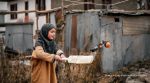
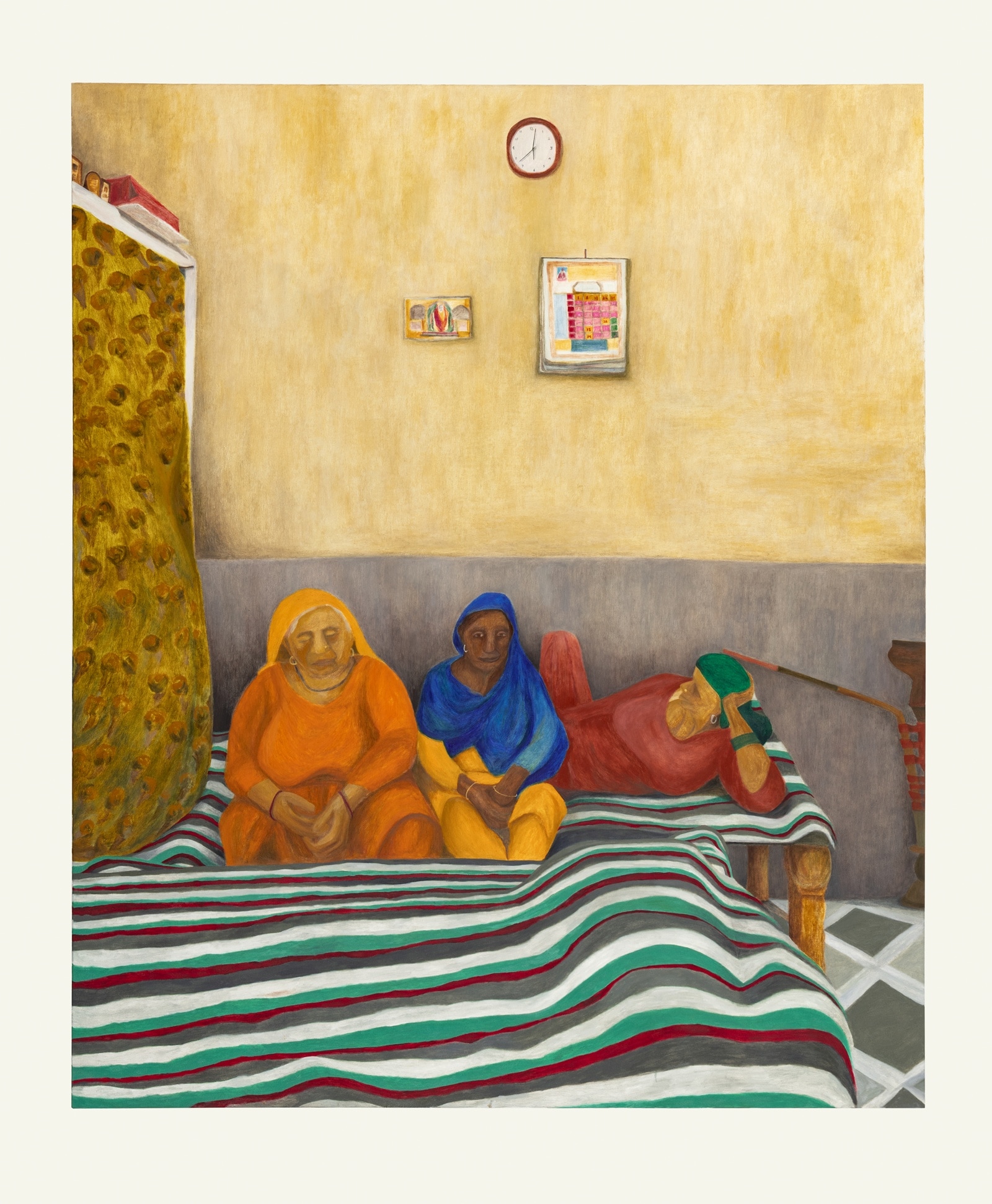 Sorkhi, Hisar District, Haryana (2025)
Raza, however, depicts the protest site as is. “When you are talking about the people, you can’t be too abstract. How can you not have people in a work about protests for basic human dignity and rights? Otherwise who are we painting it for? For me, it is important that I paint people so that everyone can identify with it. Of course, you attach an artistic element to it but too abstract would be too personal,” she says.
Raza’s paintings are, however, more than just a recreation of a demonstration. In her vigorous and gestural strokes, which allude to German expressionism, lie hidden what comes before and after it – the anticipation and the exhaustion – that makes her works so evocative and real.
Take ‘Bhim Bus Stand’ (2025). The frame shows seven women sitting at a bus stop. Raza shares that to reach the protest site (shown in ‘May Diwas, Mazdoor Mela’) one can either take a bus or march. These women were waiting for their ride when Raza saw them. “I wanted to capture that moment between waiting and getting up to leave. That seemed quite amusing to me,” says the artist.
Fatigue looms large in ‘Maruti Suzuki Struggle Committee, IMT Chowk, Manesar Tehsil, Haryana’ (2024) and ‘Sorkhi, Hisar District, Haryana’ (2025). Both images capture scenes from the aftermath of a hard day’s night. The first one, with men wrapped in blankets to keep themselves warm in a makeshift tent, is self explanatory. The other one shows three women resting after spending an entire day campaigning to encourage people to vote.
Raza did her Bachelors and Masters in Fine Art from College of Art, Delhi. She had her first solo – ‘Luggage, People and a Little Space’ – in 2020. Protests, however, have been part of her life for much longer than art has. She has been going to the protest sites since she was three, thanks to her parents. She has been actively working with the Safdar Hashmi Memorial Trust. She says, “I don’t know what else to do. Even if I wasn’t an artist I would still visit those sites. Because I am an artist, I think this is how I can contribute to the discourse.”