3 min read

Journalism of Courage




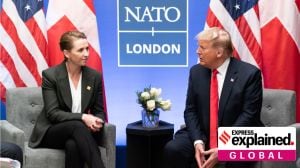
As Prime Minister Manmohan Singh heads to Washington this weekend for talks with President George W Bush, the prospects for expanding Indo-US civilian cooperation appear to have brightened.
With Bangalore emerging as an important centre of a globalising space industry, Delhi and Washington recognise the importance of promoting mutually beneficial space commerce. Translating that recognition into a reality, however, requires some savvy diplomatic footwork before, during and after the summit talks between Singh and Bush next week.
While officials are tightlipped about the negotiation details, the attempt is on to relax many of the current American regulations that constrain US civilian space cooperation with India.
On the eve of the meeting between Singh and Bush, the two sides are looking for agreements that would help simplify procedures for joint development and marketing of satellites by the Indian space establishment and American companies as well as remove US hurdles to the growth of the satellite launch business in India.
Intensified Indo-US cooperation in space could also include American participation in the India8217;s first unmanned lunar mission, Chandrayaan, which is expected to be launched in 2007.
Along with civilian nuclear energy cooperation, engagement on civilian space programmes has been at the top of the Indo-US dialogue on non-proliferation and high technology cooperation under the so-called Next Steps in Strategic Partnership signed in January 2004.
Under the NSSP talks, progress has been more visible on Indo-US space cooperation than on nuclear energy. While India is looking for some solid progress on issues relating to nuclear energy during Singh8217;s visit to Washington, there is a lot of diplomatic business to be transacted on space cooperation as well.
In the last couple of years, there has been some easing of US restrictions imposed on the Indian space programme after the nuclear tests of May 1998. As a result, the ability of the Indian space establishment to procure components and sub-systems from the US has improved.
But many problems remain. While the ISRO headquarters was removed last September from the list of entities sanctioned by the US, other establishments continue to be targeted.
More fundamentally, wide-ranging licensing requirements have made it difficult for Indian space establishment to collaborate with US companies on the joint development of satellites.
Of equal concern to India are the current American regulations that explicitly prevent the launch of satellites and other space payloads with American components on India8217;s commercial rockets.
ISRO has already lost a couple of potential contracts because of this American opposition. Delhi has been pressing Washington for some time now that lift these restrictions. An agreement to this effect during Prime Minister Manmohan Singh8217;s visit would be a big boost to Indo-US space cooperation.
The Joint India-US Working Group on Civil Space Cooperation, recently set up to promote bilateral space commerce, had its first meeting in Bangalore late last month. The Working Group declared, 8220;Chandrayaan-1 lunar mission offers an outstanding opportunity to begin Indo-US cooperation in space exploration8221;.
While the European Space Agency has already agreed to participate in the Chandrayaan mission, American participation involves sorting out some technical problems with the current US regulations.