5 min read

Journalism of Courage



Here is the rub for Vladimir V. Putin: the people who stood outside the Kremlin on Saturday,chanting epithets directed at him,are the ones who have prospered greatly during his 12 years in power.
They were well travelled and well mannered; they wore hipster glasses. In short,they were young urban professionals,a group that benefited handsomely from Moscows skyrocketing real estate market and the trickle-down effect of the nations oil wealth.
Maria A. Mikhaylova came to the demonstration in designer eyeglasses and with her hair tied back with a white ribbon,the symbol of the new opposition movement. Mikhaylova,35,said her goal was not to upend Putins government. We dont want any violence, she said,but rather to compel the political system to take account of the concerns of people like her.
It is a paradox,but one that has been documented by social scientists: the residents of Moscow and other large cities tend to express greater frustration with Prime Minister Putin as his government has helped make them wealthier. One explanation is the high level of public corruption here,which threatens new personal wealth. A second is a phenomenon seen in Gen. Augusto Pinochets Chile,that economic growth can undermine autocratic rule by creating an urban professional class that clamours for new political rights.
This is not a protest of empty pots, said Viktor A. Shenderovich,a political commentator. This is political,not economic. These people are protesting because they were humiliated. They were not asked. They were just told,Putin is coming back.
On Sunday,President Dmitry A. Medvedev turned to Facebook,the same medium that helped generate the rally of tens of thousands of people,and issued a statement saying that he disagreed with the protesters slogans,but that he had ordered an investigation into reports of fraud in the parliamentary elections last week.
The protesters themselves seemed uncertain about where their effort was heading. But they were giddy nonetheless. It is impossible to impede us, wrote Roman Volobuyev in the online magazine Afisha. Some of us will need to change our professions. Some of us will have to do the oppositefinally actually do our job. To build a party without first notarising it with the Kremlins most influential political strategist,Vladislav Y. Surkov.
It must be frustrating for Putin that those now protesting have enjoyed growing wealth while he has been the countrys predominant figure. From 2000,the year he assumed the presidency,until 2008,wages,adjusted for inflation,grew at an average of nearly 15 percent a year. But now salaries are increasing at an average of 1.3 per cent per year since the onset of the global economic crisis in 2008,according to Citibank.
And as they become wealthier,residents of cities are prone to venting their frustration with the political system.
In Moscow,rising incomes correlate with respondents saying discontent is rising, wrote Mikhail E. Dmitriyev,president of the Center for Strategic Development,a research organization in Moscow.
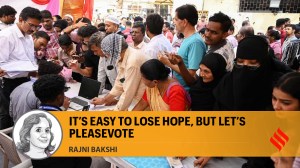
Political rights were the main demand at Saturdays rally,which was attended by students and their parents,retired people and young professionals. We dont want a revolution, Kolotilov said. We want fair elections.
If there was a single catalyst to the recent events,it was probably Putins unilateral announcement in September that he would run again for the presidency,in effect swapping places with Medvedev. The leaders of this new opposition represent a diverse array of groups,including minority political parties,which typically oppose one another as much as they oppose United Russia,the governing party of Putin and Medvedev.
Their movement does not have the economic despair that helped fuel previous uprisings in Russia and more recently helped to stir the Arab Spring in North Africa and the Middle East.
Yuri Dryugin,45,an entrepreneur in the transportation sector,said he deliberately invalidated his ballot in the election last week because Ive had enough of all this.
His demand now,he said,is simple: Fair elections with all the parties present.
Oksana,18,a student from Kirov who plans to become a lawyer,said she was not sure what she expected to come of the protests. Oksana,who declined to give her last name,said her mother was an accountant,her father a manager at a computer company and her older sister was planning to start her own business. Unfortunately,a civilised rally in our country is a rare thing so far, she said. But now I see that
its possible. ANDREW E. KRAMER amp; DAVID M HERSZENHORN