


Tags:


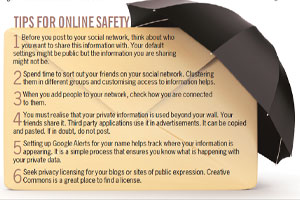
As we disclose more information online,we must ask who might access it and why.
As a researcher of the blink-and-change cyberspaces,I am often asked about the future of all things digital. I generally refuse to answer such questions because researchers are happier talking about things past than things present. Also,when people ask questions of the future,they are more interested in gadgets and platforms. Will Facebook survive the next year? Will more people use Twitter? Is the mobile the new weapon of protest? Shall we all soon talk only on FaceTime? I shrug my shoulders at these questions. However private information and privacy ties all these questions.


And this is where privacy kicks in. Many people in India,when they encounter the idea of privacy,raise their eyebrows. Culturally,we are not very private people. We celebrate our triumphs and sorrows in public,freely part with information to strangers on train rides,and dont have qualms asking about age,marital status or salary. In the age of ubiquitous computing,we must remember that once something has been committed to the online world,it will be etched somewhere and will be available for somebody else to look at. The internet,specially with increasing bandwidth,expanded spectrum and cloud-based distributed data storage,is an unforgiving space that never lets go.
Privacy,in this brave new world,is not about disclosure. It is becoming increasingly clear that we will need to disclose more and more of our private information if we want services from government public delivery systems to private credit and education online. However,once we have disclosed our private information,then what? Who uses it? Who reads it? Who stores it for what purpose? What are the implications of having that private information out there?
In the digital world,privacy is about having more control over the personal information that we have disclosed,the right to know who,where,when,how and for what purposes information that we have willingly disclosed is used. And as the country finalises privacy bills,this right of the individual,whose private information is going to feed government and business ecologies,is at stake.
There is a need to institute better regulation around data protection,data mining,data retention and data retrieval that is still in the limbo in our country,at the mercy of privately crafted terms of service that we blindly accept while signing into the digital world.
It is time to move away from understanding privacy as disclosure to privacy as control of information to know who is doing what with your private information and how you should have a say in it. And it is time to realise that just because you dont have anything to hide,does not mean that you need to be in a state of disclosure. There is a reason why you have curtains in your house,or do not allow strangers to look into your bags.
digitalnativeexpressindia.com


