Journalism of Courage
 2 min read



It was an expedition like no other: in search of a Purani Dilli delicacy called the Tar Qalya. escorts Persian scholar Salma Hussain in search of a part of Delhi8217;s culinary heritage
EVER since I have told her of our mission, Salma Apa is in a tizzy. True, she is in the habit of making regular forays into the narrow lanes of Purani Dilli and knows half the kebabchis and nanbhais there are by their first names, but this is a special trip. From the calm and perfectly green environs of the Jamia Hamdard University, where Salma Apa works as a Persian scholar-cum-caterer-at-large, we are on our way to the heat, dust and squalor of erstwhile Shahjahanabad to rescue one of the city8217;s oldest and most basic recipes, now in danger of extinction.
Some say the Tar Qalya Qalya, literally meaning goat-meaty, Tar, the layer of fat that floats on top like the rogan of Rogan Josh is a poor man8217;s korma. Or rather, a simple mutton curry, part of an everyday meal. Hardly exotic. Hardly a recipe worth scouting for. But Chef Vipul Mathur at The Imperial, member of a firmly carnivorous old Kayastha family of Purani Dilli, is of the opinion that Tar Qalya originated in the royal kitchens of Shah Jahan, where the emperor8217;s cooks combined the certainly-not-meagre leftovers 8212; meat, stock, masalas, rose petals and sandalwood powder 8212; to cook up their own delicacy. It could explain why they use only meat from the joints to make Tar Qalya. So, I take Mathur8217;s version for it.
Undeterred by such claims, counterclaims and layers of fat, Salma Apa is busy squinting at the road and yelling out directions to our driver, who can8217;t figure out where Matka Peer is. One of Delhi8217;s most popular Sufi shrines, this is where you are supposed to wish away the evil eye by donating a matka symbolically full of all that ails you to the djinns who supposedly frequent the place. Salma Apa, however, will have no truck with djinns 038; co., she casts a disdainful glance at all the touristy types and heads to the dhaba next door.
8216;8216;Babu Bhai, salaam. Yeh Anoothi bibi hain,8217;8217; she yells out to the man in spotless white. He is the owner of the dhaba, Babu Shahi, one of the best known caterers to have emerged from Old Delhi who now dishes out kebabs and curries to the rich and the famous, including, if the grapevine is to be believed, the Nawab of Pataudi.
| The search for Tar Qalya may have been futile, but I8217;ve finally got a down-to-earth recipe for genuine Old Dilli food, even though Salma Apa is not too happy about the use of dhania powder and yogurt. One difference from usual recipes: instead of kaju paste, Babu bhai uses chana powder. Babu Bhai8217;s Tar Qaliya Gosht: 1 kg Dahi: 250 g Onion: 250 g, browned Ghee: 250 g Dhania: 20 g, powdered Lal Mirch: 20 g Salt: 15g Haldi: 5 g Green Ilaichi: 3, whole Cloves: 3, whole Garam masala, ground Mix all ingredients and put on fire except browned onion paste. When the meat is well-browned, add browned onions. Cover, cook till tender. Add ghee. Simmer on low heat till tar oil and fat from the meat floats on top. |
We ask after Tar Qalya, but Babu Shahi shakes his ancient head. 8216;8216;No bibi, we don8217;t have it at the dhaba8217;8217;, he tells you. A look at the menu confirms it 8212; it8217;s dal makhni and tikkas all the way, even though the 84-year-old refuses to stoop to all that nouveau tandoori stuff. Even his 100-year-old shop at Galli Churiwalla in Chandni Chowk serves just Nahari and Paye literally, feet. 8216;8216;Paye only in the evenings and even though Nahari is for breakfast, we have started making it all day long because it is popular8217;8217;, says Babu bhai. But he says he8217;ll make Tar Qalya for us too, the next day. For the moment, he writes out a recipe and directs us to more shops and bhatiyaras traditional cooks near Jama Masjid.
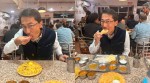
8216;8216;Korma or ishtew?8217;8217; That is the question. We consider, and then shake our heads at the waiter. Nothing will do today except Tar Qalya. Not even brain curry at Karim8217;s, Jama Masjid. Thanks to the foreigners and touristy types who throng this most upmarket of Jama Masjid 8216;shops8217;, this bastion of Old Delhi Muslim cooking has, in fact, forgotten what 8216;Qalya8217; is. 8216;8216;Galiya, nothing like it here8217;8217;, the waiter shrugs. Bare Miyan, the original owner, is not here, or he would have known, Salma Apa sighs and we make way to the establishments of Matia Mahal.
The evening Namaz has just concluded as we weave our way through the crowds, pausing at Moradabad brass and handicrafts stores and trying to determine the popular nazms that teenage girls still preferred over A R Rahman at the Urdu bookstores. But food is the prime preoccupation and we mustn8217;t tarry. Garib Nawaz hotel is perched at a small height. But the difference in stature of those inside and outside couldn8217;t be more obvious. Some squat on their haunches at the doorstep, seeking their daily bread and beef curry. Eyes follow us as we make our enquires and leave, unrewarded.
Jawahar Hotel and Rehmani hotel, the other two recommended places, also draw blanks and we are told by the proprietor of one that if we are looking for 8216;8216;bimaron ka khana8217;8217;, we may as well make chicken soup at home! Tired, we decide to chat up Abdul Maalik, a gifted kebabchi his kali mirch ke kebab has been reportedly included in the Maurya Sheraton repertoire, whose shop is just opposite the bus stand. 8216;8216;It doesn8217;t exist anymore8217;8217;, Maalik shakes his head sadly. 8216;8216;It used to exist 80-90 years ago. They used to make it in huge lagans and the heat from the firewood had to come from all sides. Sadly, the people who used to appreciate such food have all gone away.8217;8217;
It8217;s time to bring out the bottle and all around us fish tikkas and chicken corners are doing brisk business.