Journalism of Courage
 4 min read



Journey into Islam: The Crisis of Globalization
Akbar ahmed,
Penguin, Rs 525
It vastly helps if you have authored Discovering Islam, then Living Islam, before writing on Islam became hip, and it helps even more if you happen to be a scholar who has also done a long and wonderful documentary for the BBC on the same subject. Akbar S. Ahmed, scholar on Islam and also Pakistan8217;s high commissioner to Britain for a while, has written another book, his latest, Journey into Islam: The Crisis of Globalization.
His book has six chapters and could have well been called what the first chapter is titled, 8220;An Anthropological Excursion into the Muslim World8221;. Based on a series of surveys and questionnaires distributed in 8220;universities, hotels, cafes, mosques and homes8221; in Turkey, Qatar, Syria, Jordan, Pakistan, India, Malaysia and Indonesia, all countries with significant Muslim populations, Ahmed and his team got about 120 responses on an average from each country. Unlike surveys drawing up a list and dealing in percentages, these appear to have been handled more sensitively, 8220;decoded8221; and supplemented with feedback from young people on whom they admired among the living, their most inspirational Muslim historical figures, etc. By the way, the book centres on the young population in these countries, those who are in their late teens to the late 20s.
The strength of this volume is the sweep in every chapter and the aspect of the life of Muslims and their struggle with identity and ideas. Ahmed switches between time zones, countries and contexts. He confronts the age-old dilemma between what Islam provided for women and the traditional tribal attitude to women in Arabia. He discusses the Prophet8217;s wife Aisha8217;s problems after the Prophet8217;s death, and in the next paragraph, the agony of Mukhtaran Mai the Pakistani rape victim, who was also a victim of tribal attitudes and brutality a couple of years ago.
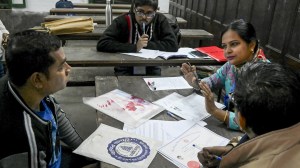
Ahmed describes at some length his journey into schools and colleges in the countries he toured with his team. He writes: 8220;I was struck by the global reach of the US media and the global spirit of the Muslim population. The world has come closer in a way I could not have imagined on my last long trip, and much had also changed8230;.8221;
Without saying so, Ahmed has escaped the syndrome of simply looking at Islam from the not wholly representative Saudi Arabian stereotype. Yes, he could have done with including more east Asian countries in his survey, but consider this: he says the three basic paradigms all Muslims are part of are all rooted in India! The Deoband paradigm, the Ajmer paradigm and the Aligarh paradigm.
Ahmed uses more India-centric phrases, another significant one being of Muslims reeling under the 8220;Taj Syndrome8221;. Ahmed says the monument symbolises the 8220;power and compassion of Muslim rulers8221;, the most significant synthesis of 8220;both the Islamic and Indic traditions8221;, but it is also a reminder to present-day Muslims of a bygone era. Ahmed says the conflict and the sense of unease with the 8220;other8221; is no consequence of 9/11, but a debate that has been raging within the community over the past centuries as it struggles with its spiritualism, its glorious past and the 8220;gaps between the rich elite and the poor now reaching dangerous proportions8221;, a very dangerous cocktail.
There is in the book, however, what many readers may well see as a 8220;design flaw8221;. Ahmed more or less buys into a 8220;clash of civilisations8221; argument, seeking to define differences between states and peoples only by looking at them in vague civilisational terms, instead of looking at several other real categories, like income groups, impoverishment and a difficult colonial experience.